


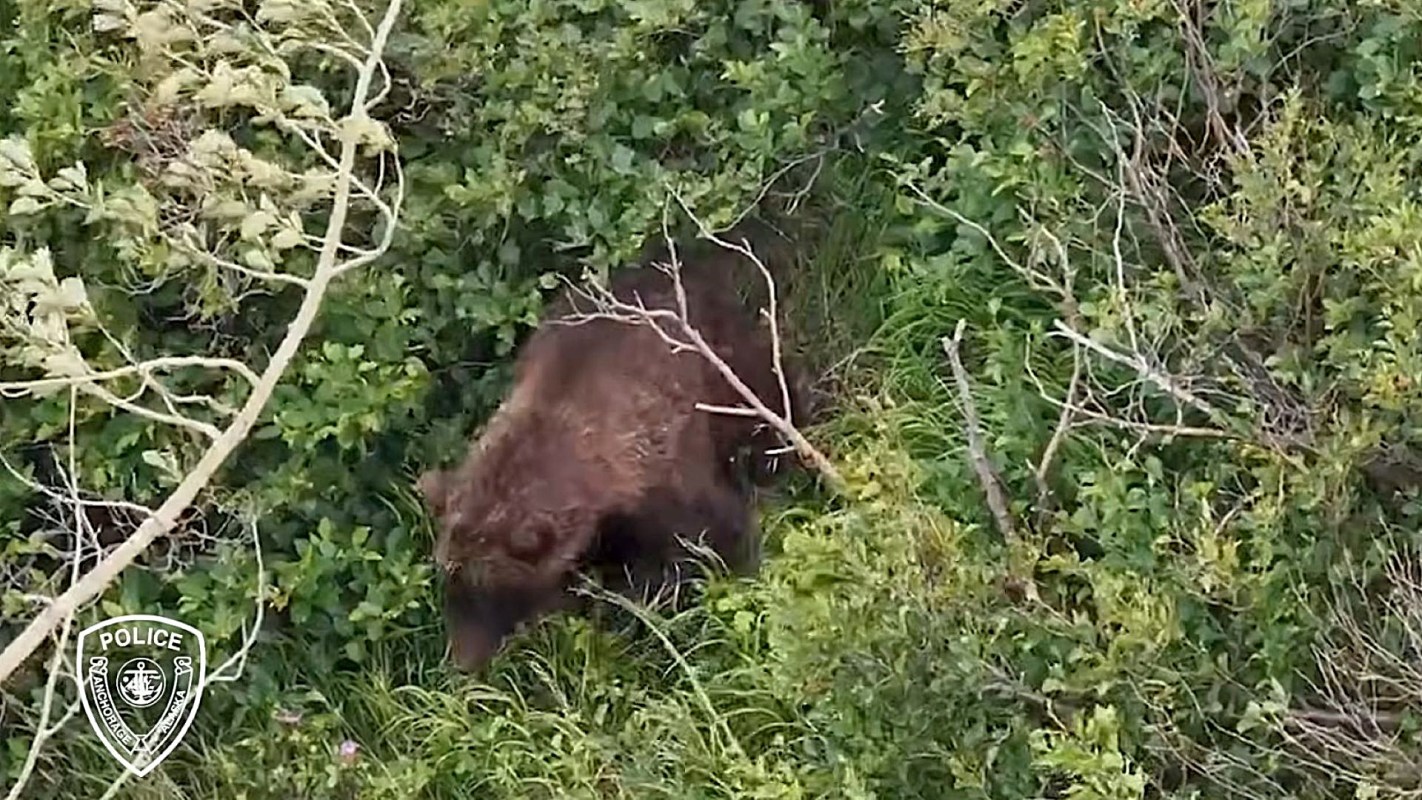
A woman was hospitalized after a Saturday evening grizzly bear attack in Alaska, underscoring the risks that can arise where neighborhoods and human spaces overlap with wild habitats.
What happened?
The Anchorage Fire Department got an emergency call at about 5:30 p.m. Saturday that a woman had been mauled by a brown bear on a narrow trail near the Bear Valley neighborhood, per Alaska's News Source.
First responders reportedly found the woman at the scene of the attack before taking her to a hospital for treatment. Luckily, the Anchorage Police Department later said her injuries were not life-threatening.
The state's Department of Fish and Game told Alaska's News Source that the animal may have been surprised by the individual and her dog, a situation likely made worse by loud winds and weather conditions that softened any noises of their approach.
Later, the ADF&G noted that a brown bear was spotted via drone near where the attack occurred on a hillside.
Why does it matter?
Bear Valley sits on the edge of Anchorage, where homes, roads, pets, and outdoor recreation can bring people into closer contact with wildlife moving through its natural range.
TCD Picks » Quince Spotlight
💡These best-sellers from Quince deliver affordable, sustainable luxury for all




And while bear attacks are rare, they can be traumatic, costly, and dangerous for both people and animals.
It's also critical to note that brown bears are far more dangerous than black bears. Brigham Young University biologist Tom Smith and University of Calgary professor Stephen Herrero told National Geographic that brown bears are 21 times more likely to cause injury in an attack than a black bear.
A person may require emergency medical care and face lingering physical injuries and emotional stress after an attack, while a bear involved in a serious conflict can end up being tracked, relocated, or killed.
Encounters with wild animals are often shaped by human behavior. As explained in a BBC Future report, attacks may be linked in part to people moving deeper into wildlife habitat, surprising animals at close range, or unintentionally attracting them with food, trash, or pets.
Life at the boundary between developed areas and wilderness can carry risks, especially in places like Alaska, where large predators are part of the landscape.
A single encounter like this can disrupt a neighborhood, close trails, and put first responders and wildlife officials on alert.

Get TCD's free newsletters for easy tips, smart advice, and a chance to earn $5,000 toward home upgrades. To see more stories like this one, change your Google preferences here.







