


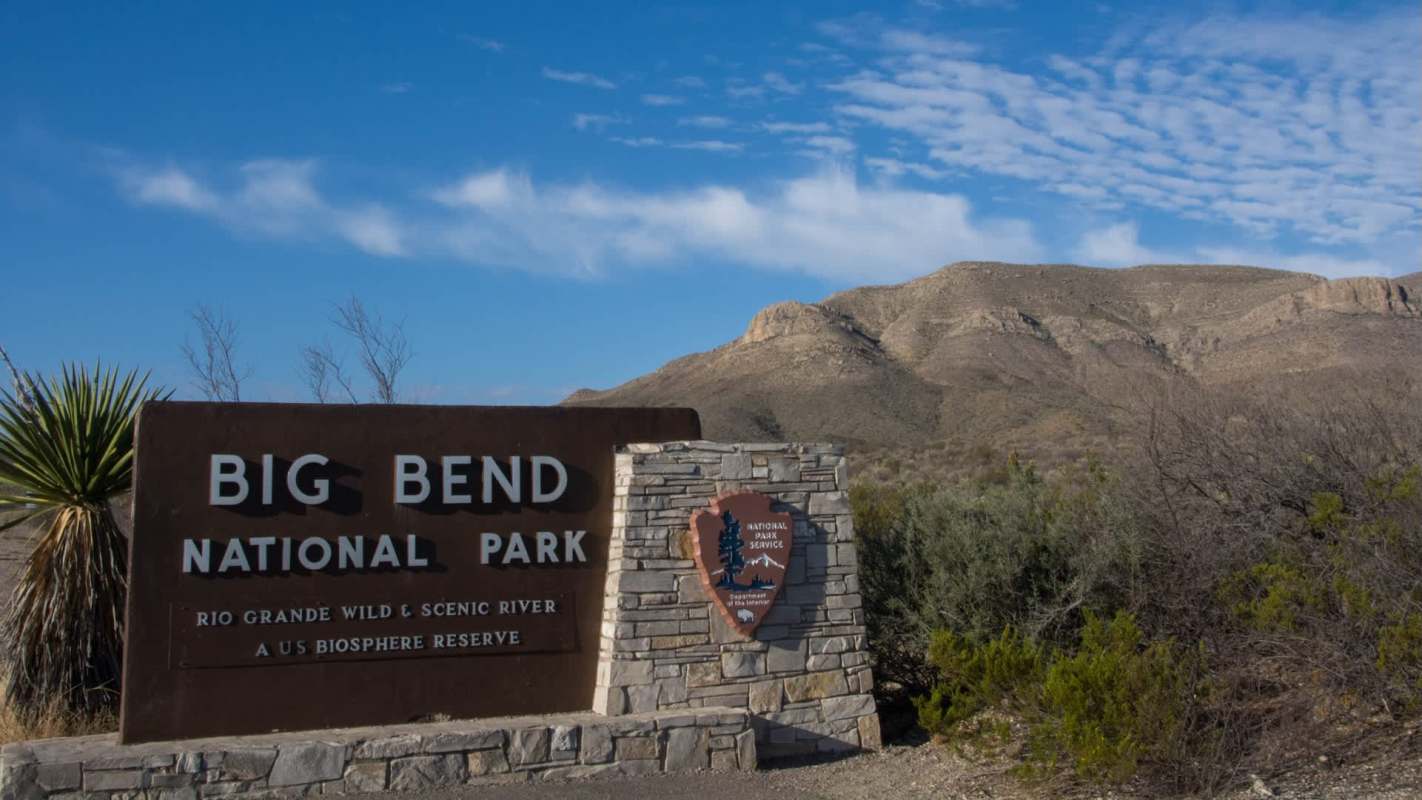
Lawmakers from both parties who tried to stop border wall construction in Big Bend National Park were defeated in the U.S. House Appropriations Committee on Wednesday. The Texas Tribune reported that the decision has unsettled Texans who see the remote desert as much more than a section of the border.
For many residents and visitors in the region, the vote has revived fears that one of the state's most treasured public landscapes could be permanently altered.
What happened?
In a 26-34 party-line vote on Wednesday, the Republican-led House Appropriations Committee rejected an amendment from Rep. Henry Cuellar of Texas that would have prevented the Department of Homeland Security from spending federal money on barriers inside the national park and the state park.
As The Texas Tribune reported, opposition to wall construction in the area had drawn bipartisan support well beyond Washington, including from local residents, ranchers, environmentalists, and Republicans like congressional candidate Brandon Herrera, who said at an Austin rally that "nobody wants this wall in Big Bend."
Cuellar argued that the region sees relatively little migrant traffic compared with other parts of the southern border.
Border Patrol logged 3,096 apprehensions in the Big Bend sector in fiscal year 2025, accounting for just 1.3% of all apprehensions across the southern border.
TCD Picks » Quince Spotlight
💡These best-sellers from Quince deliver affordable, sustainable luxury for all




"Members, I would ask you to consider, out of the 1,200 miles of river that we have in Texas, that we just carve [out] a couple miles," Cuellar said, per The Texas Tribune. "We can use any other technology except for the border wall."
Why does it matter?
Big Bend is one of Texas' most iconic natural areas, drawing visitors from across the country and supporting nearby communities that rely on tourism and outdoor recreation.
A major wall project could disrupt scenic views and alter the park experience that makes the region both economically important and culturally significant. A wall would also have potentially disastrous ecological consequences, interrupting migration, hunting, and feeding patterns for thousands of animals, including endangered species like the long-nosed bat, the black-capped viero, the Rio Grande silvery minnow, and the black bear, which isn't endangered but is highly protected in the park.
Opponents argue that public lands and local communities will be forced to bear the consequences of infrastructure they say is unnecessary in that part of the border.
Earlier this week, Homeland Security waived environmental laws to authorize barrier and road construction in the park, and a contract has already been awarded for a border wall in the region.
Democratic Rep. Veronica Escobar addressed that concern during the committee debate.
"I want you to imagine putting a wall through the Grand Canyon. That is how we in Texas feel about building a wall through Big Bend," Escobar said, per The Texas Tribune. "That not only does it not make sense, but it would destroy a national treasure."
What are people saying?
Opponents say the vote brushed aside an unusually broad coalition of people who do not want the project to move forward.
Cuellar also said the amendment would have simply reinforced the administration's own earlier position, adding, "The administration already said they don't want to put a fence there."
Supporters of rejecting the amendment saw it differently.
"To basically take this option off the table, as a matter of law, is not a responsible way to proceed," Rep. Mark Amodei of Nevada said.

Get TCD's free newsletters for easy tips, smart advice, and a chance to earn $5,000 toward home upgrades. To see more stories like this one, change your Google preferences here.







