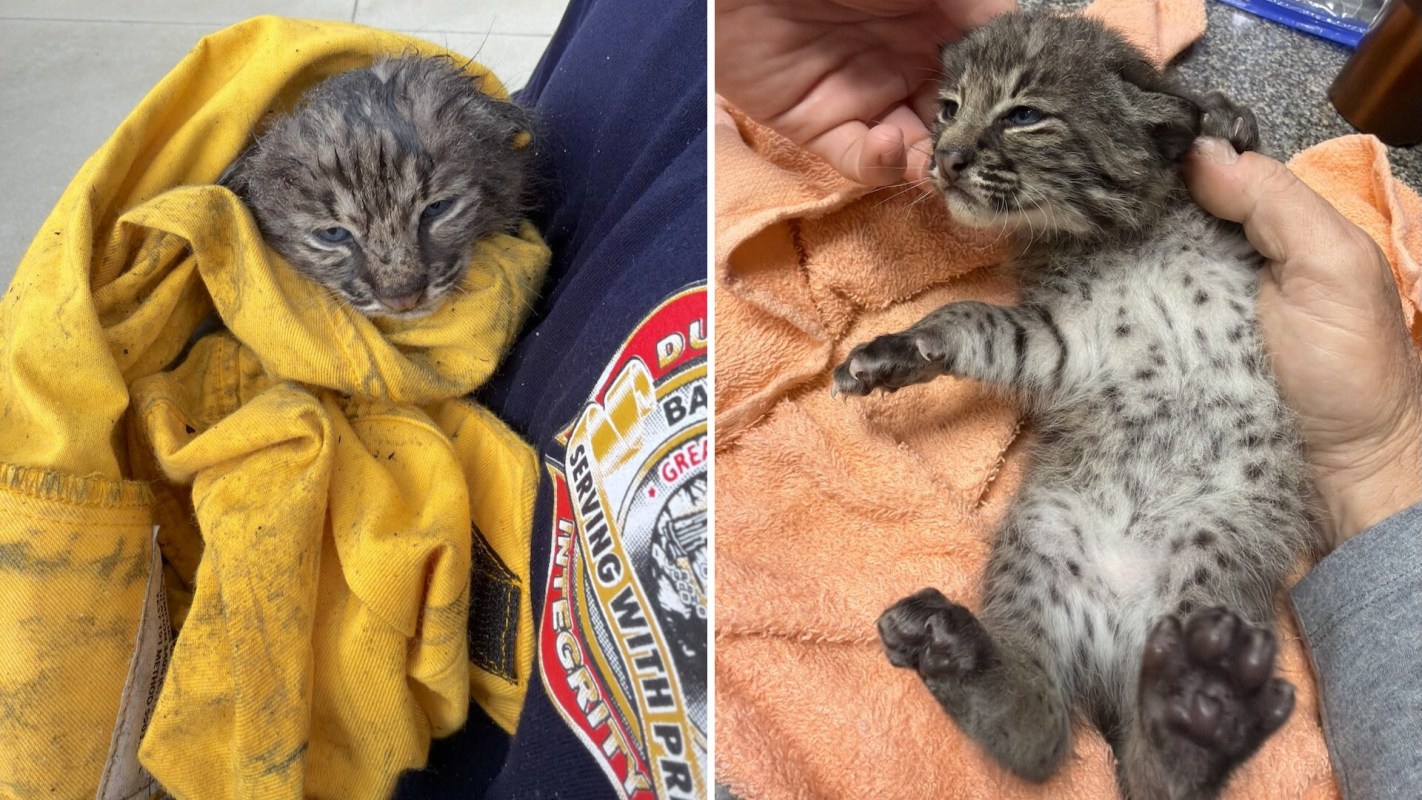
Recovery is underway for a bobcat kitten discovered crying in the aftermath of a Southwest Florida brush fire.
Named Ash by the firefighter who came across her, the young wild cat has already more than doubled her weight and continues to show promising signs of recovery.
What happened?
According to The News-Press, Ash was taken to the Clinic for the Rehabilitation of Wildlife on Sanibel Island after a volunteer with the Bayshore Fire Department found her during a Charlotte County fire response in May. She was alone, crying, and crawling through ash.
By July 7, medical teams at CROW had estimated that Ash was only 10 to 12 weeks old, The News-Press reported. The organization is a nonprofit that cares for Southwest Florida's sick, injured, and orphaned native and migratory wildlife.
After several weeks of intensive care, Ash surpassed 2.8 pounds, up from less than 1.5 pounds when she first arrived.
Dr. Jessica Comolli, CROW's medical and research director and a board-certified specialist in zoological medicine, told The News-Press that Ash is "progressing very well following her rescue."
TCD Picks » Good Store Spotlight
Get 10% off your next purchase with code TCD10



Why does it matter?
Fires can take a severe toll on wildlife, especially young animals that may not be able to escape on their own. Even when flames move through an area quickly, smoke exposure, burns, dehydration, and separation from a mother can all become life-threatening.
Wild animals may need specialized care after disasters. In Ash's case, staff have had to track more than just her weight gain, closely monitoring her lungs to make sure smoke inhalation has not caused lasting damage.
Bobcats are native to Florida, and helping injured or orphaned wildlife recover can support the health of local ecosystems. Because she is still so young, her treatment must also balance medical care with a very different goal than that of a household pet: preparing her to survive independently in the wild.
What's being done?
As part of her intensive rehabilitation, Ash receives three bottle feedings a day, and caregivers are gradually introducing solid food. That routine has helped her regain strength quickly.
The News-Press reported that staff wear face coverings and limit their interaction with Ash to prevent her from imprinting on humans or becoming too comfortable around people.
A bobcat that comes to associate people with food or safety may struggle to survive on its own or could end up in dangerous situations near neighborhoods and roads.
Although she still has more recovery ahead, Ash's outlook has improved dramatically. As Comolli put it, "She's gaining weight, her lungs are clear and she has shown no signs of ongoing complications from smoke exposure. While we continue to monitor her closely, things are looking very promising for her future."

Get TCD's free newsletters for easy tips, smart advice, and a chance to earn $5,000 toward home upgrades. To see more stories like this one, change your Google preferences here.