


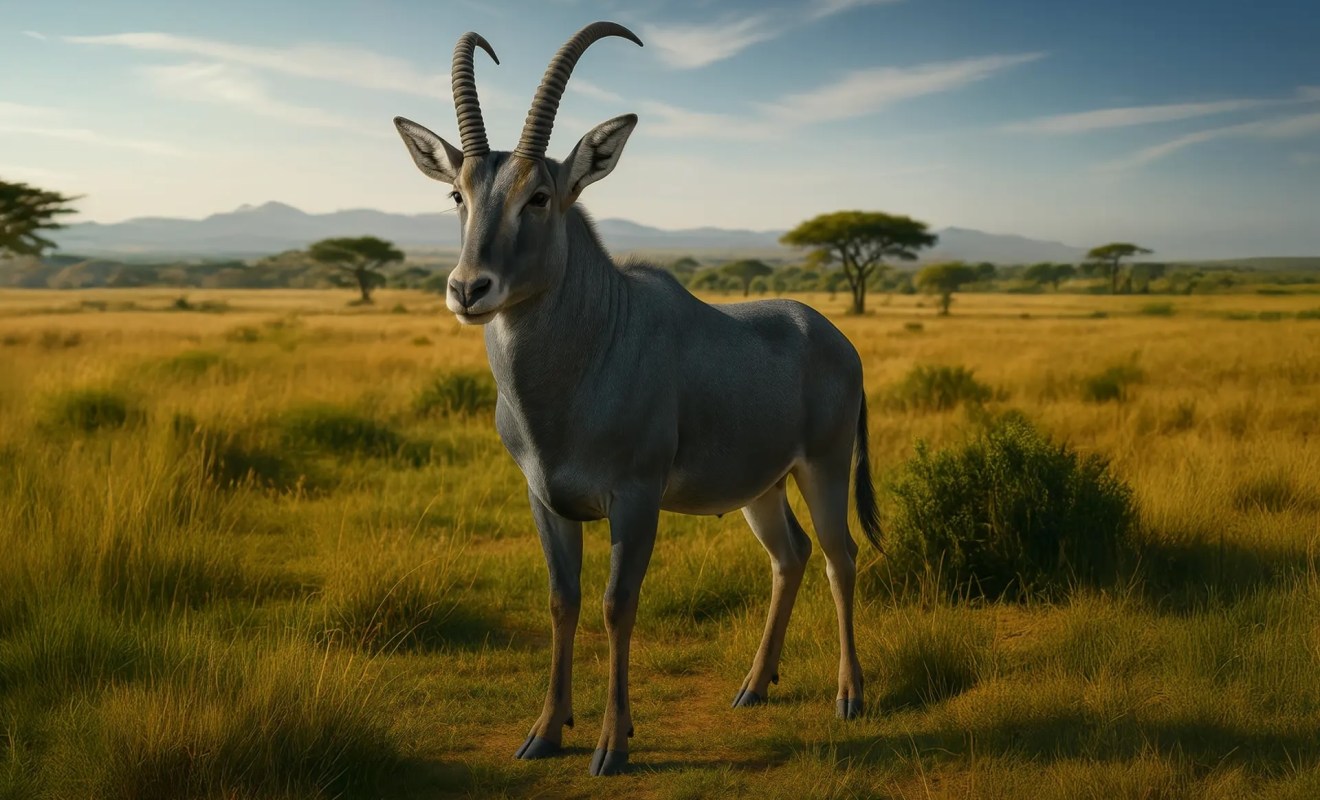
Almost like a ghost from the past, a long-lost animal with a striking blue-gray coat may soon step back into our world.
According to Time, Colossal Biosciences is leading an ambitious effort to revive the bluebuck, an antelope that disappeared 226 years ago. This project follows the company's similar de-extinction work on the dire wolf.
The bluebuck stood around 4 feet tall, with long, sharp, backward-curved horns and a distinctive grayish-blue coat — a trait that ultimately contributed to its downfall. European colonists hunted the species to extinction by 1800.
Now, scientists are attempting to reverse that history using modern genetics.
The team plans to reconstruct the bluebuck by editing the DNA of its closest living relative, the roan antelope. By identifying the genetic differences behind the bluebuck's defining traits, researchers aim to modify living cells and eventually produce a calf that closely resembles the extinct animal.
"We filtered them and got to about 3 million variants," said Colossal genome engineer Scott Barish, per Time. "Then we got it down to 2.4 million truly functional regions of the genome and then narrowed our focus to what are truly key phenotypes and got down to about 20,000. It's so much more manageable but still an imposing number."
Get cost-effective air conditioning in less than an hour without expensive electrical work The Merino Mono is a heating and cooling system designed for the rooms traditional HVAC can't reach. The streamlined design eliminates clunky outdoor units, installs in under an hour, and plugs into a standard 120V outlet — no expensive electrical upgrades required. And while a traditional “mini-split” system can get pricey fast, the Merino Mono comes with a flat-rate price — with hardware and professional installation included. |

Beyond the scientific feat, the effort is fueling broader conversations about conservation. Many antelope species are already facing steep population declines, and researchers hope the tools developed through de-extinction could help protect species that still exist today.
In that sense, reviving one animal could help others from disappearing.
"Bringing the bluebuck back is only half the work," said Colossal CEO and co-founder Ben Lamm, per Time. "The other half is making sure the world is ready to protect it when it returns. That means working across governments, conservation organizations, and international regulatory bodies to establish formal protections that follow the bluebuck wherever it lives, not just in a single reserve, but across the southern African landscape it once called home."

Get TCD's free newsletters for easy tips, smart advice, and a chance to earn $5,000 toward home upgrades. To see more stories like this one, change your Google preferences here.
TCD Picks » Quince Spotlight
💡These best-sellers from Quince deliver affordable, sustainable luxury for all




Cool Picks






