


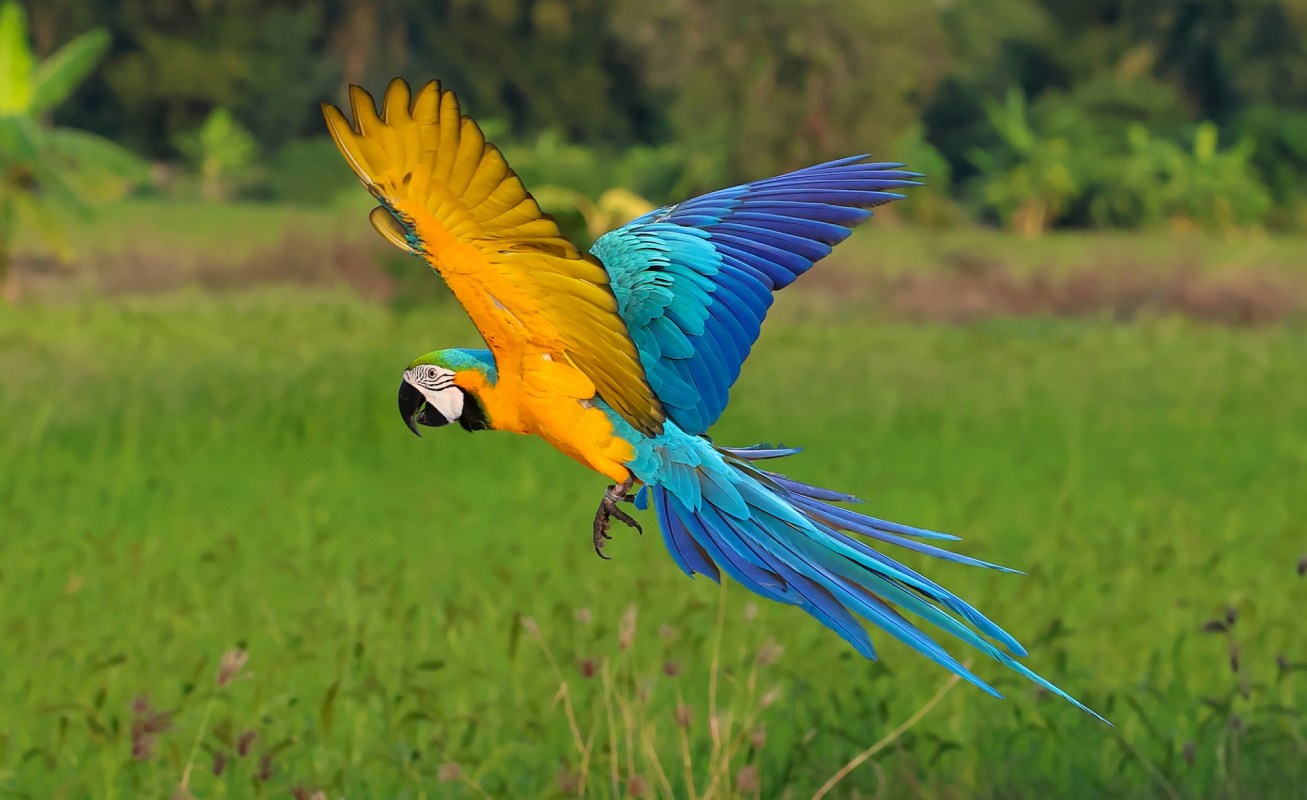
Images of the vibrant macaws might come to mind when thinking of Brazil's Rio de Janeiro, or maybe even the zany domesticated blue macaw from the animated movie "Rio."
But these blue-and-yellow macaws have been largely absent from the city for nearly two centuries. That is, until a new initiative aiming to "refauna," or restore lost species, Tijuca National Park brought back these magnificent parrots, as reported by The Guardian.
Tijuca National Park is one of the largest of its kind, spanning 10,000 acres of southeastern Brazil.
Brazil's Atlantic Forest, home to Tijuca, was decimated in the 1800s for commodities like coffee and charcoal. Deforestation and wildlife trafficking nearly wiped out the blue-and-yellow macaw, along with other once-abundant species like tapirs, jaguars, and peccaries.
In the 1860s, Emperor Don Pedro II ordered trees to be replanted in Tijuca. The replanting of 100,000 trees here is thought to be one of the earliest tropical reforestation initiatives. Despite these ecological efforts managing to restore the water supply of Rio de Janeiro, they failed to bring back the flashes of blue and gold to the forest's canopy.
Nearly 150 years later, in 2010, a team of researchers, nature reserve managers, and animal handlers joined forces for the first refaunation program in the Brazilian Atlantic Forest. Their efforts began with delicate precision in reintroducing the red-humped agouti and brown howler monkey to play the critical role of dispersing seeds.
TCD Picks » Quince Spotlight
💡These best-sellers from Quince deliver affordable, sustainable luxury for all




With early signs of success for this low-cost and effective method to breathe life back into the forest, the team brought three female and one male blue-and-yellow macaws to the park. Through a series of releasing and recapturing these macaws, Refauna can closely monitor the reintroduction of these birds, and hopefully, the ecosystem benefits they bring to Tijuca.
An additional six macaws will be brought to the park soon. The Refauna team plans to release 50 of these magnificent birds in Tijuca.
"Reintroducing species is not simply about returning animals to the forest. It is about rebuilding ecological relationships and ensuring that these species can once again perform their ecological roles," said Vanessa Kanaan, director of Instituto Fauna Brasil.
Along with the agouti's razor-sharp teeth and the large droppings of howler monkeys, the blue-and-yellow macaw also plays a critical role in seed dispersal, as its powerful beak can crack open tough seeds and its ability to fly can transport seeds over significant distances.
"They can also help regenerate other forests by taking seeds from Tijuca outside the park," said Luisa Genes, Refauna's scientific director.
The four macaws — named Fernanda, Selton, Fatima, and Suel — will need to further adapt to the wild after having been rescued from captivity. The team is focusing on rebuilding their muscles after years in cages to encourage flying, feeding them native fruits so the parrots will be able to forage for themselves, and discouraging social interactions with humans.
"The macaw really is a symbol of our efforts to bring life back to Tijuca," says Marcelo Rheingantz, executive director of Refauna. "My dream is that one day they will fly far away from here and we will be able to see them from all over the city."

Get TCD's free newsletters for easy tips, smart advice, and a chance to earn $5,000 toward home upgrades. To see more stories like this one, change your Google preferences here.







