


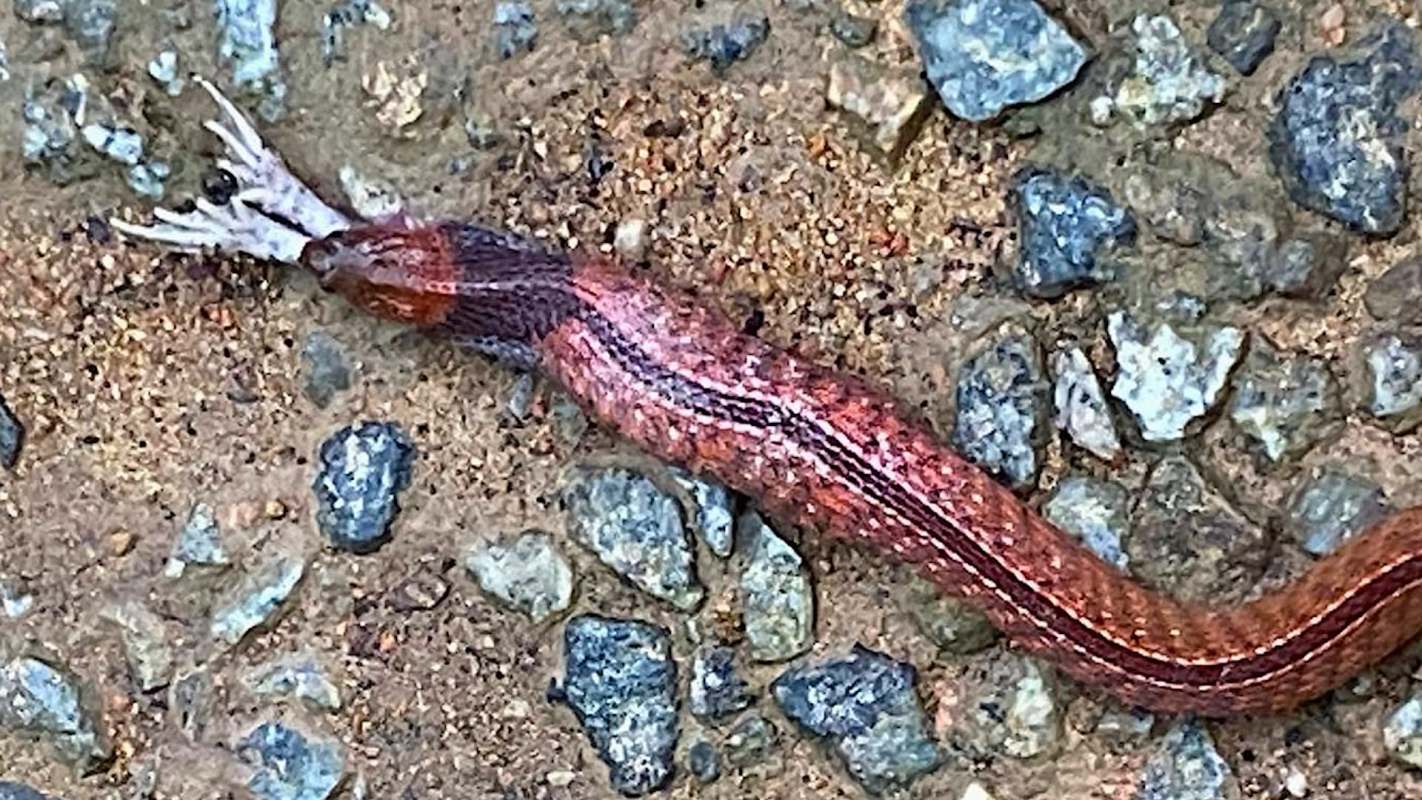
An unusual snake encounter at Singapore's MacRitchie Reservoir has drawn online attention as experts stress that people should stay far away from the venomous and poisonous animal.
What happened?
Identified as a blue-necked keelback, the reptile carries a rare double distinction: it is both venomous and poisonous, with the ability to inject and release toxins.
In the photo posted by Mat Chay on August 1, seen in the primary image above, what looked like partially swallowed prey was still sticking out of its mouth, igniting conversation in the Singapore Wildlife Sightings Facebook group, according to The Straits Times.
By August 4, Singapore's National Parks Board said it knew about the sighting on the MacRitchie Nature Trail and confirmed how dangerous the species is.
Mr. How Choon Beng, group director of wildlife management at NParks, said, "The blue-necked keelback snake can be found in mature secondary, primary, and swamp forests of the Central Nature Reserves and surrounding nature parks."
The species is considered locally vulnerable. Adults reach about 30 inches (75 centimeters) long and are recognizable by an orange-brown body, a blue neck, and a dark marking that narrows into a line down the back, according to The Straits Times. Dr. Alex Figueroa from the International Commission on Zoological Nomenclature Secretariat at the Lee Kong Chian Natural History Museum, NUS, said the snake is usually found near forest streams and feeds mainly on frogs.
TCD Picks » Quince Spotlight
💡These best-sellers from Quince deliver affordable, sustainable luxury for all




Why does it matter?
As BBC Future has reported, encounters with wild animals are often shaped by human activity, particularly when people move deeper into natural areas or disturb animals while they are feeding, hiding, or trying to retreat.
A startled snake may respond defensively when disturbed, putting all parties in danger. More human interactions could make survival more difficult for the vulnerable species in an already fragmented landscape.
What can I do?
If you see a snake on a trail, experts say the safest response is to remain calm, back away slowly at least 15 feet, and give the animal room to retreat. Never approach it or try to handle it — even to take a closer photo. This is good advice for all wild animals.
Figueroa warned, "The species is known to be venomous, so any handling should be left to experts." He added, "For safety, it is encouraged that the public leaves all snakes alone."
Pet owners are also urged to keep animals on a short leash so they do not rush toward the snake and trigger a defensive response. That is especially important in forested parks and nature reserves, where wildlife encounters are more likely.
People are further encouraged to leave snakes alone when they are feeding. Dr. Figueroa warned that disturbing them at that moment can interrupt a meal and force the animal into an energy-draining escape response.
Anyone who needs help with a wildlife-related issue in Singapore can contact NParks' Animal Response Centre at 1-800-476-1600.

Get TCD's free newsletters for easy tips, smart advice, and a chance to earn $5,000 toward home upgrades. To see more stories like this one, change your Google preferences here.







