


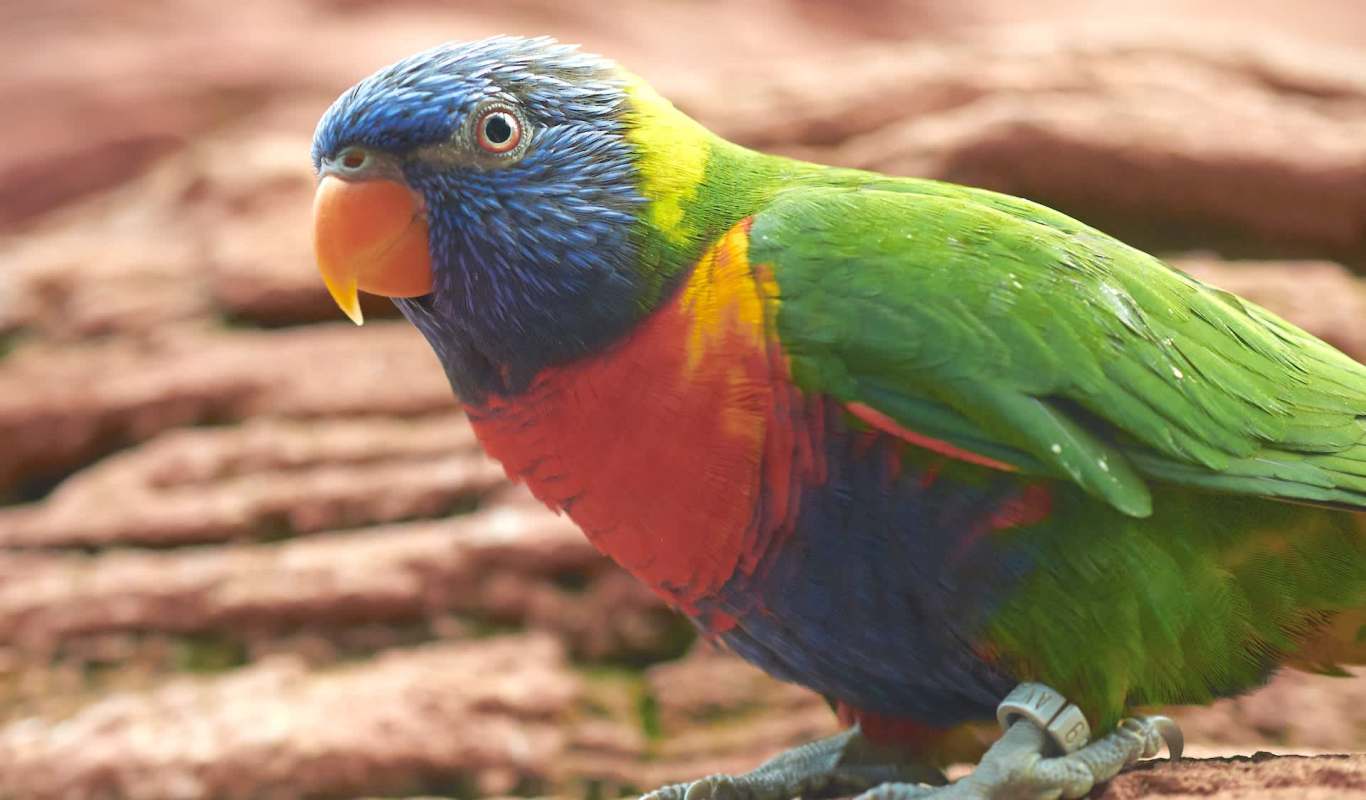
A rare find emerged from a 14-day journey over steep limestone on Indonesia's Buru Island when mountaineers and conservationists managed to photograph the blue-fronted lorikeet.
Because the parrot has been photographed only once in more than a century, the images constitute a major rediscovery.
What happened?
A team led by the Indonesian mountaineering group Kanal Buru reached the 2,700-meter (8,858-foot) summit cloud forest of Mount Kapalatmada in April and documented the elusive bird there, according to Mongabay. The expedition also included researchers from American Bird Conservancy, Birdtour Asia, and Yayasan Planet Indonesia.
Before this latest encounter, the bird had been photographed only once, in 2014, during a birding tour led by Craig Robson. The species Charmosynopsis toxopei occurs only on Buru and was originally described from seven museum specimens collected in the 1920s, after which it largely disappeared from view.
The newly released photos, accessible through Cornell Lab's eBird, show the small parrot in a dense mountain forest, with its vivid lime-green feathers and orange beak clearly visible. The team also recorded its high-pitched calls for the first time.
Why does it matter?
The discovery gives conservation groups, local communities, and decision-makers better information about where the bird still survives and what it may need.
TCD Picks » Quince Spotlight
💡These best-sellers from Quince deliver affordable, sustainable luxury for all




The blue-fronted lorikeet remains vulnerable. The International Union for Conservation of Nature listed it as data-deficient in 2024, meaning there still is not enough information to fully understand its status.
"Rare sighting records suggest a highly restricted habitat use," Benny A. Siregar of Burung Indonesia warned, per Mongabay. "The primary challenge facing the blue-fronted lorikeet is that they are facing threats that remain largely unknown. This bird inhabits areas under continuous pressure from deforestation."
Healthy forests help support cleaner air and water, store carbon, and can strengthen local livelihoods through conservation and ecotourism rather than habitat destruction.
What are people saying?
John C. Mittermeier, director of the Search for Lost Birds at American Bird Conservancy, described the moment of discovery. "We noticed two small birds fly into a nearby tree, so I picked up my binoculars to see what one of them was. I short-circuited with excitement when I realized it was a blue-fronted lorikeet."
Sumaraja, a Birdtour Asia guide and tour leader, said in a statement to ABC that the encounter was overwhelming: "When we saw the blue-fronted lorikeet, I couldn't hold back my tears. Every day, I almost cried with joy at seeing that these birds still exist."
Expedition leader Handoko said, per ABC: "I hope to share these experiences to empower people in Buru to protect this unique area."

Get TCD's free newsletters for easy tips, smart advice, and a chance to earn $5,000 toward home upgrades. To see more stories like this one, change your Google preferences here.







