


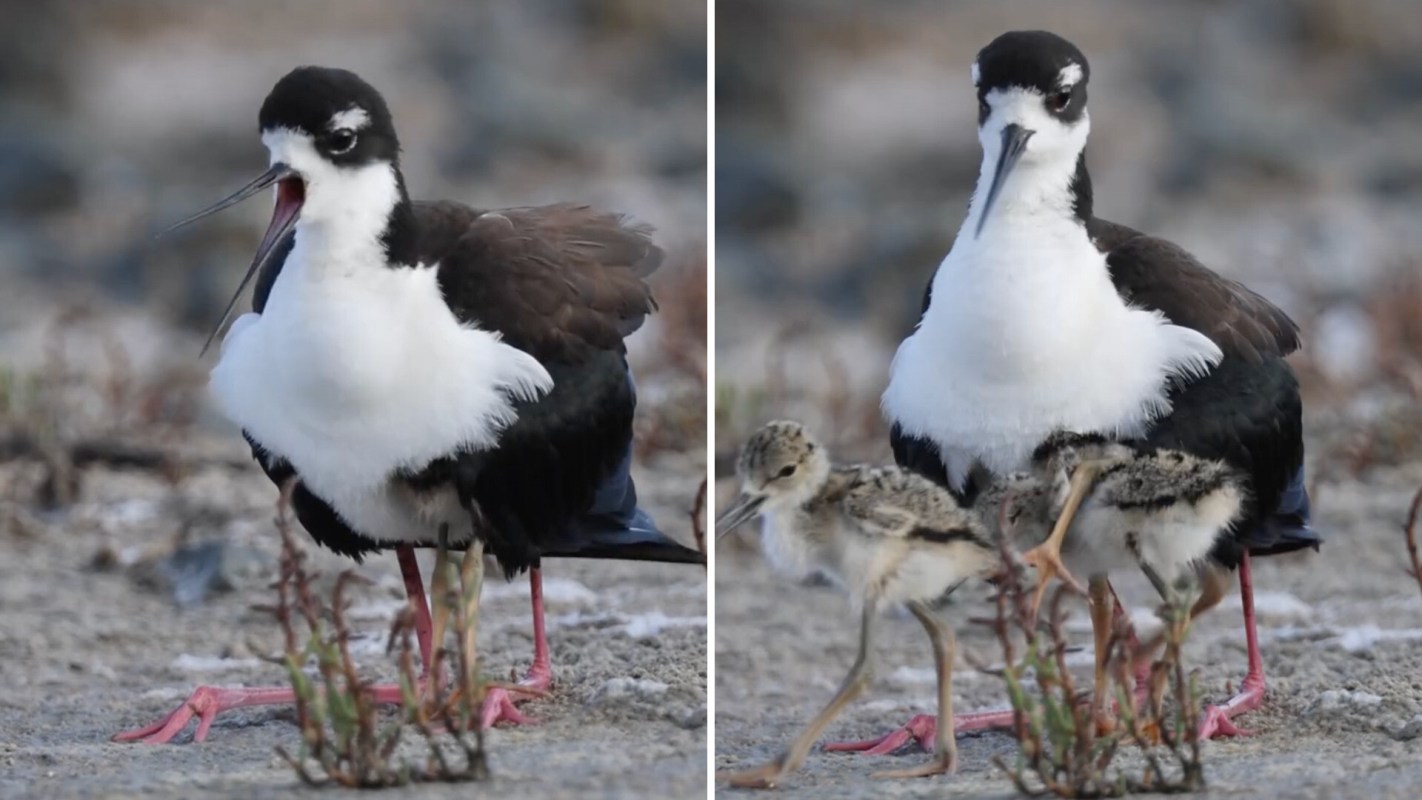
Online viewers are falling for tiny black-necked stilt chicks after a Bay Area bird photographer captured them up close at the Don Edwards refuge on San Francisco Bay.
The footage also highlights the wildlife that still lives alongside the region's urban activity.
What happened?
In an Instagram post, the Bay Area photographer captured a mother black-necked stilt with four chicks under her body, completely invading her space, as kids do. All that can really be seen of the chicks is their little bodies and legs bunched together. Then, one by one, they started coming out from under mom and walking away.
One commenter captured the surprise and humor of the moment, writing, "Did not know there is a spider with feathers lol so cute. Mother nature and her fascinating way."
The post also brings attention to the Don Edwards refuge, where wildlife sightings can reveal animals many people might otherwise miss.
Why does it matter?
Black-necked stilts are closely tied to wetland environments, and a mom with her chicks in a protected refuge shows what these landscapes can support. It is not just a stopover for birds passing through — it is also the kind of habitat where wildlife can nest and raise young.
TCD Picks » Quince Spotlight
💡These best-sellers from Quince deliver affordable, sustainable luxury for all




Wetlands play an outsized role in supporting biodiversity. A refuge so close to city life makes that conservation work visible on a local level. Not every memorable wildlife encounter requires long-distance travel. Sometimes it can happen at a refuge close enough for an afternoon visit.
What can I do?
Protected spaces such as the Don Edwards refuge on San Francisco Bay are part of the ongoing effort to preserve habitat for birds and other wildlife.
Exploring nearby refuges, marshes, or shoreline trails responsibly can help protect wildlife. Keeping a respectful distance from chicks and nesting birds is especially important, since young animals are vulnerable to stress and disturbance.
Using binoculars or a zoom lens instead of moving closer can help people enjoy wildlife without interfering with it. Following posted trail rules and seasonal closures is another simple way to protect breeding animals.
People can also support wetland conservation through local volunteer events, habitat restoration efforts, or community groups focused on protecting nearby natural areas.
"Absolutely adorable," one commenter wrote. Another kept it simple: "So awesome!"

Get TCD's free newsletters for easy tips, smart advice, and a chance to earn $5,000 toward home upgrades. To see more stories like this one, change your Google preferences here.







