


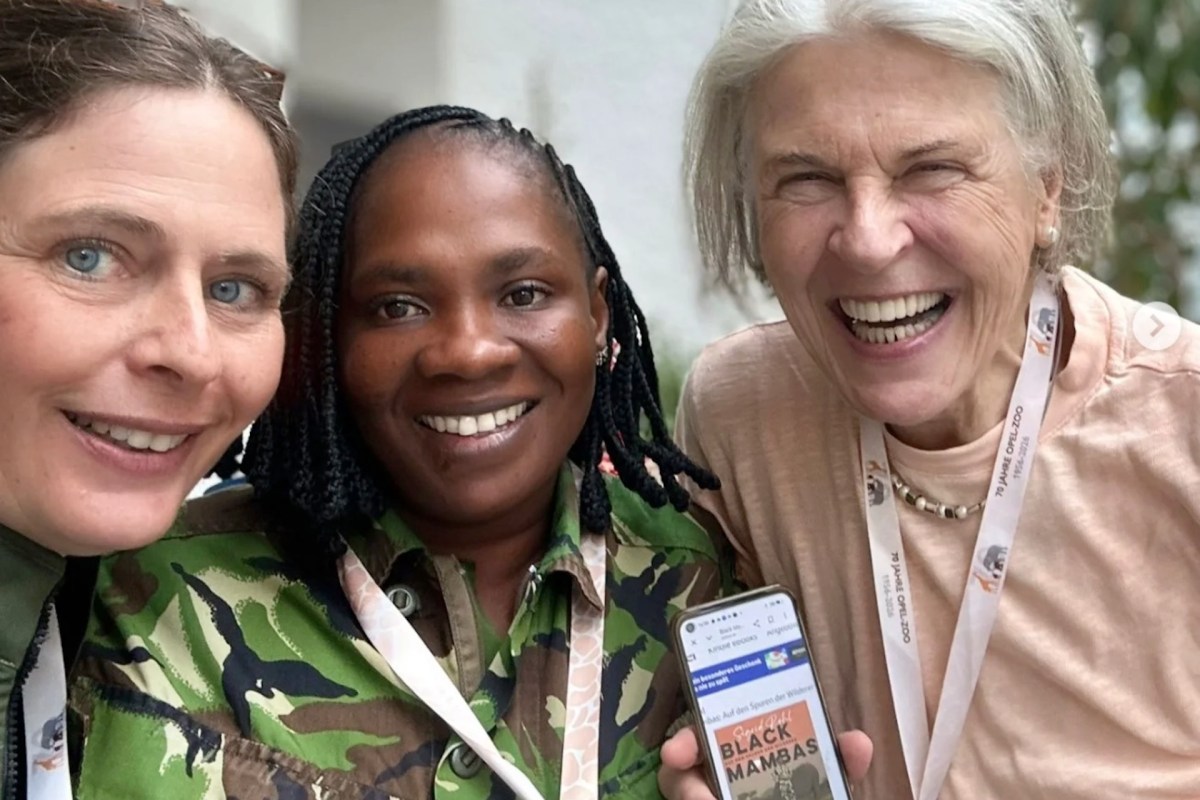
A major international moment has arrived for the Black Mambas, a community-based anti-poaching unit known for its work protecting wildlife in South Africa — and for being made up entirely of women.
In an Instagram post, the group announced that it attended an annual zoo and aquarium gathering for the first time, describing the visit as an important milestone in sharing its conservation work on a global stage.
"For the first time, @theblackmambas have the honour of attending the EAZA Conference in Germany — an important milestone in sharing our conservation story on an international platform," it wrote. "A heartfelt thank you to organizers and for making this opportunity possible and supporting meaningful global conservation connections!"
The post showed Sgt. Collet Ngobeni smiling with two other attendees.
Stefanie Reska is the head of conservation and Center for Special Survival Wilhelma coordinator at Wilhelma Stuttgart, a zoological-botanical garden.
Sigrid Röhl is the author of a book about the Black Mambas.
TCD Picks » Quince Spotlight
💡These best-sellers from Quince deliver affordable, sustainable luxury for all




The significance of the appearance was clear. The focus was on building meaningful international relationships and elevating community-led conservation work to a broader audience.
That matters because conservation efforts often depend on visibility, trust, and collaboration.
When local or community-rooted groups are invited to international forums, they gain opportunities to share on-the-ground experience with researchers, policymakers, and conservation organizations that work in various ways and across different regions.
Those exchanges can strengthen future partnerships, increase public awareness, and attract support for initiatives that might otherwise remain local or under-resourced.
Rather than framing the moment in institutional terms, the Black Mambas emphasized the people involved, particularly Ngobeni and the personal reception she received.
It's a reminder that conservation work is driven by individuals and relationships built over time.
The Black Mambas are stepping onto a larger stage and directly sharing their story with the international conservation community.
That kind of visibility can open doors to collaboration and ensure community-driven conservation remains part of global discussions about biodiversity protection.
Social media users responded with encouragement in the comments.
"Congratulations," one user wrote. "What a great opportunity."
"This is great! Your model is so unique; widespread attention is definitely warranted," another added.

Get TCD's free newsletters for easy tips, smart advice, and a chance to earn $5,000 toward home upgrades. To see more stories like this one, change your Google preferences here.







