


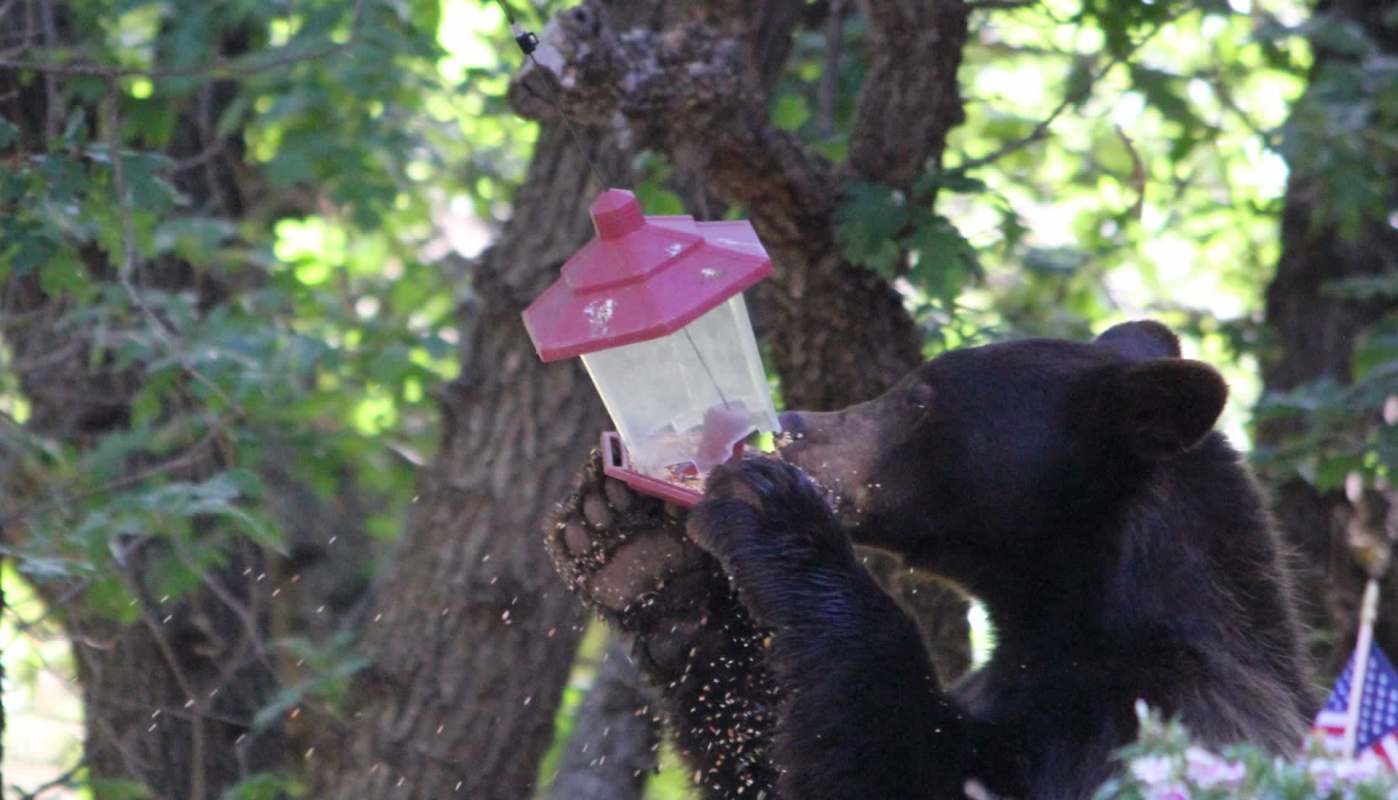
Black bear sightings often become more common in early summer. Bears come out of hibernation with their energy reserves drained, and that hunger pushes them to cover more ground in search of calories they can get easily.
What's happening?
As National Geographic reported, this can put them on a collision course with humans, especially in neighborhoods where backyards are stocked with bird seed, pet food, and unsecured trash.
Kari Kingery, wildlife program manager for the Confederated Salish and Kootenai Tribes, told National Geographic that "during hibernation, black bears are essentially in torpor or asleep for three to four months," and when they wake up, "they're very hungry."
This hunger remains consistent for months as bears maintain a caloric surplus to get back to their base weight. Kingery told National Geographic that during this time, food easily available to humans, such as bird feed, open garbage cans, and pet food left on porches, can be enticing to the animals.
Home security footage is also making these visits more visible. Rae Wynn-Grant, a National Geographic Explorer and co-host of Mutual of Omaha's Wild Kingdom Protecting the Wild, noted that Ring cameras and similar doorbells now capture animals that once may have gone unnoticed. At the same time, it is mating season, so male bears in particular are moving around more.
Why does it matter?
Spotting a bear on the porch or in the yard can feel like an emergency. But Wynn-Grant emphasized that "There's a huge difference between a bear sighting and a bear conflict," adding that bears generally do not want to fight.
TCD Picks » Quince Spotlight
💡These best-sellers from Quince deliver affordable, sustainable luxury for all




Many of these encounters are shaped by human behavior. Easy access to calorie-dense food around homes can train bears to return again and again, increasing the risk of property damage, frightening encounters, and danger for both people and wildlife. In many cases, the issue is not that bears are seeking humans out, but that neighborhoods unintentionally become attractive food sources.
The broader context matters too. Black bears now number more than 300,000 in the United States, and the species has recovered across much of its historic range after earlier declines linked to unregulated hunting and deforestation. Add in the spread of home cameras, and a rise in sightings is hard to avoid.
What can I do?
If you see a black bear, the advice is to stay composed. National Geographic summarized it this way: do not run, since that can trigger a chase response; instead, back away steadily, make yourself look larger, and create noise.
If an encounter worsens, both experts recommended bear spray. Wynn-Grant said, "Bear spray is best-deployed before the bear is running at you," while Kingery explained that the capsaicin targets a bear's highly sensitive nose.
To make homes less tempting to bears, experts recommend cleaning outdoor grills and securing trash in bear-proof garbage containers. Bird feeders can be a major pull for bears.
On that point, Wynn-Grant added, "I know you really love your bird feeder because it attracts some really cool birds, but it is also a calorie heaven for black bears."

Get TCD's free newsletters for easy tips, smart advice, and a chance to earn $5,000 toward home upgrades. To see more stories like this one, change your Google preferences here.







