


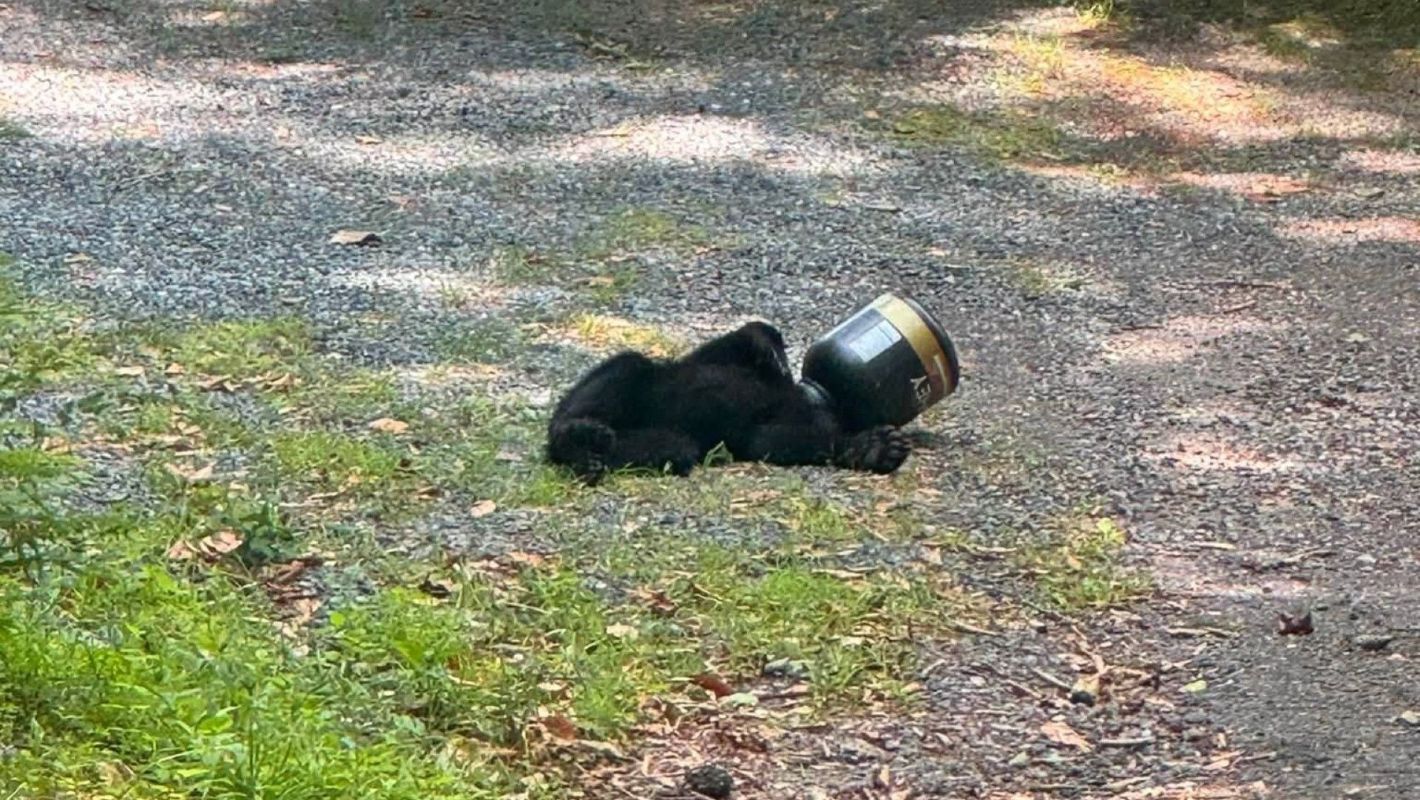
In Bristol, New Hampshire, a black bear cub escaped a dangerous situation after getting its head stuck inside a plastic jug, with police officers stepping in to help.
The cub was ultimately freed and released safely.
What happened?
Last Thursday, after receiving reports that a young black bear had a plastic jug stuck over its head, Bristol police could not immediately rush in to help, as the cub's mother was close by.
According to local news outlet NBC 5, officers initially waited for a New Hampshire Fish and Game biologist to arrive because approaching a bear cub while its mother remains nearby is incredibly risky.
But that assistance had not yet arrived when a Bristol Police Department lieutenant saw a moment to move in without attracting the mother bear's attention. He grabbed the cub, put it in his cruiser, and drove it a safe distance away, the local news reported.
The lieutenant and the chief of police then cut the jug off of the baby bear's head and returned the cub to the woods so it could reunite with its mother.
TCD Picks » Quince Spotlight
💡These best-sellers from Quince deliver affordable, sustainable luxury for all




It was an unusual call for the officers, but luckily, the cub was freed before the plastic container could cause more serious harm.
Why does it matter?
The danger for the cub was a result of human activity. A discarded plastic jug can pose a serious threat to wildlife, especially to hungry young animals drawn to food smells or leftover residue inside containers.
When animals become trapped in containers or other trash, the consequences can quickly turn severe. A container stuck over an animal's head can interfere with breathing, eating, seeing, or escaping predators. For a cub, even a short period of restriction can become life-threatening.
Improperly stored garbage can also draw bears closer to roads, homes, and people, increasing the likelihood of risky encounters.
What can I do?
Everyday disposal habits can have consequences far beyond the trash can.
Securing and properly disposing of waste can help keep animals and people safe from human-wildlife encounters. Rinsing containers, placing trash in closed bins, and avoiding leaving food outside can reduce the chances that wildlife will investigate.
In bear country, that also means taking extra precautions with garbage, compost, pet food, and birdseed. If animals learn that neighborhoods are easy places to find food, they are more likely to return — and more likely to end up in situations that may be unsafe for both people and wildlife.
Regardless, untrained individuals should not attempt to handle distressed wildlife on their own. Even when an animal appears helpless, a nearby parent or a panicked reaction can make the situation dangerous very quickly. Wildlife professionals are usually the safest first call.

Get TCD's free newsletters for easy tips, smart advice, and a chance to earn $5,000 toward home upgrades. To see more stories like this one, change your Google preferences here.







