


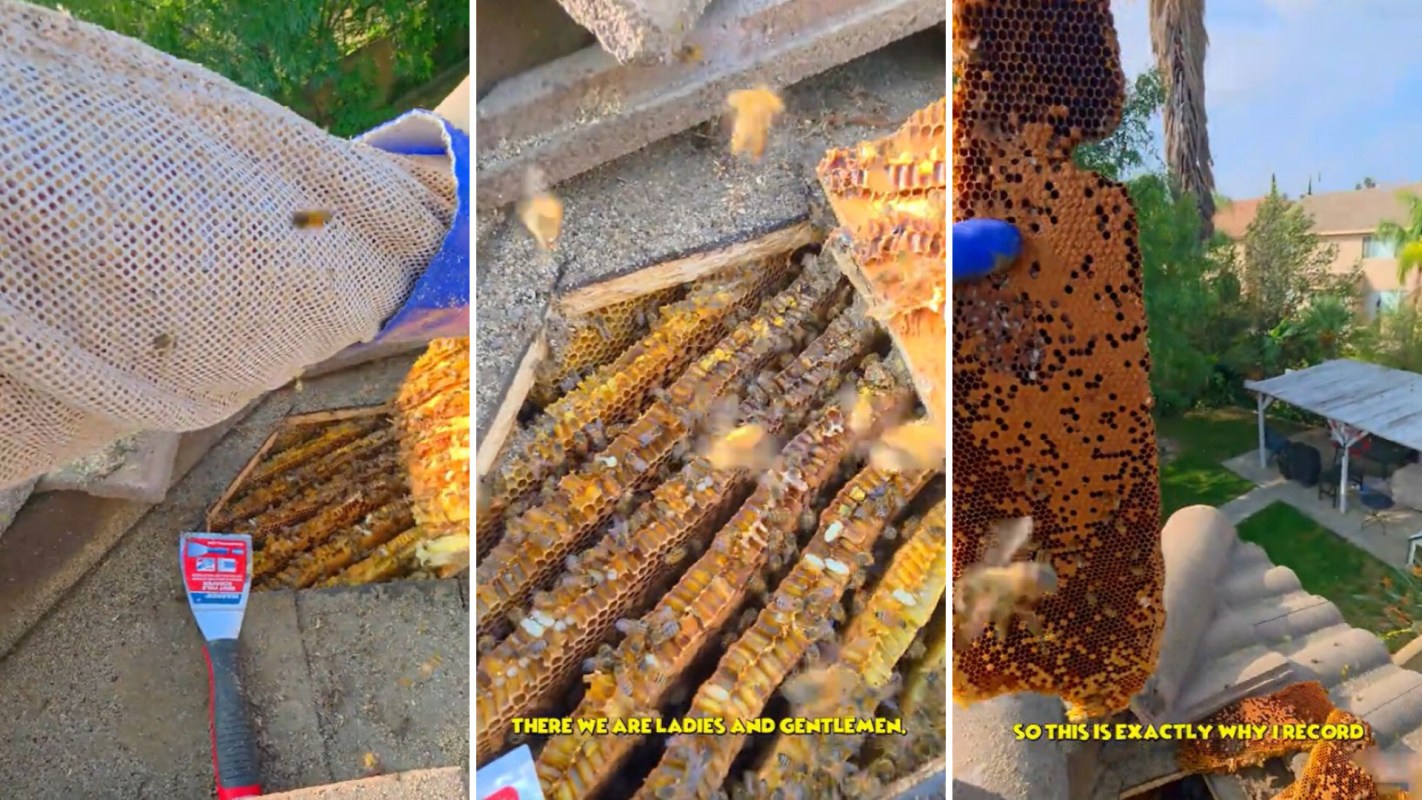
What began as an apparently routine bee-removal call became a far larger discovery once a beekeeper lifted part of the roof and uncovered honey in several roof cavities.
What happened?
On TikTok, Southern California bee-removal creator Eli (@eli_thebeeguy) shared footage of a call that quickly escalated.
@eli_thebeeguy For Bee Removal Call Eli (626) 487-6052 I thought this was a normal bee removal until I opened the roof. Then it just kept getting bigger. Honey everywhere, multiple roof cavities, and a huge hidden colony. This is why I never assume a hive ends where I first find it. #Bees #nature #wildlife #HoneyBees #SaveTheBees #SouthernCalifornia #beetok #beekeeper ♬ original sound - 𝙀𝙡𝙞_𝙩𝙝𝙚𝘽𝙚𝙚𝙂𝙪𝙮
The creator summed up the surprise in the caption: "I thought this was a normal bee removal until I opened the roof. Then it just kept getting bigger. Honey everywhere, multiple roof cavities, and a huge hidden colony. This is why I never assume a hive ends where I first find it."
Rather than stopping at one visible hive, the removal revealed a larger, more complex colony occupying multiple parts of the structure.
Honey found across multiple roof cavities suggests the bees had likely been there for quite some time — long enough for the house itself to become part of their nesting space.
Why does it matter?
Bees do not end up inside roofs entirely by accident. Human-built structures can create warm, sheltered cavities that resemble natural nesting sites, especially in places where development has reduced available habitat. In that sense, situations like this may be partly tied to the way people reshape landscapes and the ways animals are forced to adapt.
TCD Picks » Quince Spotlight
💡These best-sellers from Quince deliver affordable, sustainable luxury for all




For homeowners, a hidden colony can also become a costly problem. Significant amounts of honey and wax inside walls or roofs can attract other pests, stain building materials, and make repairs more difficult even after the bees are removed.
Calling a professional instead of attempting a DIY fix can reduce safety risks for both the people living in the home and the pollinators themselves.
Rather than simply destroying a colony, trained removers may be able to relocate bees while helping prevent further structural damage.
What are people saying?
The comment section reflected a mix of admiration and curiosity.
One commenter wrote, "Do the repairs too? Ur goated."
Another said, "I have followed you for a long time… Always wondered what you do with all the honey?"
A third commenter simply said, "How wonderful to see so many bees."

Get TCD's free newsletters for easy tips, smart advice, and a chance to earn $5,000 toward home upgrades. To see more stories like this one, change your Google preferences here.







