


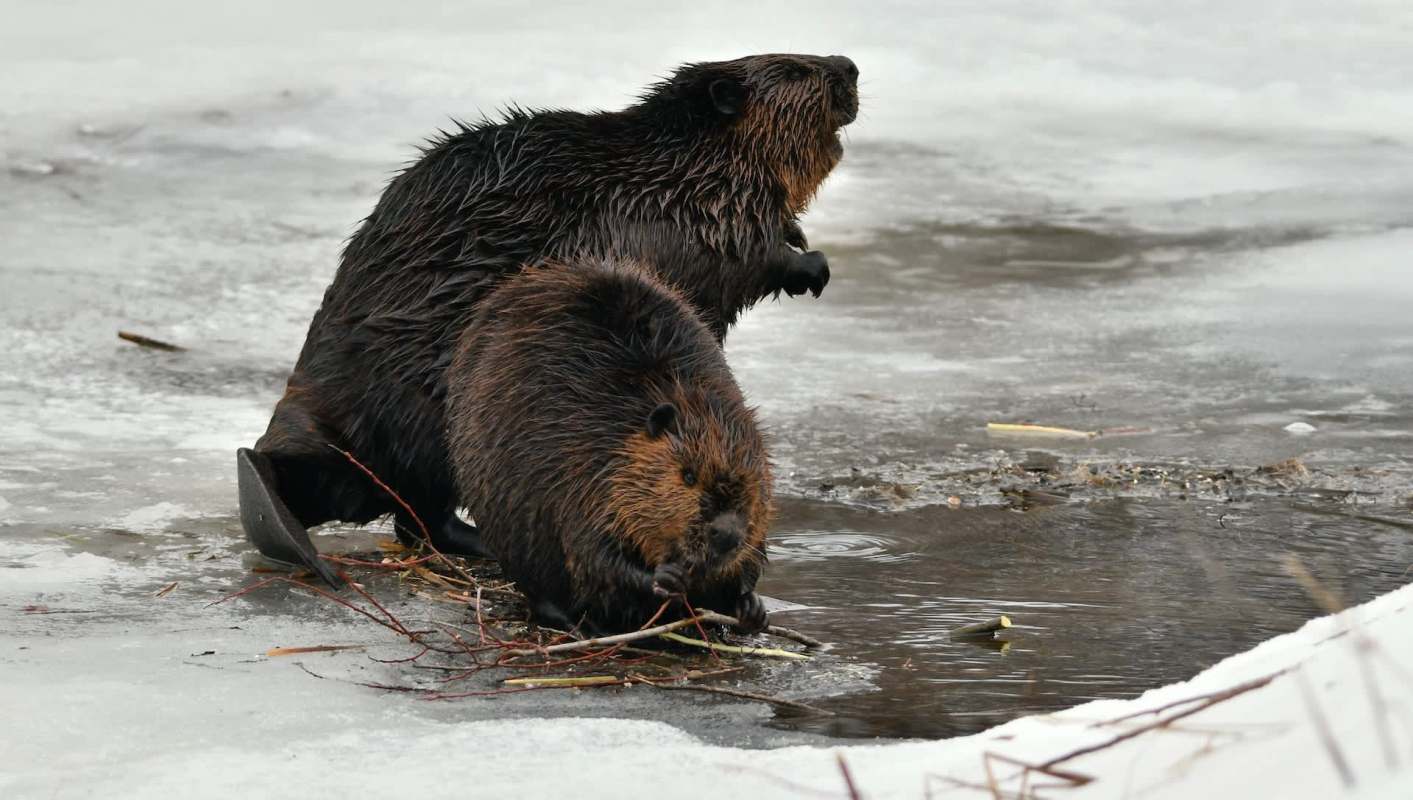
New research indicates that rising temperatures are creating more eager beavers.
What's happening?
In a study published in the journal Global Change Biology, University of Alberta scientists observed when beavers first emerged at Miquelon Lake Provincial Park each year from 2008 to 2025.
The scientists said in a news release that the research was the first to explore how the changing climate impacts the behaviors of a non-hibernating mammal such as the beaver.
While beavers rely on freshwater habitats, they are constrained by ice in winter — lodge entrances are under water — and use warmer months to stock up. Unsurprisingly, rising temperatures led the beavers to get out from under the ice earlier.
The study found that for every 1 degree Celsius (1.8 degree Fahrenheit) rise in temperature, beavers would emerge approximately six days earlier.
That could foster important changes for the animals. In the study, they averaged 144 days under the ice and typically made their way out in the April 1 range.
TCD Picks » Quince Spotlight
💡These best-sellers from Quince deliver affordable, sustainable luxury for all




A co-author of the study, Glynnis Hood, noted that the weather trend in the area could change those figures quickly.
"It's indicating warmer summers and more droughts, which will result in earlier emergence dates and shorter periods living under the ice," Hood said.
Why is the changing climate's impact on beavers important?
Rising global temperatures have ripple effects across nature. Keystone species such as beavers have valuable roles to play in ecosystems, but these changes create complications.
While additional foraging time is beneficial, it may also lead to increased interactions with nearby communities.
Hood pointed out that more active beavers could come into conflict with humans by taking down trees or blocking culverts. The pattern of more time outside their lodges also builds upon itself, per the research.
Longer, more fruitful summers led them to come out earlier the next year. It creates another important area of consideration for planning.
"With beavers potentially being out longer in the fall and earlier in the spring, wildlife managers will need to adapt in kind," Hood said.
What's being done about beavers' changing behaviors?
The study brings into focus how beavers are adapting to rising temperatures and shorter winters. It also provides a sense of how beavers that are moving north to the Arctic might react to their new environments and changing conditions, per Hood.
Since beavers are such a prolific and resourceful species, it is critical for humans to be ready for how they change where they already are and to adjust where they're headed.
"How they modify these new environments will test our ability to coexist with a species that outlasts northern winters and in an ever-changing world," Hood concluded.

Get TCD's free newsletters for easy tips, smart advice, and a chance to earn $5,000 toward home upgrades. To see more stories like this one, change your Google preferences here.







