


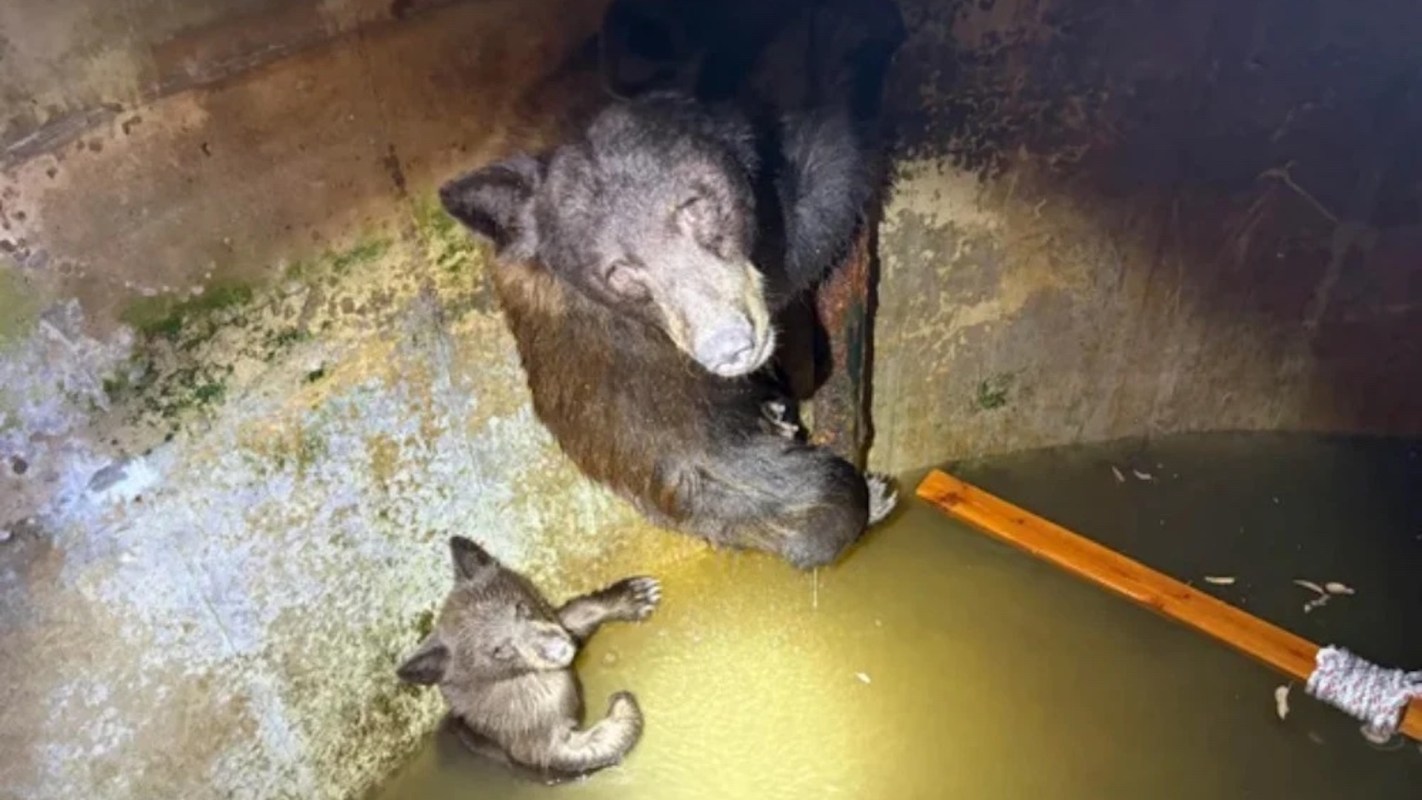
A mother bear and her three cubs all made it out of a large concrete water tank in La Verne, California, after rescuers cut into the structure to free them, KABC reported.
Here's what to know
According to KABC, the family spent more than 12 hours inside the tank near Claremont Wilderness Park's 5-Mile Loop Trail.
Officials said the bears had been in distress for hours, and one cub managed to get out on its own before firefighters and wildlife crews finished the rescue.
Rescuers first drained the structure, a step handled by the California Department of Fish and Wildlife, before fire crews from La Verne and Los Angeles County joined the effort.
KABC reported that the mother bear and her cubs appeared to have entered through an opening about 1 foot wide and couldn't get back out. Crews then used a saw to widen the opening and lowered a ladder into the tank.
Around 8 a.m., Glendora residents Jamie Kirk and Eric McDonald spotted the trapped bears, and Kirk described how alarming the scene was.
TCD Picks » Quince Spotlight
💡These best-sellers from Quince deliver affordable, sustainable luxury for all




"We climbed up top, and there's a small hole and right away we see a bear staring at us, kind of holding on to the walls because it was full of water," Kirk said.
Officials said the bears may have been searching for water during hot, humid weather. Periods of heat and limited resources can drive wild animals into built spaces such as tanks, fences, and roads that can quickly become dangerous.
More background
The bears were not trapped in a natural ravine or cave but inside a manmade water-storage structure near a popular recreation area.
As people live, hike, and build closer to wild habitat, animals can end up navigating environments that were never designed for them. Encounters like this are part of a larger pattern explored in a BBC report on why wild animals attack humans, which examines how closer contact between people and wildlife can increase risks for both.
Exhausted and frightened wildlife can become unpredictable, creating difficult and potentially risky situations for bystanders and first responders. Witness Bradney Boli told KABC, "I think the bears got very lucky because it would not be easy to hear that."
The cub that escaped before crews arrived was reunited with its family.
What's being done?
The response began by draining the tank to reduce the immediate danger, then firefighters enlarged the opening so the bears could climb out on their own instead of staying stranded.
Instead of forcing direct contact with panicked wildlife, crews changed the environment and gave the bears a safe way to escape.
Securing small openings in tanks, checking other water infrastructure for wildlife hazards, and designing access points that do not become traps could help prevent similar emergencies.
"They were exhausted, so it took a few minutes for the first cub to come out, then the second cub got out, and then finally the mother," said Keith Navarre with the Los Angeles County Fire Department.
Where can I learn more?
Bear encounters can turn serious fast when animals move through neighborhoods and other human spaces. The stories below add context to the La Verne rescue by showing what's at stake for residents, responders, and the bears themselves.
• In another California conflict, public outrage after a mama bear's death fueled coexistence reforms.
• In Mammoth Lakes, a couple fought back when a 70-pound bear attacked outside their home.
• In Tennessee, wildlife officers euthanized three bears after officials deemed the danger too high.
Each case points to the same challenge: stopping risky encounters before they become emergencies. They also show the different ways communities respond when a bear is trapped, distressed, or seen as a growing danger.

Get TCD's free newsletters for easy tips, smart advice, and a chance to earn $5,000 toward home upgrades. To see more stories like this one, change your Google preferences here.







