


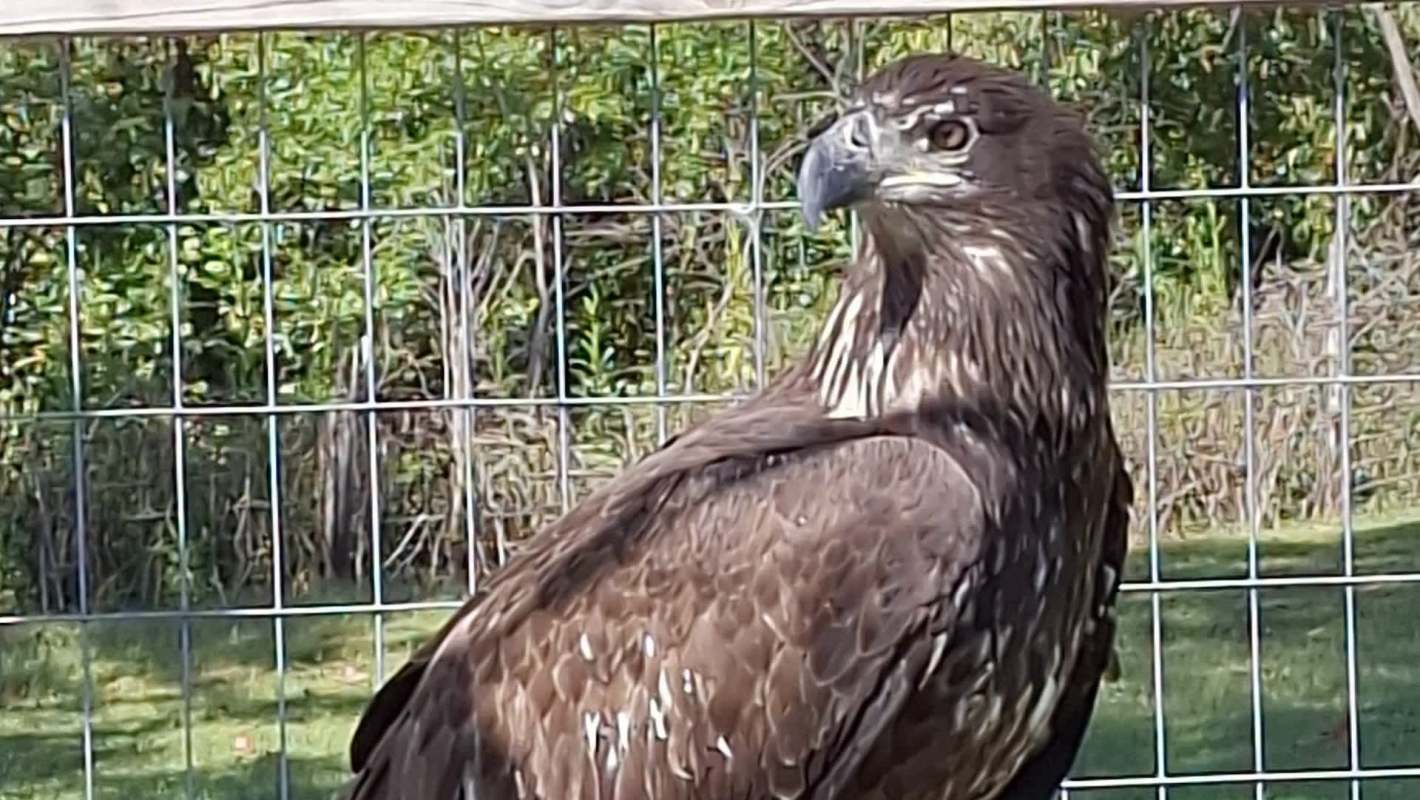
Two service members at Naval Weapons Station Crane in Indiana spotted a young bald eagle stranded on the roadside and stepped in to help save its life.
After months of treatment for disease and starvation, the bird returned to Crane with a fitting name: "Freedom."
Here's what to know
While on duty at Crane, U.S. Navy Petty Officer 2nd Class Mitchell Brimner and Army Staff Sgt. Jonathan Park found a juvenile bald eagle by the road that was alone, appeared sick, and could not fly, according to WTWO/WAWV. Their discovery led to the bird being taken to a wildlife rehabilitation center for care.
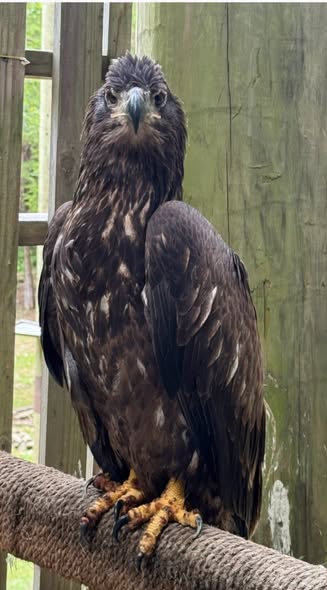
With the eagle near traffic, Park first focused on keeping the road safe. "I stopped my car to direct traffic once I noticed there was a bald eagle on the side of the road," he said.
Help from the installation's environmental office and fellow security coworkers eventually let the pair safely contain the bird after several unsuccessful attempts over an hour.
A concerned driver tipped them off and provided contact information for Bedford-based Raptor Rise Rehabilitation Center. Founder Lola Nicholson then came out to take the eagle into her care.
TCD Picks » Quince Spotlight
💡These best-sellers from Quince deliver affordable, sustainable luxury for all




More background
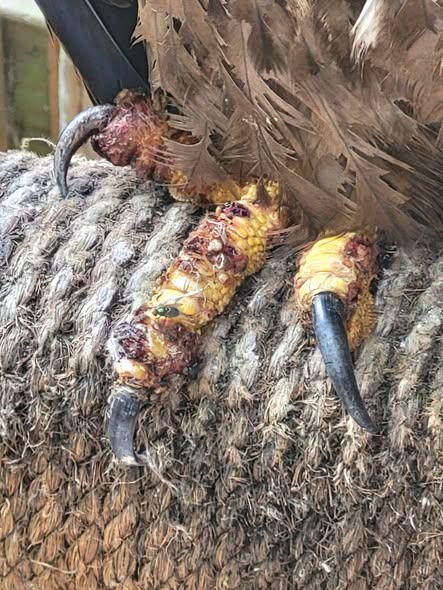
A veterinarian's examination showed the juvenile had two forms of avian pox, including the more serious diphtheritic strain, which caused one eye to swell and foam and severely affected its vision.
It was also emaciated after becoming unable to hunt effectively.
At Raptor Rise's 30-acre facility, the eagle spent months in treatment and quarantine while also undergoing flight and hunting training to rebuild its strength. It was later named "Freedom," in recognition of both America's semiquincentennial and the military connection to where it was found.
Nicholson said the species has a roomy refuge at the installation, which spans 64,000 protected acres.
What's being done?
Brimner said they used a makeshift box to secure the eagle without causing more injury: "We got a box, taped it up, cut some holes in it, and then I had him (Park) stand in front of it to distract the eagle while I came up behind it and put the box over its head," he recalled. "But once we were about a foot away, it sort of stopped wriggling. I think it just wanted the help."
After that, staff took the eagle to Raptor Rise, where it was diagnosed and began the long rehabilitation required before it could hunt and fly on its own again.
On September 21, Freedom returned to Crane and was released into the wild at the protected location where it was originally found.
Nicholson said the seriousness of the situation was clear immediately: "We knew right away something was wrong. If you can catch a bald eagle, there is obviously something wrong with it."
Where can I learn more?
These stories cover similar bald eagle rescues and recoveries from around the country. They follow injured or stranded birds as rescuers, veterinarians, and rehab teams work to return them to the wild.
• In Washington state, a bald eagle returned to the wild after recovering from traumatic injuries.
• Along a busy highway, a bald eagle in distress drew a passerby's attention and a rescue response.
• In North Carolina, responders found an injured bald eagle on the side of a highway.
• After a family called for help, rescuers freed a bald eagle trapped in a fence.
• In Arizona, an eaglet needed emergency surgery and foster care after swallowing a fishing hook.

Get TCD's free newsletters for easy tips, smart advice, and a chance to earn $5,000 toward home upgrades. To see more stories like this one, change your Google preferences here.







