


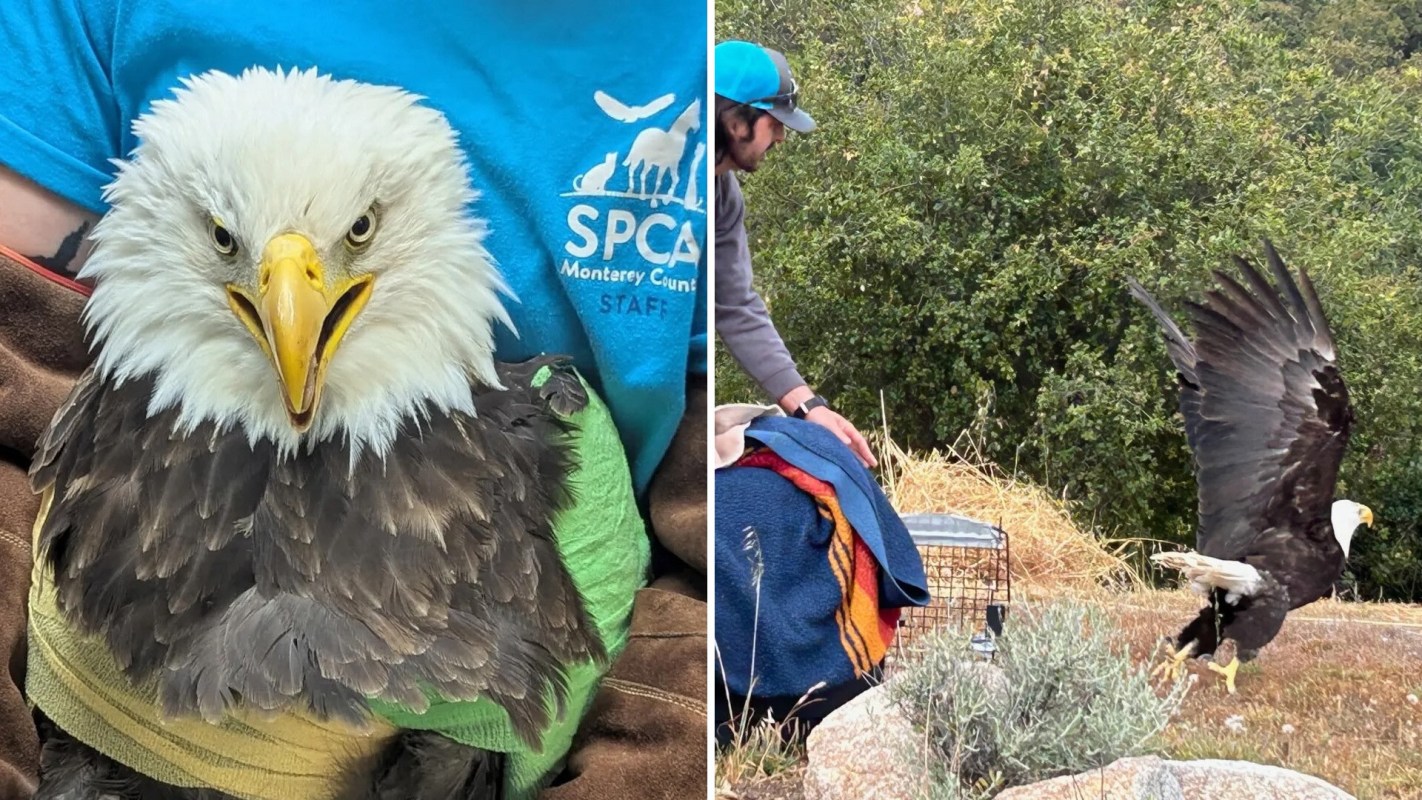
Nearly six months after a badly injured bald eagle was taken in from the Monterey Bay area, the bird has been returned to the wild following extensive treatment, therapy, and monitoring, according to KRON.
What happened?
The large male eagle entered the care of SPCA Monterey County's wildlife rescue and rehabilitation center after being rescued in Salinas on Dec. 21, 2025.
A medical evaluation found two serious issues: a fractured coracoid near the shoulder and signs that the bird had been electrocuted.
Those injuries made the outcome difficult to predict, according to KRON.
"Electrocution is a slow-developing injury," SPCA Monterey County wrote, per KRON. "It can take several days or even weeks for symptoms to become fully visible."
Despite that uncertainty, treatment began right away.
TCD Picks » Quince Spotlight
💡These best-sellers from Quince deliver affordable, sustainable luxury for all




"Our skilled wildlife rescue team immediately began the intensive work of mending this majestic bird," the organization wrote.
Over the next 25 weeks, the eagle underwent ongoing care that included medication and specialized physical therapy.
By Friday, rehabilitators said he had recovered enough strength to go back to the wild.
His rescue was SPCA Monterey County's 2,863rd wildlife intake of 2025.
Why does it matter?
Bald eagles are among the most recognizable birds in the United States. Dedicated wildlife care can make a difference when animals like this one are injured by human-built infrastructure or other hazards.
Rescue teams need expertise, equipment, and time — resources that many community-based wildlife organizations work hard to sustain.
Healthy raptor populations are a sign of stronger local ecosystems.
What's being done?
In this case, the intervention came through hands-on rehabilitation.
SPCA Monterey County provided months of medical treatment and physical therapy tailored to the eagle's injuries, giving the bird time to rebuild strength and regain his ability to fly before release.
That kind of specialized care is a critical part of wildlife conservation.
Rescue centers can respond when animals are hurt, and they deal with threats such as electrocution, trauma, and habitat-related dangers that can affect birds and other species.
If someone finds an injured wild animal, contacting trained professionals rather than trying to intervene alone can improve the animal's chances of survival and recovery.
"Today, we released him back into the wild," rescuers wrote Friday. "After a brief pause, he caught the wind and soared out over the hills, circling above the landscape before continuing on his journey."

Get TCD's free newsletters for easy tips, smart advice, and a chance to earn $5,000 toward home upgrades. To see more stories like this one, change your Google preferences here.







