


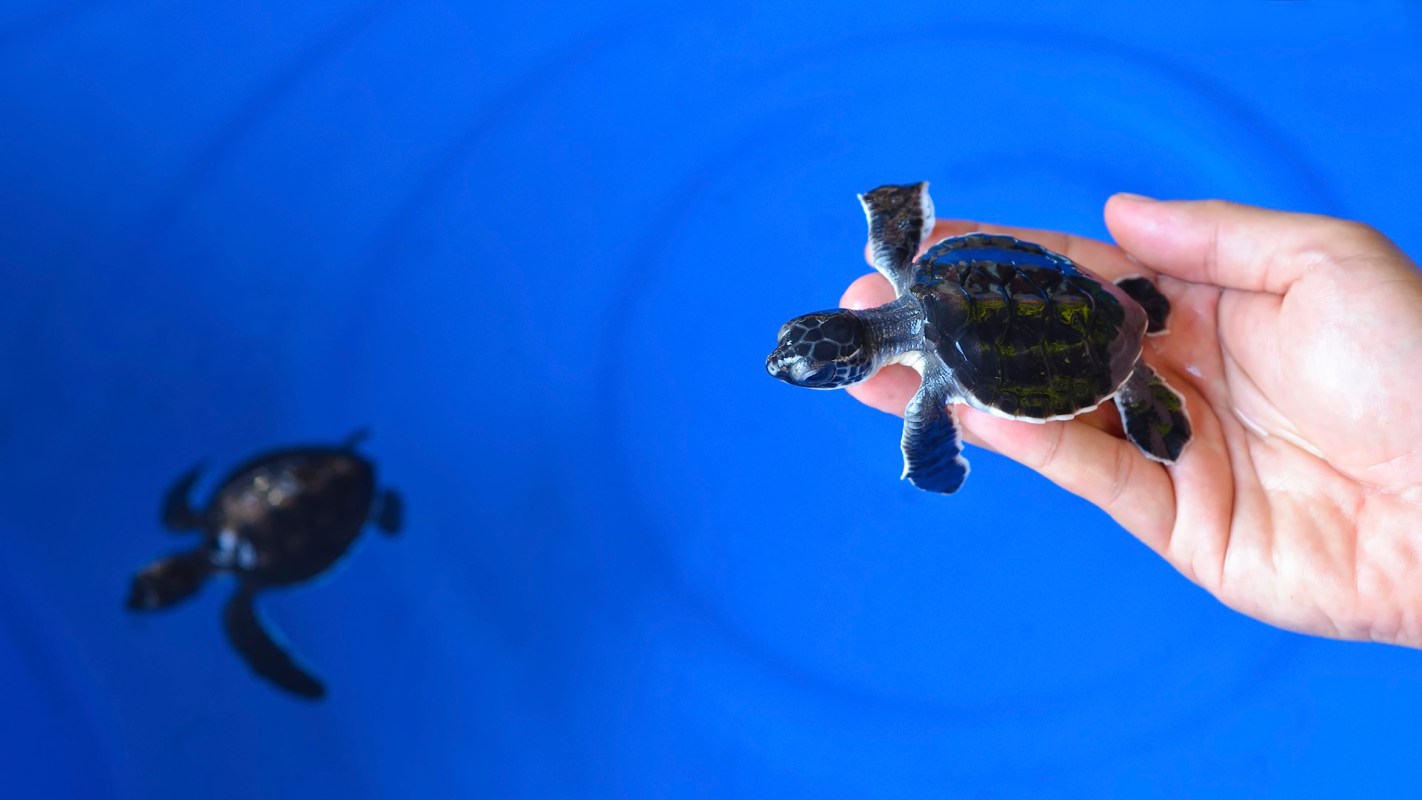
Dozens of baby sea turtles were discovered in a Florida Keys family's backyard swimming pool.
According to WPLG Local 10, 64 hatchlings wound up in the family's chlorinated pool after the home's bright lights apparently disoriented them, causing them to wander away from the ocean.
Here's what to know
In Islamorada, the homeowners found the hatchlings in their pool and reached out to The Turtle Hospital for help.
After several days of recovery, the turtles were fortunately well enough for a safe release back into the ocean. All 64 were taken in for care, cleaned, and fed before going back out to sea, WPLG Local 10 reported.
Sea turtle hatchlings are especially vulnerable in their first moments of life, when they are meant to move quickly toward the water. When artificial lights outshine the natural horizon, the turtles can head in the wrong direction instead.
In coastal communities, that can endanger sea turtles when they wander into streets, yards, storm drains, and even swimming pools.
TCD Picks » Quince Spotlight
💡These best-sellers from Quince deliver affordable, sustainable luxury for all




More background
Sea turtles are an important part of Florida's coastal ecosystem.
Healthy sea turtle populations help support marine food webs and are part of the natural heritage that draws people to places such as the Florida Keys.
The incident points to a wider concern in coastal areas, where human development overlaps with nesting habitat.
While outdoor lighting can be useful for safety and convenience, it can also unintentionally create dangerous conditions for hatchlings that rely on darkness and moonlight to find the sea.
When people see an animal in distress or away from its natural home, it's critical to contact trained experts rather than trying to handle the situation alone.
Because the homeowners sought professional help, the turtles had a chance to recover before being released into the Gulf Stream.
Protecting sea turtles supports healthier beaches and oceans, which in turn benefits coastal communities, local tourism, and the natural spaces residents value.
What's being done?
When residents understand that lighting can confuse hatchlings, they are better prepared to prevent these incidents before they happen.
For homeowners near beaches and nesting areas, simple changes can help reduce the risk. Dimming or shielding outdoor lights, turning off unnecessary lighting at night, and watching for stranded hatchlings can all make a meaningful difference.
Where can I learn more?
The Islamorada rescue is one example of a problem coastal communities keep running into as development overlaps with nesting beaches. These articles look at similar efforts in Florida, South Carolina, Australia, and beyond, where quick action can make a real difference for turtles.
• Along Florida's Palm Beach coast these last few years, record turtle nests are giving conservationists new optimism.
• In Australia, baby green sea turtles reached the ocean after rescuers moved vulnerable eggs.
• In Myrtle Beach, S.C., volunteers rushed more than 100 loggerhead eggs to a safer nest site.
• U.S. conservation groups have sought protections for diamondback terrapins before numbers fall further.
• In India, experts released over 100 rare turtles into a wildlife sanctuary after captive rearing.
They all show the importance of protecting nesting habitat and responding quickly when something goes wrong, as it can give turtles a better shot at survival.

Get TCD's free newsletters for easy tips, smart advice, and a chance to earn $5,000 toward home upgrades. To see more stories like this one, change your Google preferences here.







