


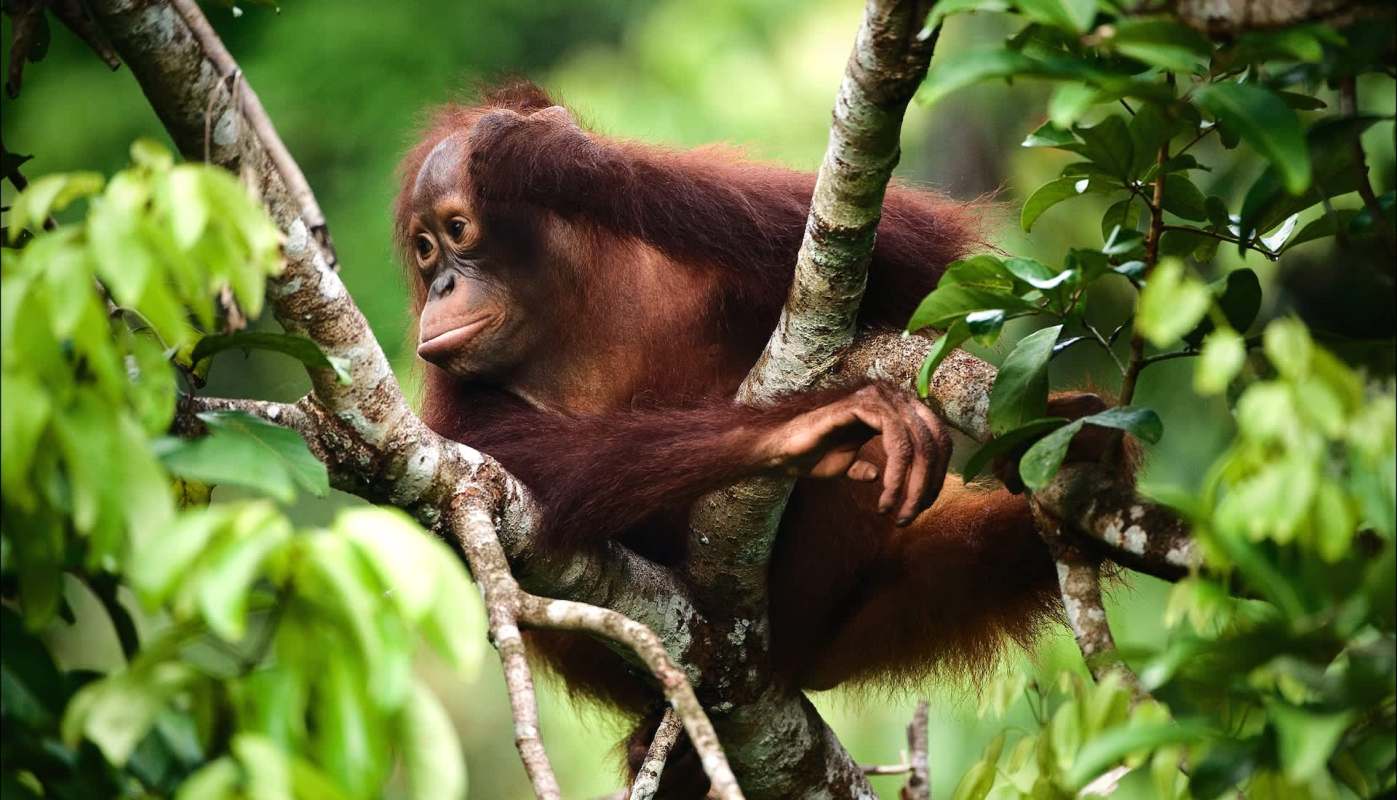
In eastern India, forest officials found five baby orangutans — an unexpected find, as the endangered apes do not occur naturally in the country.
Their appearance there has raised suspicions that the animals were transported through an international trafficking network.
Here's what to know
In the Udaipur section of the Jaleswar forest range, officials on a routine Sept. 8 patrol located the animals in Odisha's Balasore district, Sarawak Tribune. Odisha Environment Minister Ram Singh Khuntia identified that area as the site of the discovery.
Investigators think the five babies may have been brought into India illegally from Southeast Asia. Khuntia said the Wildlife Crime Control Bureau would investigate, as authorities suspect an international trafficking syndicate could be involved.
The animals are being quarantined at a zoological park in Odisha as officials work to determine how they reached the forest.
Since wild orangutans are found only on the Southeast Asian islands of Borneo and Sumatra, finding them in India suggests human involvement rather than natural movement.
TCD Picks » Quince Spotlight
💡These best-sellers from Quince deliver affordable, sustainable luxury for all




More background
Orangutans face several threats at once in their native habitat. Habitat loss, deforestation, and illegal wildlife trafficking have all driven steep population declines.
The World Wildlife Fund estimates that roughly 104,000 orangutans still live across Borneo and Sumatra, down from more than 230,000 a century ago. A third species, the Tapanuli orangutan, is critically endangered, with fewer than 800 thought to remain in the wild.
Where can I learn more?
These stories offer more context on the pressures facing orangutans and the toll trafficking takes on young apes. They also explore conservation efforts in Borneo, tourism welfare concerns, and rescues connected to the illegal wildlife trade.
• In Borneo, villagers are paid to spot orangutans in a conservation experiment.
• At a tourism site, captive apes endured profound violations of dignity and welfare.
• In the Republic of the Congo, authorities seized a baby chimp from the wildlife trade.
• In Congo, an infant chimp rescued from the pet trade began life again at a sanctuary.
• At Tchimpounga in Congo, Beau joined the chimp family after surviving traffickers.

Get TCD's free newsletters for easy tips, smart advice, and a chance to earn $5,000 toward home upgrades. To see more stories like this one, change your Google preferences here.







