


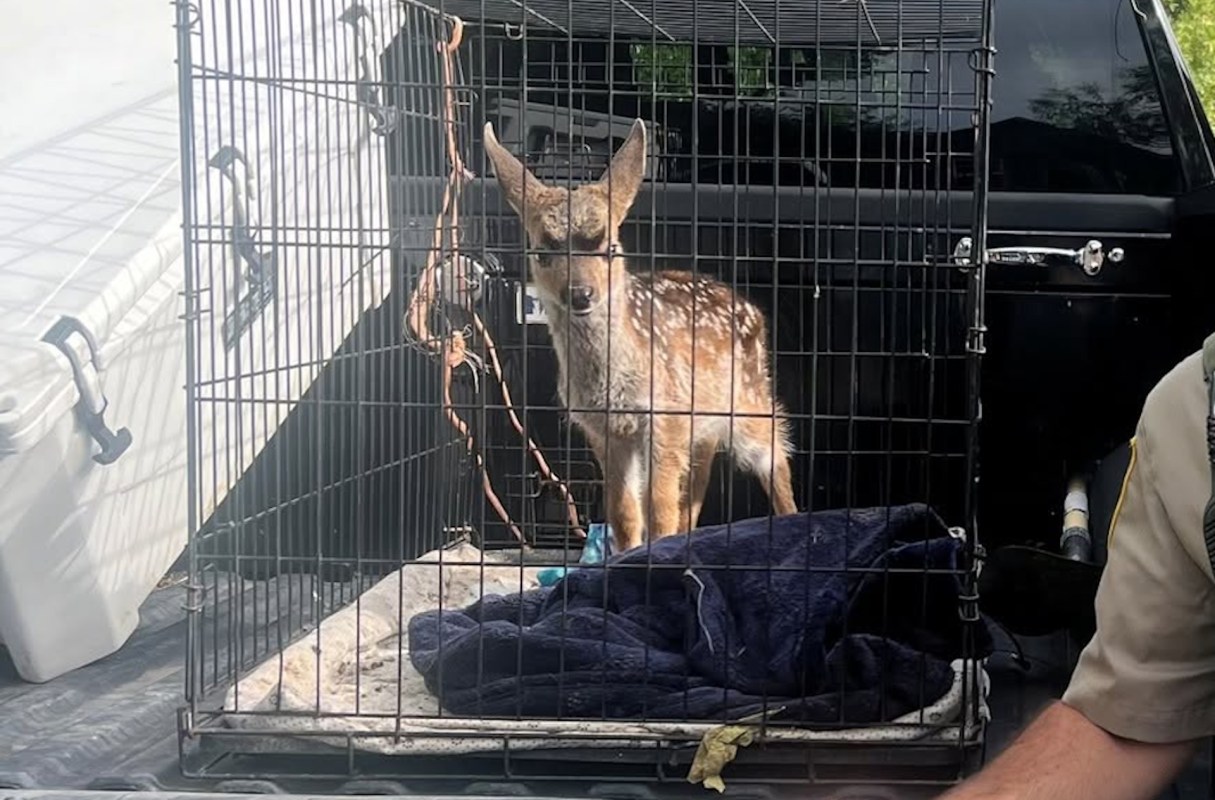
In Sonoma County, California, authorities are looking into a case in which a baby deer was allegedly kept in a dog crate for weeks.
According to wildlife authorities, "fawn-napping" occurs "every spring and summer," and KGO said rehabilitation centers get calls about residents taking fawns from the wild.
What happened?
According to the outlet, the California Department of Fish and Wildlife was alerted after a report that a young deer had been removed from the wild and put in a dog crate. Investigators later said the people involved acknowledged keeping the fawn there for more than three weeks.
The inquiry is still underway, but officials said one suspect was cited and could face jail time. The deer was moved to a wildlife rehabilitation center, where it will stay until it grows larger and can survive on its own.
Experts said the Sonoma County case is part of a broader seasonal trend. During spring and summer, wildlife rehabilitation facilities regularly hear about residents taking young deer out of the wild.
Why does it matter?
A fawn found alone is not necessarily in danger. Mother deer often leave their young by themselves for extended periods while searching for food, then return later to nurse and protect them. When people intervene too quickly, they can separate a baby animal from the parent it still depends on.
TCD Picks » Quince Spotlight
💡These best-sellers from Quince deliver affordable, sustainable luxury for all




Wild deer require specific care and minimal human contact, and removing them from their ideal environment will likely harm their chances of survival. A dog crate and confinement inside a home is not the appropriate setting for it to grow. Keeping a wild animal captive can leave it stressed, weakened, or less able to adapt later.
When people take wild animals into their own hands, rehabilitation workers and public agencies must spend time and money undoing a preventable problem. It can also affect local ecosystems, animal welfare efforts, and public trust.
What's being done?
For now, the fawn remains in professional rehabilitation care, officials said, and it is expected to go back into the wild once it is able to live independently.
Officials are using the incident to remind Californians not to collect young deer merely because they appear to be by themselves.
The California Department of Fish and Wildlife said that keeping a deer in personal possession is "illegal and unethical."

Get TCD's free newsletters for easy tips, smart advice, and a chance to earn $5,000 toward home upgrades. To see more stories like this one, change your Google preferences here.







