


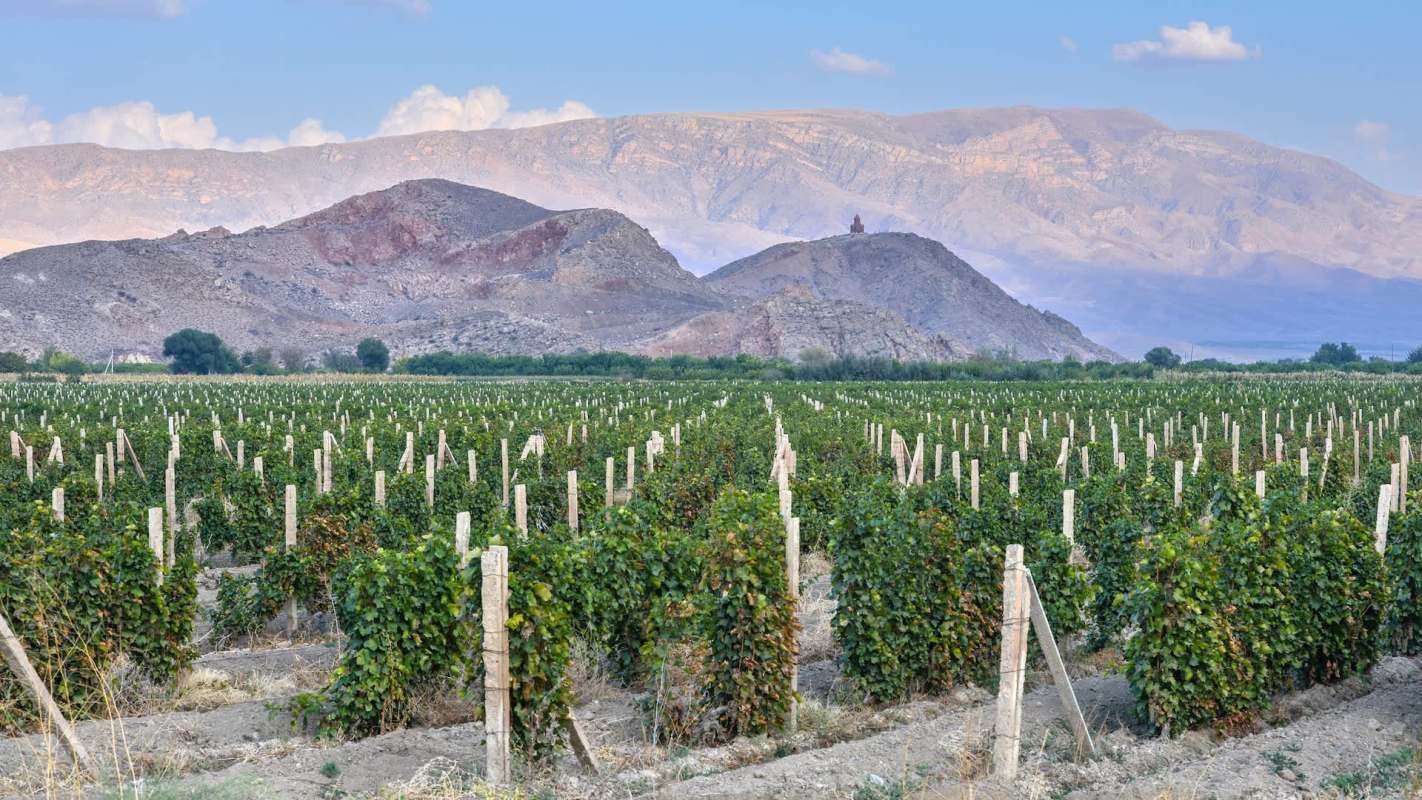
High in the Vayots Dzor province, Armenian grape farmers are reviving an ancient winemaking tradition. They may be helping both rural communities and mountain ecosystems in the process.
Across vineyards that are about 3,600 to 5,250 feet above sea level, farmers are bringing back native grape varieties. And they're using organic practices that support healthier soil and local biodiversity to rebuild the wine economy, according to Mongabay.
This comeback is especially striking because Armenia is not rebuilding just any wine industry.
In 2007, archaeologists uncovered what is widely considered the world's oldest known winery. As Mongabay detailed, they found it in a cave complex in Vayots Dzor, dating back roughly 6,000 years.
But during the 20th century, Soviet agricultural policy prioritized brandy production, and many grape varieties once used for wine disappeared from local cultivation.
Now, wineries including Trinity Canyon Vineyards are working to reverse that loss. Founded in 2013, Trinity Canyon grows grapes on natural mountain plateaus, where Armenia's rocky terrain makes conventional vineyard layouts difficult.
TCD Picks » Quince Spotlight
💡These best-sellers from Quince deliver affordable, sustainable luxury for all




The result is what the winery describes as "vertical viticulture." Elevation shapes nearly everything from soil and climate to harvest timing. That challenge could ultimately become one of Armenia's biggest strengths in a warming world.
Since 2012, researchers at the National Academy of Sciences of Armenia have collected and sequenced more than 3,400 grape samples. Their goal has been to preserve the country's native varieties and identify which can best tolerate climate stress.
"Winemaking wasn't so popular in Armenia when we began this process," Kristine Margaryan, head of the Laboratory of Plant Genomics at the National Academy of Sciences of Armenia, told Mongabay.
Temperatures in Vayots Dzor have already increased by about 1.3 to 1.4 degrees Celsius, or 2.3 to 2.5 degrees Fahrenheit, over the last century. That means agriculture in the region may eventually need to move even farther uphill.
To plan for that future, researchers partnered with Maran Winery to establish Armenia's first high-altitude vineyard at 6,824 feet.
Early findings suggest many native Armenian grapes perform well there, while Western European varieties struggle. That could give local growers an important advantage as they search for crops suited to a changing climate.
For local communities, that matters far beyond what ends up in a wine glass.
A more resilient grape industry can support jobs, preserve regional farming knowledge, strengthen tourism, and keep more economic activity rooted in rural areas. It can also help protect cultural traditions tied to Armenia's landscapes, dialects, and foodways.
Instead of using synthetic fertilizers, the team at Trinity Canyon plants cover crops to improve soil health and support local biodiversity. It also avoids pesticides and herbicides when possible and maintains buffer zones near neighboring farms to reduce contamination.
That kind of farming can create better habitat for beneficial insects and other wildlife while easing chemical pressure on surrounding land.
"We must know how to extend the life of vineyards," declared Zaruhi Muradyan, CEO of the Vine and Wine Foundation of Armenia. "Various measures like specific irrigation methods, non-drip systems, and air circulation can help mitigate the negative effects, but we must be prepared."

Get TCD's free newsletters for easy tips, smart advice, and a chance to earn $5,000 toward home upgrades. To see more stories like this one, change your Google preferences here.







