


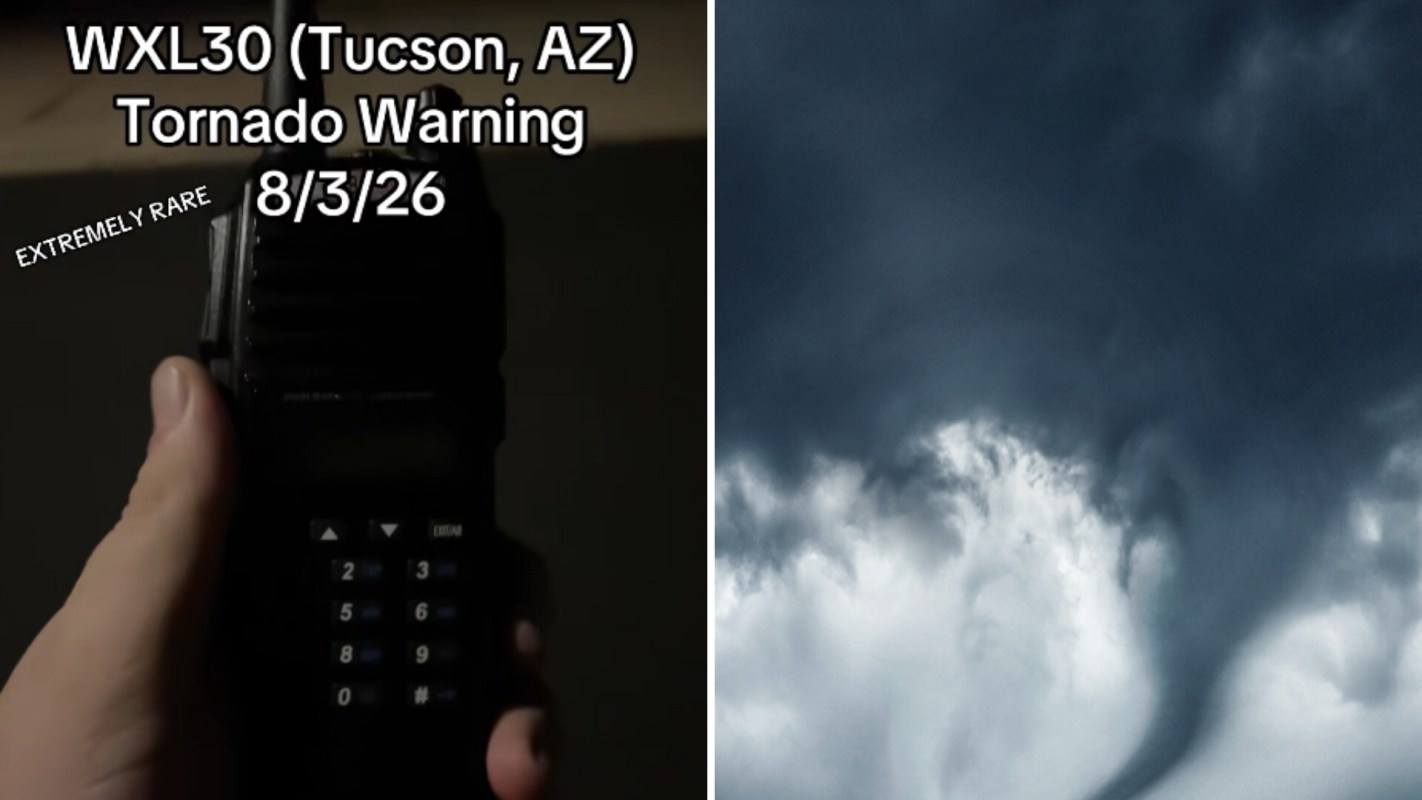
An Arizona tornado warning drew attention online after a video captured an especially chilling detail: Officials warned that heavy rain was concealing the tornado itself.
The Monday alert urged people in western Pima County to take cover immediately after radar indicated rotation in the storm.
What happened?
The viral TikTok featuring emergency audio from Arizona's monsoon season collected over 170,000 views and 19,000 likes.
@apachejunctioneas WXL30 Tornado Warning (8/3/26) #tornado #severeweather #arizona #weather #fyp ♬ original sound - ApacheJunctionEAS
The warning was in place until 9:45 p.m. and included this message: "Heavy rainfall is hiding this tornado. Do not wait to see or hear the tornado. Take cover now."
It added that "flying debris will be dangerous to those caught without shelter" and that mobile homes would be "damaged or destroyed" as a "severe thunderstorm capable of producing a tornado was located eight miles east of Topawa moving west at 15 mph."
Commenters also described severe weather in other parts of the state. "It got wicked for a bit in San Tan," one wrote, while a second user added: "It had to be a tornado. It sounded like a freight train in Chandler last night."
TCD Picks » Quince Spotlight
💡These best-sellers from Quince deliver affordable, sustainable luxury for all




Another user explained, "I'm in Mesa, but it literally looked like a f****** apocalypse outside."
Why does it matter?
A rain-wrapped tornado can be especially dangerous because people may not be able to see the funnel until it is very close. When visibility drops during a severe storm, waiting for visual confirmation can cost precious time.
Beyond the warning, the alert laid out several threats, including flying debris; risk to mobile homes; and damage to roofs, windows, vehicles, and trees. For families, such a storm can require an emergency shelter and repair bills and cause missed work and transportation problems.
In general, extreme weather disasters endanger lives and livelihoods by damaging homes, disrupting jobs, straining emergency services, and necessitating recovery costs for communities.
While no single storm can be linked to the changing climate, rising global temperatures are contributing to more disruptive weather patterns all over, including heavier downpours that can increase danger and make storms harder to track and navigate safely.

Get TCD's free newsletters for easy tips, smart advice, and a chance to earn $5,000 toward home upgrades. To see more stories like this one, change your Google preferences here.







