


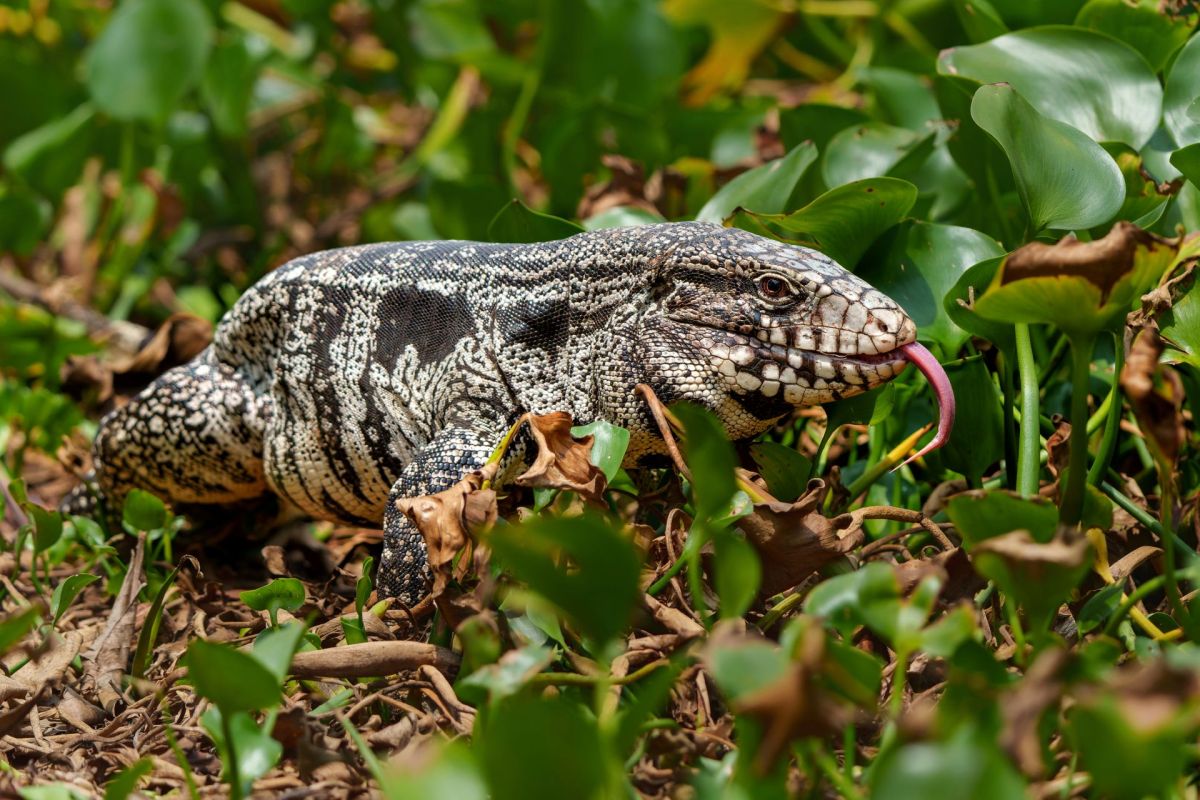
A sighting of a lizard known as a tegu has alarmed residents near Lake Poinsett, Florida, even though alligators are a familiar sight.
What's happening?
In the words of homeowner Brady Deluca to WKMG, "They're huge. They're so big. They look like mini dinosaurs."
Deluca recorded a video of an Argentine black and white tegu moving across a neighborhood road toward a canal. The City of Cape Canaveral then shared a notice saying Brevard County was asking residents to help identify the non-native species.
State wildlife officials said Argentine black and white tegus are strong swimmers that can grow to nearly 5 feet long. The Florida Fish and Wildlife Conservation Commission has also documented them eating eggs from native animals, including alligators and sea turtles.
For Deluca, it was not the first unsettling encounter in the area. She said a neighbor found a smaller tegu in a crab trap last year. Deluca took that as a sign the reptiles may already be moving through local waterways and yards.
Why are tegus concerning?
Present-day tegus arrived in Florida because people brought them there through the pet trade, according to the Florida Museum. Human introduction of tegus to ecosystems in Florida has created the imbalance they have today.
TCD Picks » Quince Spotlight
💡These best-sellers from Quince deliver affordable, sustainable luxury for all




The FWC warned they can prey on eggs from species already under pressure, including sea turtles and alligators. Deluca said that the threat feels close to home after she watched sandhill crane parents raising chicks near her house.
"We had two babies here for a couple weeks, and now they only have one," Deluca said to WKMG.
Now, local communities face the challenge and cost of monitoring and controlling animals like tegus.
What's being done?
FWC is asking anyone who sees a tegu to document it with a photo and note the location. They can submit the sighting through the IveGot1 app or the Exotic Species Hotline.
Officials also say people should not try to handle the animals themselves. While tegus may not be what most people picture when they think of Florida wildlife, they can still be unpredictable, especially when cornered.
A clear photo and exact location can help wildlife managers understand where animals are moving. And early reporting gives officials more time to protect established birds, reptiles, and nests in the area.

Get TCD's free newsletters for easy tips, smart advice, and a chance to earn $5,000 toward home upgrades. To see more stories like this one, change your Google preferences here.







