


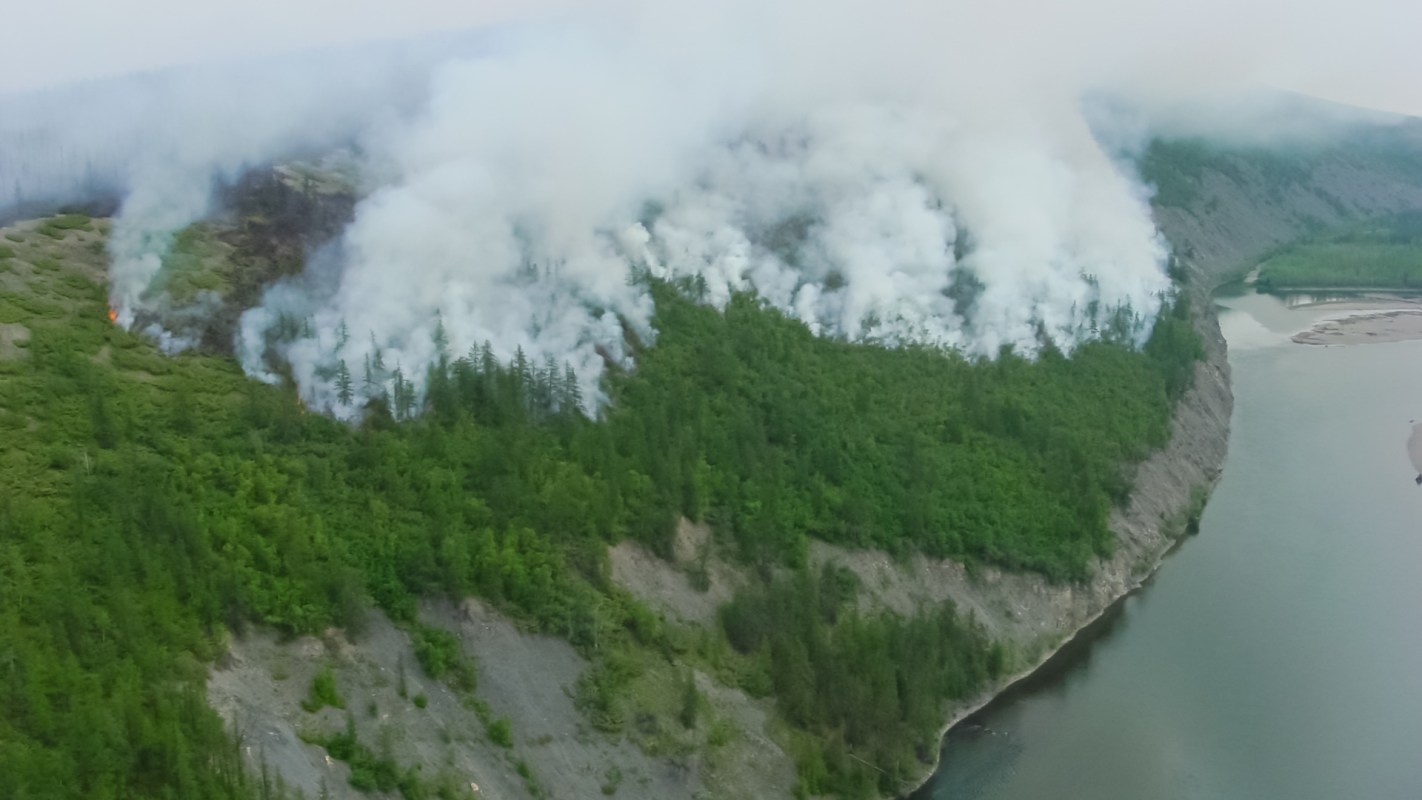
Air pollution is contributing to greater chances for severe fires in a region mostly known for its ice.
Research conducted by experts from a collection of German institutions — published in Environmental Research Letters — found that extreme fire risks in the Arctic are 200 times more likely than before human-caused warming started overheating the planet around the 1850s.
"Over the past two decades, the pan-Arctic has experienced rapid climatic change, accompanied by an unprecedented rise in extreme wildfire activity," the researchers wrote.
The team used a probability-based framework to gauge how humans impacted Arctic wildfires from 2019 to '21. The experts found that higher daily temperature averages and drier vegetation contributed to the increased risks, per the study.
Similar conditions are fueling worsening blazes in California and elsewhere, experts from Penn State added. They were not part of the Arctic study.
The heat increase is particularly pronounced in the Arctic. PBS reported that, since 1980, temperatures have risen about four times faster there than in the rest of the world.
TCD Picks » Quince Spotlight
💡These best-sellers from Quince deliver affordable, sustainable luxury for all




"We show that temperature and humidity dominate the recent increase in fire weather risk, supported by a substantial elevation in vapor pressure deficit over the pan-Arctic region," the researchers wrote in the journal.
The wildfire toll is significant, as about 57.8 million Arctic acres have burned during the three studied years, which surpassed the scorched land total there during the entire 1990s. Arctic regions in Canada, Greenland, Alaska, and Russia have experienced a 40% increase in extreme fire frequency since 2000, according to the research.
Worse yet, the study spotlighted a troubling cycle. Fires are accelerating permafrost melt, which is releasing even more planet-warming carbon dioxide that had been safely stored for millennia.
And while every flood, tornado, and fire can't be linked to the planet's overheating, researchers from NASA and elsewhere agree that it's making conditions for extreme events more likely.
In fact, the Arctic researchers found less than a 1% chance that natural weather conditions in 2020-21 would have induced the same wildfire intensity.
Glacier melt is a more well-publicized Arctic threat, but the fire research is proof that staying informed about the crucial region's health can help you learn more about other factors impacting it, including temperature and humidity changes.
They are key factors "significantly amplifying pan-Arctic fire weather extremes," according to the findings.

Get TCD's free newsletters for easy tips, smart advice, and a chance to earn $5,000 toward home upgrades. To see more stories like this one, change your Google preferences here.







