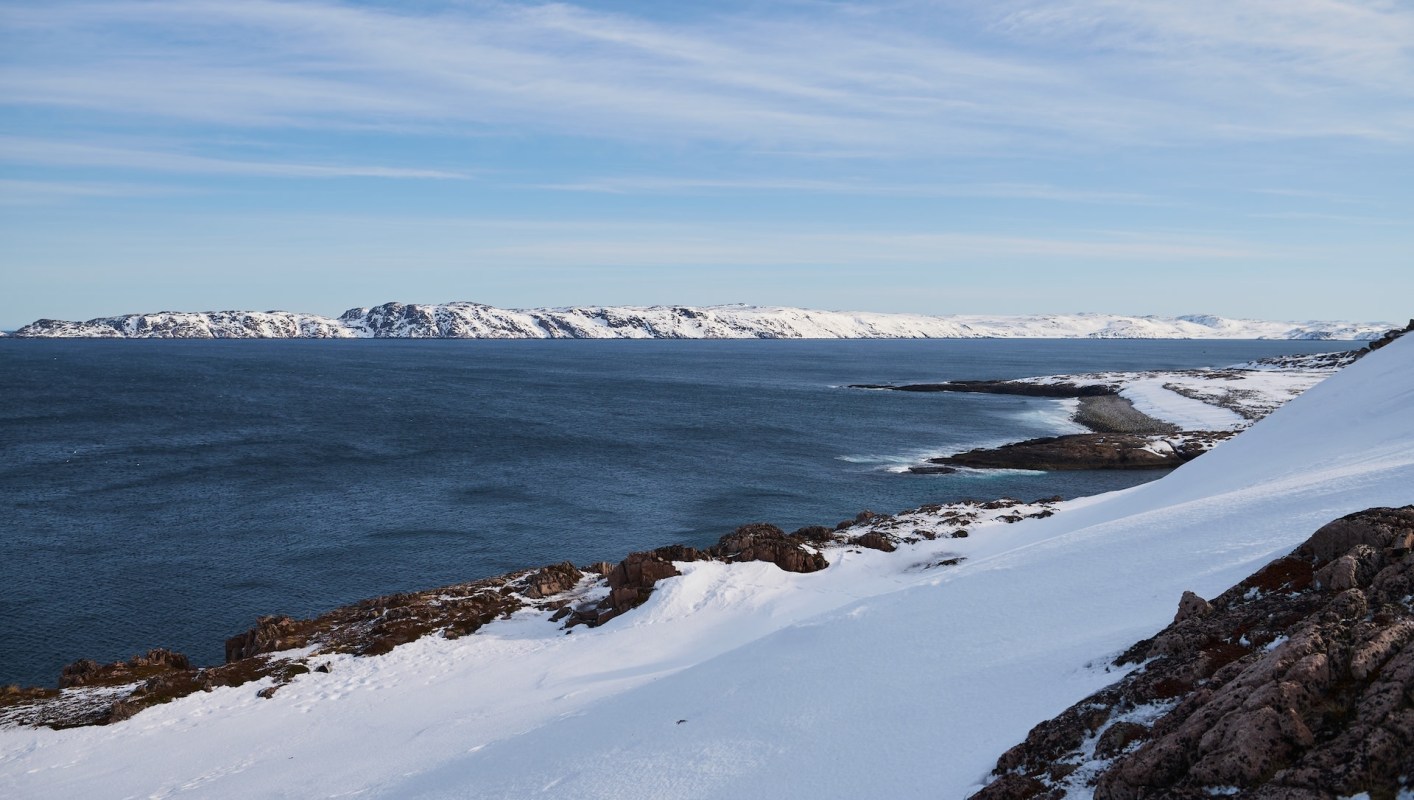
A lab study has revealed how coastal permafrost cliffs erode in Arctic landscapes.
The researchers' work helps us understand the conditions that make Arctic coastal bluffs erode most quickly and the impacts of their deterioration.
What's happening?
Using a new dimensionless model, a research team created an experiment to study the processes that contribute to coastal permafrost erosion in the Arctic.
Their intention was to assess how rising global temperatures and increasingly intense storm activity are eroding frozen ground and causing the rapid retreat of Arctic coastlines.
They published their findings in the Journal of Geophysical Research: Earth Surface after testing frozen soil blocks against waves in varying conditions.
The researchers recorded erosion with cameras and observed that large waves caused erosion to more than double that of small waves.
TCD Picks » Quince Spotlight
💡These best-sellers from Quince deliver affordable, sustainable luxury for all




Another observation was that frozen blocks containing more ice eroded and warmed more slowly, due to the additional heat energy required to melt the ice before erosion occurred.
Ultimately, the researchers concluded that even coastlines with high ice content that currently appear stable could abruptly erode if global temperatures continue to rise.
"Arctic coastal erosion has intensified at unprecedented rates due to climate change, creating new challenges for coastal communities, infrastructure, and ecosystems," the researchers wrote.
Why are Arctic coastlines important?
Arctic sea levels are rising, driven by strong storms and thawing permafrost that destabilizes land and causes cliffs to collapse.
|
Should we be harnessing the ocean to power our homes? Click your choice to see results and speak your mind. |
 Absolutely 👍
 This study further confirms that shifting climate conditions and warming temperatures are compromising stable land and accelerating coastal erosion.
For communities in the region, this phenomenon means the soil underneath roads, buildings, and pipelines is less reliable. When land sinks into the sea, thawing permafrost affects wildlife habitats, sediment loads, and carbon release.
Now, with a better understanding of these processes, scientists can predict where and how rapid coastline failures may occur and how to mitigate the damage.
What's being done to protect Arctic environments?
Researchers, such as those involved in this study, are improving their monitoring and mapping technologies in Arctic coastal zones.
Through their work, they can inform communities how to adapt to coastal erosion risks, plan to reinforce infrastructure, avoid additional development, and evacuate if necessary.
Collectively, we can take action to curb steadily rising global temperatures through daily mindfulness about the negative impacts of human activity.
For example, you can reduce your pollution output, make your home more energy resilient amid extreme storms, and save money on utility bills by installing solar panels.
TCD's Solar Explorer can help you navigate the process of switching to solar and find a local installer at a competitive rate. One of our solar partners, EnergySage, helps homeowners save up to $10,000 on solar installations with its free quote comparison tool.
You can also help raise public awareness of how conditions in the Arctic affect global climate patterns. Learning more about critical climate issues, such as Arctic coastal erosion, is a step in the right direction toward advocating for sustainable policy change where you live.

💰Get TCD's free newsletters for easy tips to save more, waste less, and make smarter choices — and earn up to $5,000 toward clean upgrades in TCD's exclusive Rewards Club.