


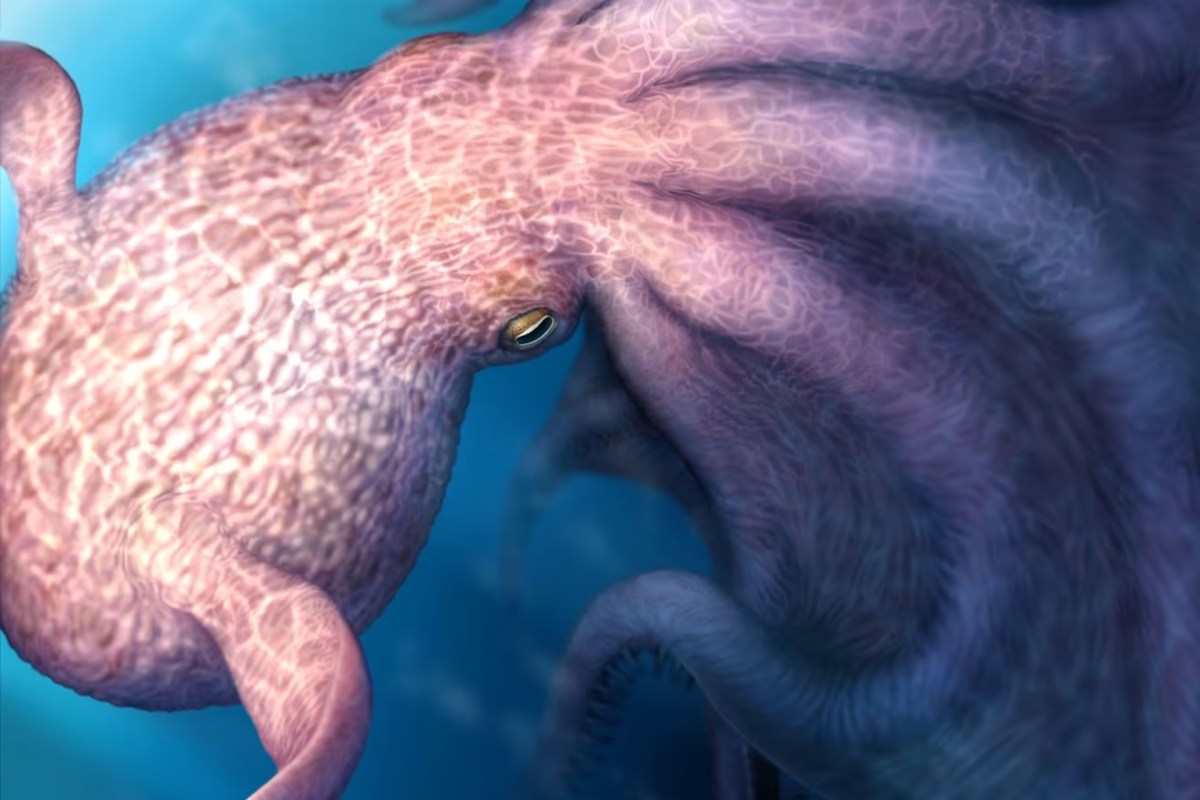
A study has posed the possibility that 60-foot-long octopuses were apex predators of the sea between 72 million and 100 million years ago.
National Geographic broke down the research, published in the journal Science, which hinted at the kraken legend of old based on an examination of 15 fossilized octopus beaks from the Late Cretaceous period.
Not only did the scientists project the massive size of the octopuses, but they also suggested that the creatures could have preyed on prehistoric predators, such as sharks and mosasaurs.
"It challenges the common view of an 'age of vertebrates' in marine ecosystems," Yasuhiro Iba, one of the paper's authors and a paleontologist at Hokkaido University in Japan, told the publication.
Researchers had to get creative to map out the giant, ancient octopus species. Their beaks were made of chitin — a polymer found in the exoskeletons of insects and crustacean shells — and are about the only part of them that remains.
Nowadays, the beak is a reliable indicator of the rest of the octopus' dimensions, per researchers. Using AI, the experts were also able to find a dozen additional fossilized octopus jaws from the interior of rocks.
TCD Picks » Quince Spotlight
💡These best-sellers from Quince deliver affordable, sustainable luxury for all




However, some remain skeptical. Christian Klug, a paleontologist at the University of Zurich who did not participate in the study, told National Geographic that the 60-foot estimate is "quite extreme," noting that all researchers have to go on are the animals' jaws.
Be that as it may, the fossilized beaks hinted that the octopuses were chomping down on some big-time game. There was major damage and signs of use, which could mean they were at least taking on tough shells and possibly some of the most feared predators out there.
To know for sure, researchers will need more evidence, as Adiel Klompmaker, a paleontologist at the University of Alabama Museums, told the publication. Klompmaker, who wasn't part of the study, questioned whether they would have been the biggest things out there, even at 60 feet.
"I wonder what was living in the deeper parts of the oceans during the Cretaceous," he mused. "What's lurking out there that we have not discovered yet?"

Get TCD's free newsletters for easy tips, smart advice, and a chance to earn $5,000 toward home upgrades. To see more stories like this one, change your Google preferences here.







