


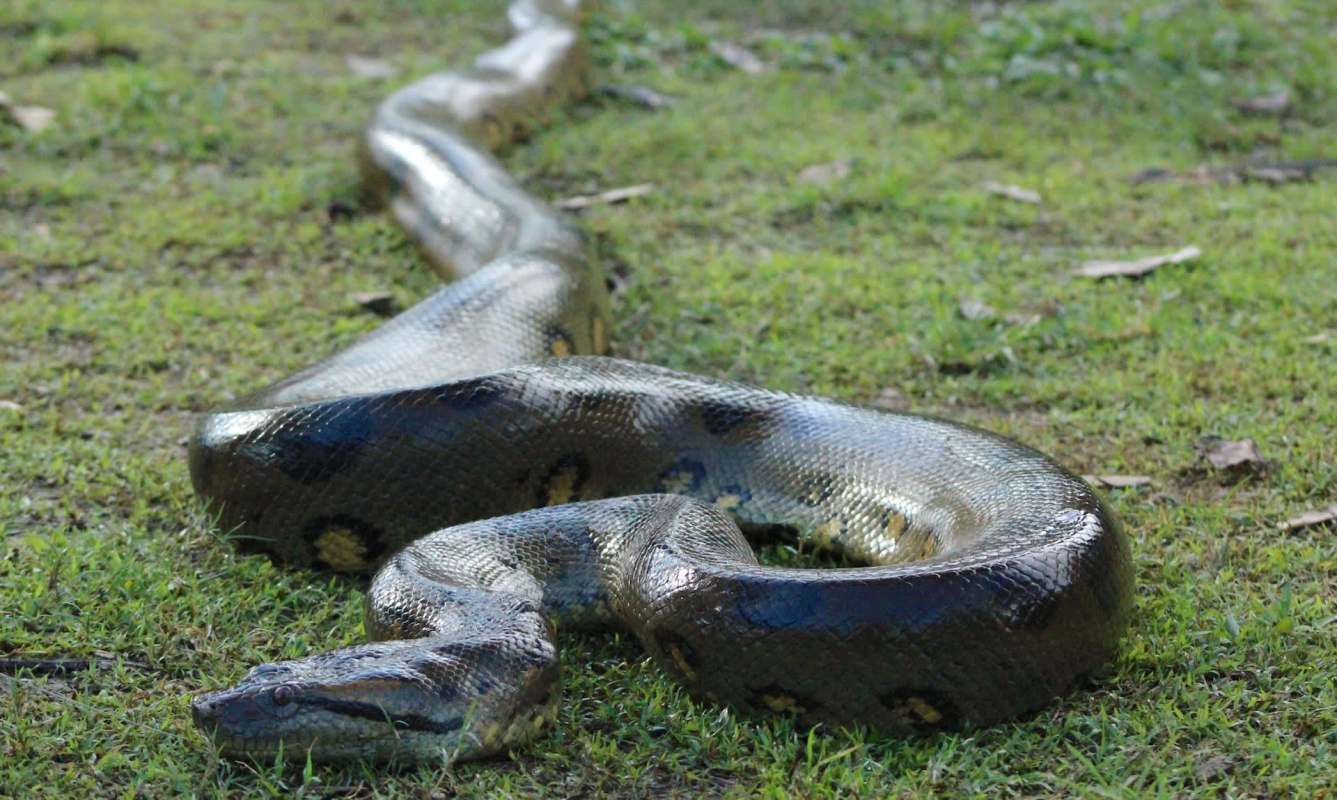
Near Kirchroth, on the Bavarian stretch of the Danube, a woman out on a riverside walk had a startling encounter when she spotted an unusually large snake lying in the sun by the water.
This wasn't a snake ordinarily seen in the area. Authorities later determined it was an anaconda, a South American constrictor that seemed to have spent time in captivity.
Here's what to know
According to Euronews, the 66-year-old reported seeing a snake more than 6.5 feet (two meters) long beside the Danube, prompting police, firefighters, and a reptile specialist to respond.
The specialist found that the snake was an anaconda.
Euronews reported that signs suggested people had kept the animal for a while.
Germany is outside an anaconda's natural range. Around Kirchroth, the snakes people are more likely to run into are nonvenomous grass snakes and Aesculapian snakes.
TCD Picks » Quince Spotlight
💡These best-sellers from Quince deliver affordable, sustainable luxury for all




Euronews noted that Aesculapian snakes can approach 6.5 feet (two meters) in length.
More background
Bavaria has strict regulations on keeping large constrictors. As Euronews reported, anacondas fall under the state's category of "dangerous animals of a wild species" and may be kept only when strict requirements are satisfied.
According to Euronews, anacondas can grow to 29.5 feet (nine meters) and weigh up to 441 pounds (200 kilograms).
Euronews said anacondas kill by wrapping themselves around prey until it suffocates, then swallowing it whole. Smaller snakes feed mainly on birds, while larger females can take animals such as capybaras, young deer, and caimans.
Encounters between humans and wild animals are often shaped by human activity, whether through captivity, landscape changes, or other disruptions — something BBC Future explores in its look at why wild animals attack humans.
What can be done?
Rules only work if authorities can track dangerous species, verify housing standards, and step in when animals are illegally sold or released.
Buying unusual wild animals as pets can create serious downstream problems when those animals outgrow their enclosures, become expensive to care for, or prove difficult to handle.
In many cases, the result is abandonment, unsafe keeping conditions, or emergency rescues like this one.
"It was a longer snake than the ones we have here," she told police.
Where can I learn more?
These stories show how people and snakes keep crossing paths in surprising places. They range from backyard encounters and guarded python nests to invasive sightings in Europe and urban rescues in Bangladesh.
• In a backyard, a garter snake encounter prompted a wave of snake-friendly yard tips.
• In Florida, a giant snake nest stirred fear as protective pythons guarded eggs.
• In Spain, the first invasive snake sighting in a park raised ecological alarms.
• On the Balearic Islands, horseshoe snakes spread and deepened fears for native wildlife.
• In Dhaka, snakes entering human settlements reflected mounting pressure from rapid urbanization.

Get TCD's free newsletters for easy tips, smart advice, and a chance to earn $5,000 toward home upgrades. To see more stories like this one, change your Google preferences here.







