


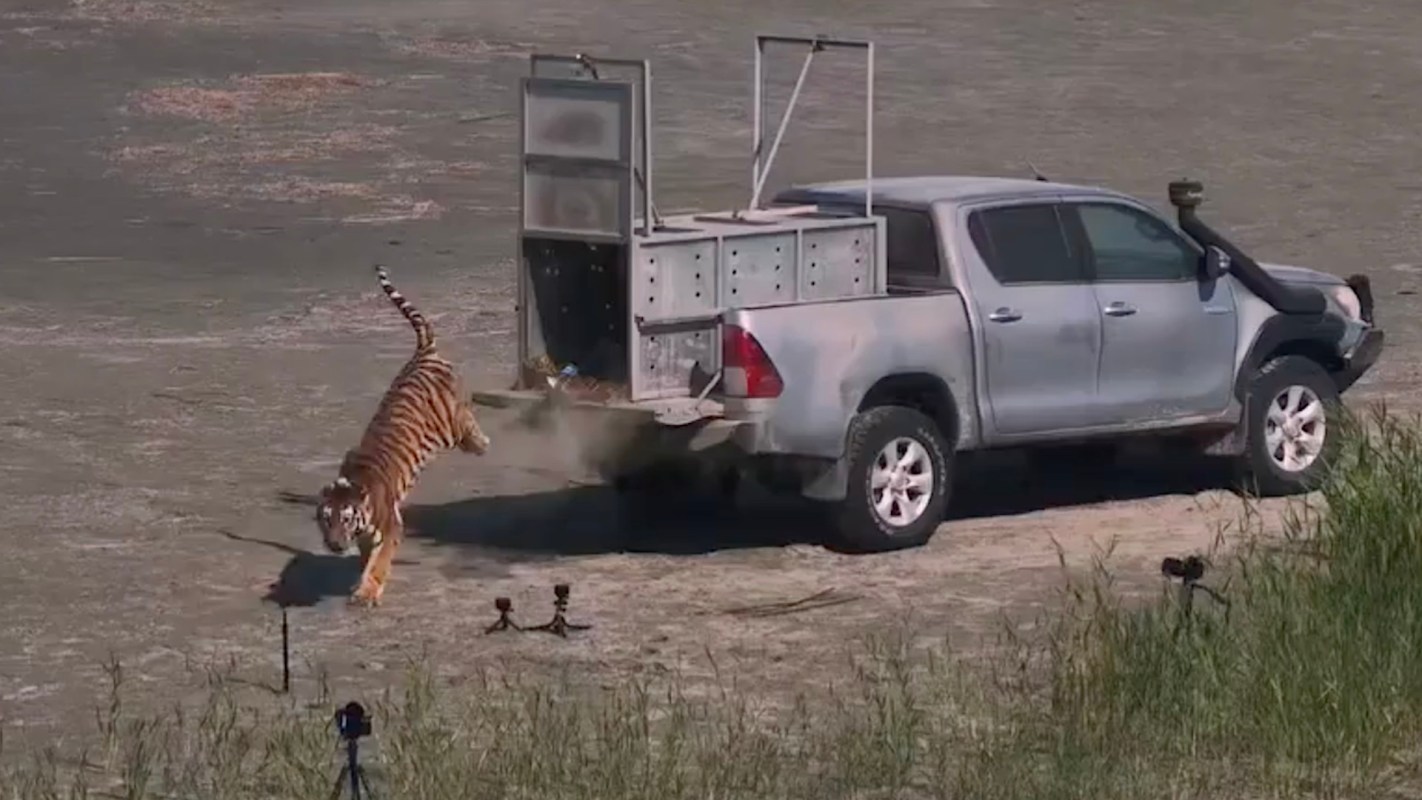
An Amur tigress named Umit walked through Kazakhstan's Ile-Balkhash State Nature Reserve on July 31, marking the first return of a wild tiger to the country in more than 70 years.
For conservationists, the return of this top predator represents a hopeful moment and a win.
What happened?
Footage of Umit, which in Kazakh means 'hope,' shows the tigress being released into the reserve, a notable moment in Kazakhstan's push to bring wild tigers back to part of their historic habitat. The video was credited to wildlife photographer and researcher Saltore Saparbayev.
One poster shared Saparbayev's footage to Reddit and described Umit as the first wild tiger known to be on Kazakhstan soil in more than seven decades.
(Click here if the embedded video does not appear.)
Umit can be seen quickly sprinting away from the enclosure she was transported in, before wandering through nearby grasses. The release happened in an area that once formed part of the range of the now-extinct Caspian tiger, also known as the Turanian tiger, which was declared to be extinct over 20 years ago.
TCD Picks » Quince Spotlight
💡These best-sellers from Quince deliver affordable, sustainable luxury for all




The original poster discussing the scene said Umit is the only tiger that has been released, although others may follow.
One commenter noted, "The first few months are a critical test of survival; the tiger must navigate unfamiliar terrain, identify new prey species, and map out vital water sources and hunting grounds."
The OP also noted that Umit was equipped with a satellite collar so conservation teams can monitor how she adjusts to life in the wild.
Why does it matter?
As an apex predator, a tiger can affect both prey numbers and prey behavior, creating wider ecological effects that may help nearby grasslands, wetlands, and forests recover or stay healthy.
Around the nation's Lake Balkhash, stronger ecosystems could mean more resilient landscapes, greater biodiversity, and added possibilities for conservation research and ecotourism.
The broader goal is to undo a human-caused loss that stretched across generations. Rewilding projects including apex predators are not especially common, but they suggest that damaged ecosystems are not always beyond repair.

Get TCD's free newsletters for easy tips, smart advice, and a chance to earn $5,000 toward home upgrades. To see more stories like this one, change your Google preferences here.







