


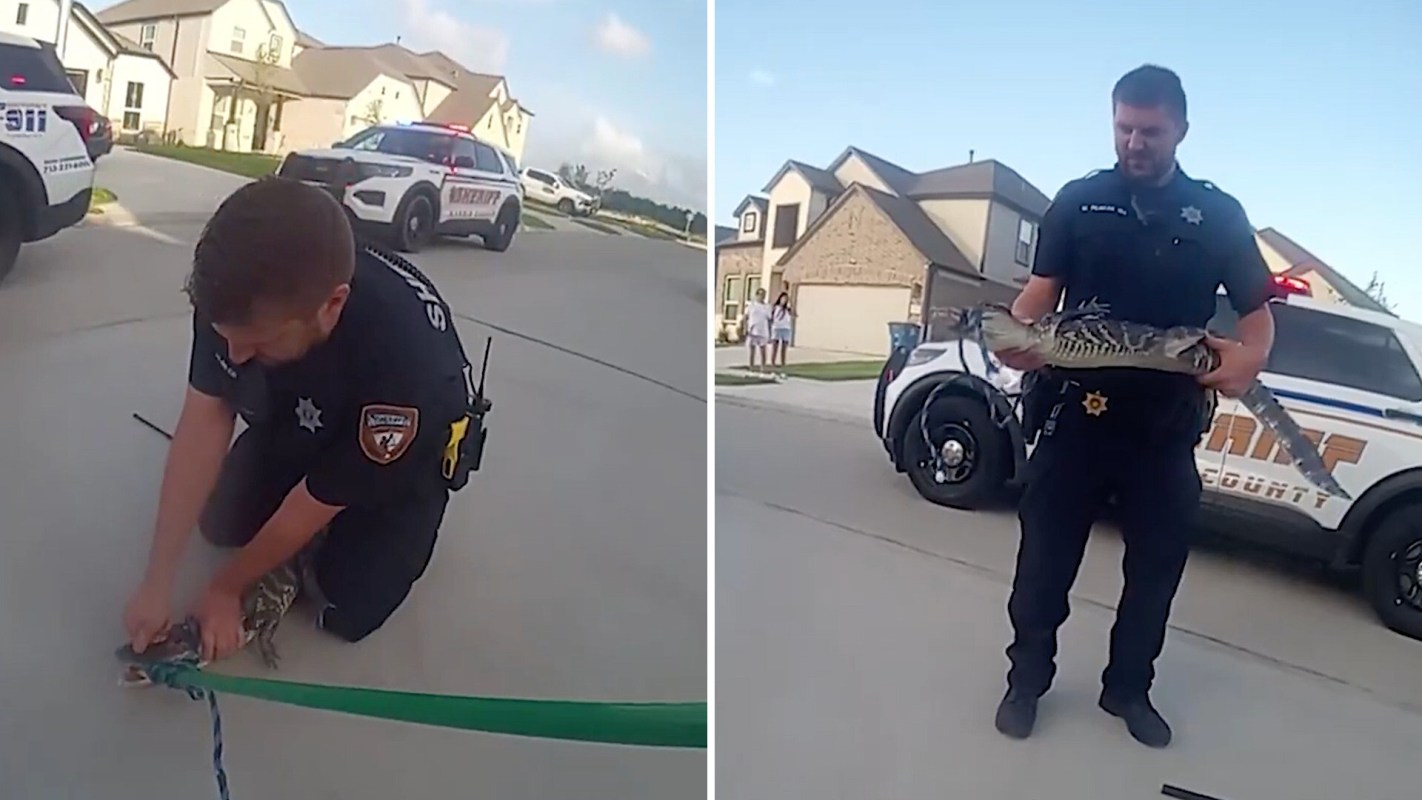
A routine drive through Sheldon, Texas, turned into an unexpected wildlife rescue when Harris County deputies found themselves wrangling an alligator from beneath a pickup truck.
The reptile was safely removed from the roadway and released into nearby water.
What happened?
Deputies were called after residents in Sheldon reported an alligator in the street, and when they got there, they found the animal tucked under a parked pickup truck.
As the Houston Chronicle reported, the animal was later released at Sheldon Reservoir after deputies placed it in their car. To get it out from under the truck, the two deputies used a broomstick and rope, then restrained its limbs.
HCSOTexas (@HCSOTexas) posted a video of the rescue to the social platform X, writing: "See you later, alligator… hopefully not too soon!"
HCSO Deputies M. Peavler and K. Loera responded to Sheldon Ridge Way, where they safely wrangled an alligator hiding under a pickup truck.
— HCSOTexas (@HCSOTexas) July 9, 2026
After a ride in a patrol vehicle, the gator was released into Sheldon Reservoir.
See you later, alligator… hopefully not too soon! 😂 pic.twitter.com/APNUB4DxQa
Around Houston, seeing an alligator is not especially unusual. The Houston Humane Society says the area's bayous and waterways provide natural habitat for the animals.
TCD Picks » Quince Spotlight
💡These best-sellers from Quince deliver affordable, sustainable luxury for all




Sightings can happen even in places dominated by pavement and traffic, especially after an animal wanders out of a nearby waterway or green space.
Why does it matter?
The encounter points to a broader reality in fast-growing regions such as greater Houston, where human development increasingly overlaps with wildlife habitat.
Roads, parking lots, drainage systems, and expanding neighborhoods can all bring people into closer contact with animals that have long lived in the area. Research on human-wildlife conflict has increasingly pointed to this overlap as a major driver of encounters.
These encounters can be stressful and potentially dangerous if handled the wrong way. Even when an animal is not actively attacking, approaching it, trying to move it, or cornering it can cause it to lash out in self-defense.
Wild animals are often simply trying to navigate landscapes that humans have heavily reshaped. In many cases, the safest outcome for both people and animals depends on keeping a distance and calling trained responders.
What's being done?
In this case, deputies helped keep the situation from escalating by removing the alligator from the road and releasing it into a more suitable environment. That quick response protected nearby residents while avoiding harm to the animal.
In areas where alligators are common, experts generally advise people not to feed them, not to approach them for photos, and to keep pets away from the water's edge.
If you spot an alligator in a road, yard, or parking area, the best step is usually to give it space and contact local authorities or wildlife professionals rather than trying to intervene yourself.
In a region built around bayous and other bodies of water, reducing conflict often means recognizing that people are living closer than ever to wild habitat.
The Houston Humane Society says conflicts with people are "very rare" because alligators are typically more defensive than aggressive.

Get TCD's free newsletters for easy tips, smart advice, and a chance to earn $5,000 toward home upgrades. To see more stories like this one, change your Google preferences here.







