


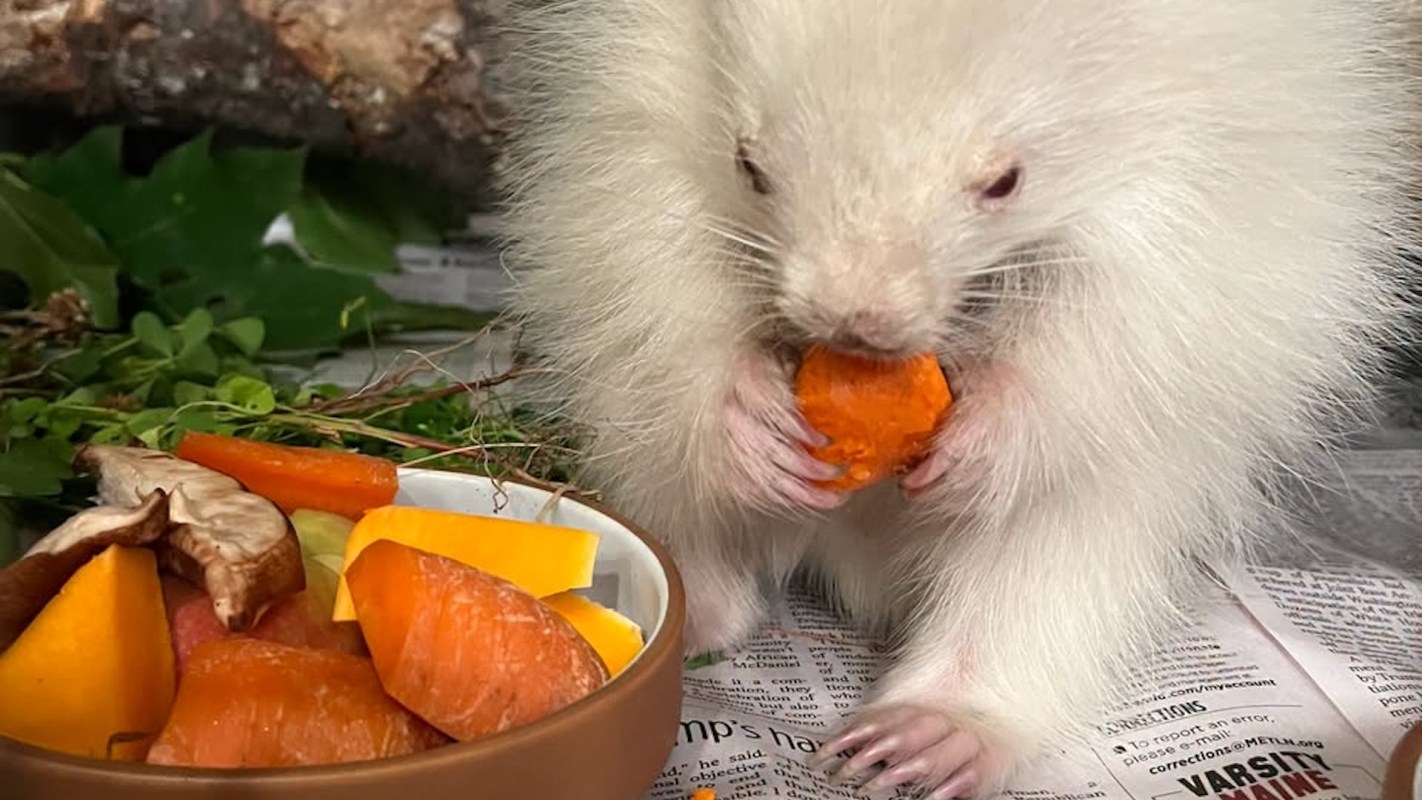
A rare and undeniably cute baby porcupine is getting a second chance in Maine after a dangerous encounter with dogs left rescuers concerned about more than its visible injuries.
This adorable tiny animal isn't just very young — it is also albino, an exceptionally rare condition in the wild, where bright white coloring can make survival even more difficult.
What's happening?
After being brought in, the young albino North American porcupine, or Erethizon dorsatum, is being treated at the Center for Wildlife near Kittery.
Popular Science reported that his condition is quite rare — according to the wildlife center, only about one in 10,000 porcupine births results in albinism.
Its appearance is in sharp contrast to porcupines' usual features: instead of a dark body with pale quills, this porcupette is completely white and has pinkish paws. In the wild, that kind of visibility can make the animal more exposed.
The Center for Wildlife described how the rescue unfolded: "This baby porcupine was discovered after some dogs were attempting to chase it. Thankfully, his rescuer was able to step in before any serious injuries occurred. Due to his unique coloring, his young age, and potential injury from the dog interaction, the baby porcupine's rescuer decided it was best to bring him in for care."
TCD Picks » Quince Spotlight
💡These best-sellers from Quince deliver affordable, sustainable luxury for all




The full extent of the baby's condition emerged after intake. His health looked stable upon first glance when he arrived, but when staff examined him, they found he was dealing with crusty eyes, crust build-up on one arm, a runny nose, and raspy breathing — all tied to mange, a skin disease caused by mites.
Why does it matter?
Thankfully, someone stepped in before the dogs could cause serious harm and got the animal to trained professionals.
For an albino animal, the risks can be even greater. The lack of camouflage can make them easier to spot for predators, and may also come with additional health challenges, meaning survival can be harder even without an illness such as mange. For a young animal facing both heightened visibility and disease, the odds can be especially steep.
What's being done?
Because mange can be treated, the baby is under active care. The Center for Wildlife team is monitoring the porcupine closely while staff addresses both the skin infection and the crusting around sensitive areas such as the eyes and paws.
Wildlife centers also provide an important public service by turning rescues into educational moments. Cases like this can help communities better understand when to step in, when to call experts, and how to reduce harm to native animals in everyday situations.
The Center for Wildlife summed up the effort this way: "Our clinic team is working hard and keeping a close eye on him as they administer medication to fight off the mange infection. Daily cleanings occur as well in order to keep the crust away as best as possible. We hope to see some improvements soon and hopefully have this little guy on his way to recovery!"

Get TCD's free newsletters for easy tips, smart advice, and a chance to earn $5,000 toward home upgrades. To see more stories like this one, change your Google preferences here.







