


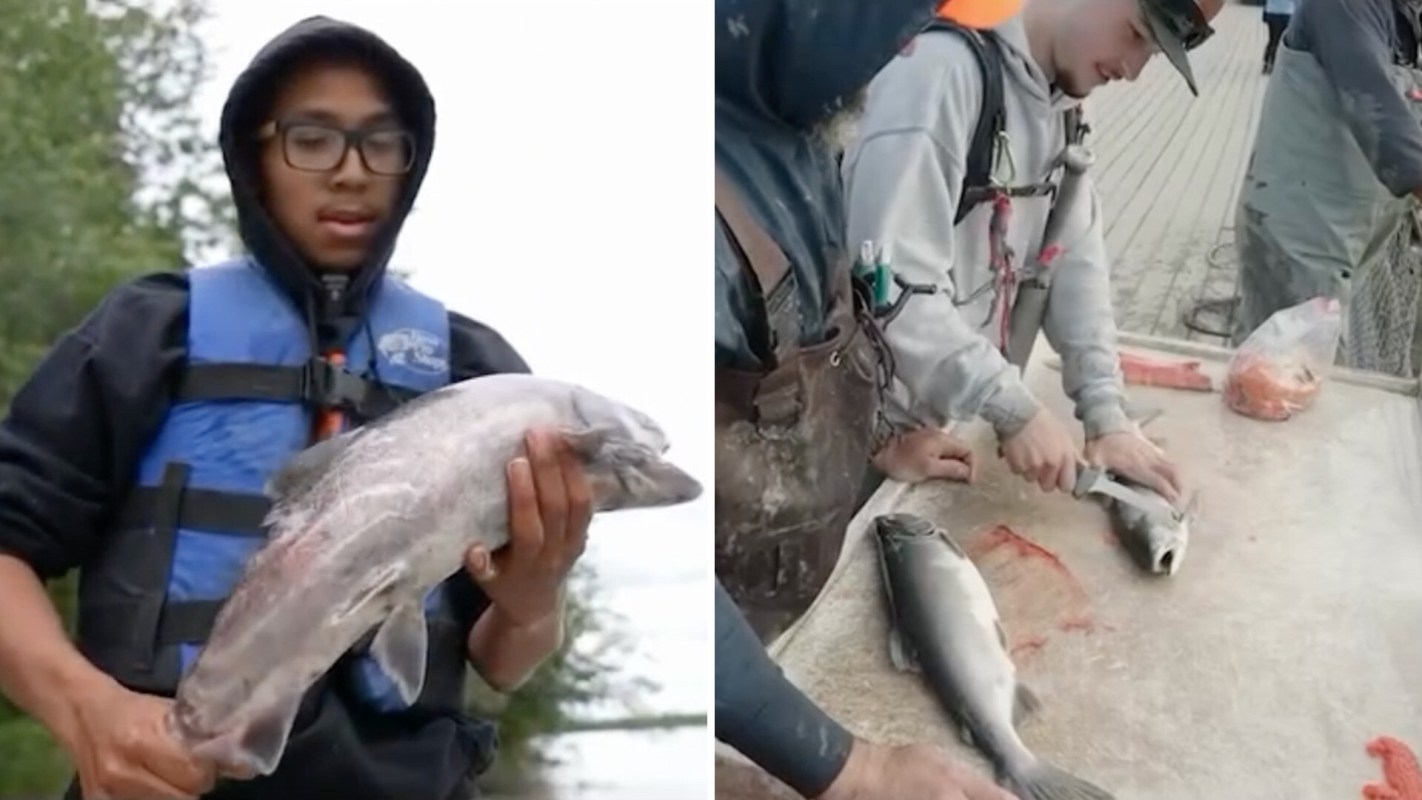
In Alaska, families that have relied on salmon for generations say they are being shut out of rivers and fisheries even as industrial boats continue hauling in massive offshore catches.
Here's what to know
In an Instagram video report, More Perfect Union (@perfectunion) summed up the conflict: "Regular people are losing the right to fish in Alaska. Corporations discard millions of pounds of fish every year while people lose access to rivers, and the media is sleeping on the story. Now the working class is fighting back, and their rage could flip the U.S. Senate."
In 2024, the United States signed an agreement with Canada that effectively closed most king salmon fishing in those rivers for seven years. The report follows subsistence harvesters and small-boat fishermen who say salmon declines have upended everyday life. Along the Yukon River system, annual king salmon runs reportedly fell from about 400,000 in 1981 to under 40,000.
Federal regulators at the National Oceanic and Atmospheric Administration say warming oceans and related climate effects are chiefly responsible for the salmon collapse, and a 2026 NOAA study said bycatch removals did not appear to meaningfully drive Yukon River Chinook declines at the population level. At the same time, Alaska trawlers reportedly brought in about 100,000 Alaska-origin salmon as bycatch in 2025, plus 4.2 million pounds of halibut, according to More Perfect Union.
Fishermen interviewed in the video argued that the official explanation overlooks potential habitat damage and food-web disruption, as well as fish they believe are discarded without being fully recorded.
One commenter captured that frustration, writing, "Corporations and greed are destroying everything. Trawling should be illegal all over the world. Our Oceans need that. Fishermen need that."
TCD Picks » Quince Spotlight
💡These best-sellers from Quince deliver affordable, sustainable luxury for all




More background
According to the report, Eva and Charlie, featured at their village's fish camp on the banks of the Tanana River, needed a special educational permit just to take a small number of salmon from the river for food and cultural tradition, even as large offshore fleets continued operating.
The report noted that many of the biggest industrial trawling firms are headquartered in Seattle, that much of the revenue flows out of Alaska, and that roughly two-thirds of those jobs are filled by non-Alaskans. Alaska pollock trawling generates about $832 million and supports just over 6,000 jobs.
The North Pacific Fishery Management Council sets bycatch limits, gear rules, and fishing areas for trawlers, even as several council members work for groups whose operations depend on trawling.
What's being done?
According to the report, a Facebook group focused on trawling and bycatch has swelled to almost 60,000 members, adding pressure on candidates in a closely divided state to answer questions about the industry.
Bill Hill, an independent House candidate and small-boat commercial fisherman, said, "If bottom trawling is destroying the environment, you know, we need to find a way to ban that." U.S. House candidate Mary Peltola's campaign said she wants to prohibit factory trawling.
Senator Dan Sullivan and Representative Nick Begich introduced bycatch bills focused on research and gear improvements to reduce bycatch, but the measures would neither outlaw particular gear types nor restrict the waters where trawlers can operate.
As another commenter wrote, "This practice is disgusting and should've been banned years ago."
The people featured in the report described the issue as one of survival and inheritance. As one said, "Salmon are very resilient. If you give them a chance, they'll bounce right back. They've gone through many changes in history. They've been around since the dinosaurs. And they just had to do the right thing for the fish to come back."
Where can I learn more?
Alaska's salmon fight is part of a wider struggle over disappearing fish, industrial pressure, and who pays the price. Related coverage looks at Native communities losing subsistence catches, weakened ocean monitoring, and efforts to rebuild salmon habitat.
• Across rural Alaska, prized salmon catches are disappearing from rivers central to Native life.
• Alaska's fishing industry lost a key ocean monitoring network as salmon and crab crashes worsened.
• From the Global South, small-scale fishers warn the blue economy is becoming a coastal land grab.
• In Washington, officials say hazardous salmon habitat needs comprehensive repair.

Get TCD's free newsletters for easy tips, smart advice, and a chance to earn $5,000 toward home upgrades. To see more stories like this one, change your Google preferences here.







