


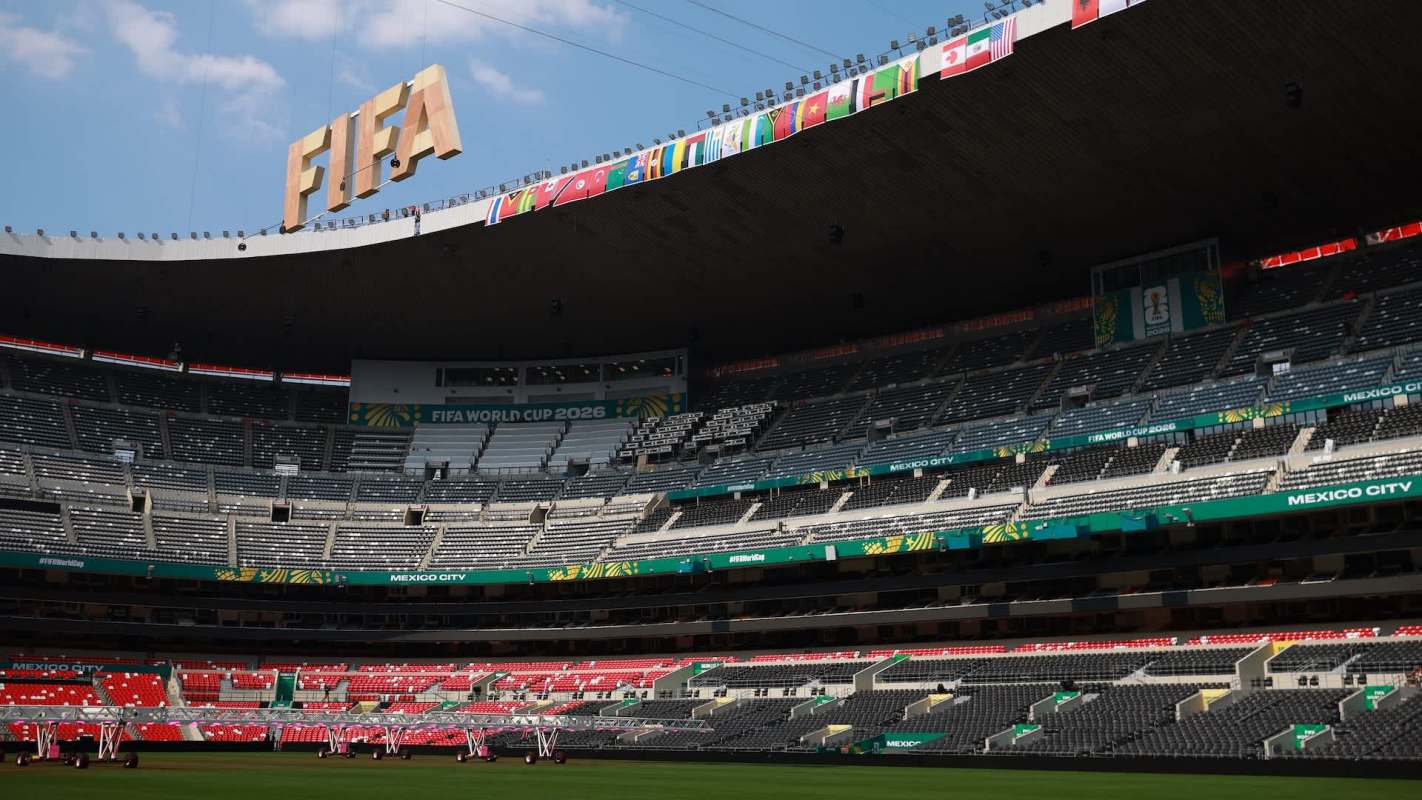
The 2026 World Cup is expected to bring packed stadiums and elite competition to cities across North America.
Another question could shape the tournament, too: how organizers would respond if wildfire smoke turns the air unsafe.
What's happening?
SoFi Stadium has drawn fresh attention after a burst of fires in Southern California.
Grist reported that about a dozen blazes erupted last month, leading Los Angeles County to issue a multiday air quality advisory.
Experts told the outlet that FIFA still does not appear to have a clear smoke protocol if conditions worsen.
The question is especially important in Los Angeles, which will host eight matches from June 12 to July 10 and draw huge numbers of fans and players.
TCD Picks » Quince Spotlight
💡These best-sellers from Quince deliver affordable, sustainable luxury for all




"FIFA has basically almost done nothing," said Nicholas Watanabe, a professor of sport and entertainment management at the University of South Carolina. "They are lagging behind even minor leagues in North America."
What once might have seemed unusual now happens regularly enough that other leagues have built rules around it. The NWSL, NCAA, and NFL already use AQI-based guidance, and several professional leagues have postponed games in recent years because of smoke.
Why does it matter?
The bigger concern is what bad air quality can do to people. Wildfire smoke can make conditions unhealthy very quickly for athletes and spectators, especially children, older adults, and those with asthma or other respiratory conditions.
An AQI of 101 marks the point at which the air is labeled "unhealthy for sensitive groups," and the situation can deteriorate quickly.
"They might get a burning throat, a cough, and a headache," said Mary Johnson of Harvard University's T.H. Chan School of Public Health.
Nor does a city need to sit next to a fire to have a problem: smoke can travel long distances and still push air quality into dangerous territory.
Several host cities — including Los Angeles, Seattle, and Vancouver — already face notable smoke risk, and forecasts suggest parts of the West and Canada could see a difficult 2026 fire season.
What's being done?
In a statement, FIFA said, "Climate-related risks are assessed as part of overall tournament planning and managed in close coordination with host cities, stadium authorities, and national agencies."
Even so, the organization emphasized extreme heat and did not name any AQI threshold for postponing or suspending matches.
That omission has frustrated many experts.
Other organizations have been far more specific. The NFL can relocate games if AQI remains consistently above 200, while the NCAA requires events to be moved indoors or canceled once AQI exceeds 300.
The NWSL uses a stepped system: hydration breaks at 101, consideration of rescheduling at 180, and mandatory postponement or cancellation above 200.
Enclosed venues may be able to filter polluted air more effectively, but many World Cup stadiums will not have that advantage.
That is why some experts want FIFA to set clear standards.
"It would make sense for FIFA to think ahead and implement some air quality standards that would trigger some decisions about whether or not to play," said geographer Dominik Kulakowski, adding, "We're seeing wildfires become a larger part of life."

Get TCD's free newsletters for easy tips, smart advice, and a chance to earn $5,000 toward home upgrades. To see more stories like this one, change your Google preferences here.







