


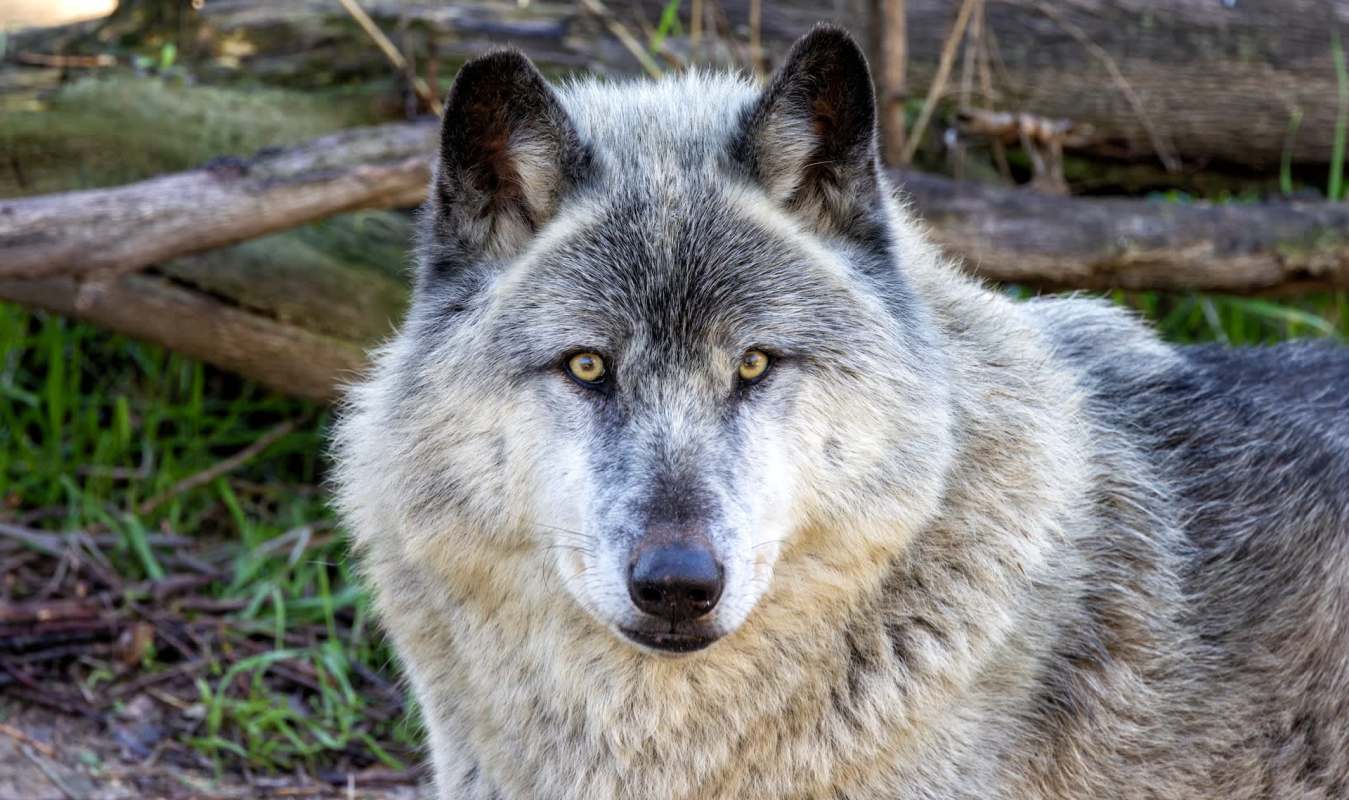
For years, Yellowstone's wolf reintroduction has been held up as a classic case of predators transforming a landscape. But as Science Daily details, a new review of the evidence says one of the best-known versions of that story might just be a little too good to be true.
What's happening?
In a peer-reviewed study published in Global Ecology and Conservation, researchers said a widely discussed 2025 paper on Yellowstone wolves used methods that could have exaggerated the animals' apparent effect on vegetation.
The disagreement centers on a headline-grabbing finding from earlier research that claimed willow crown volume increased by about 1,500% after wolves recovered in Yellowstone National Park.
The newer paper said the finding was based on "circular reasoning" because plant height was used both to calculate and to predict willow volume, Science Daily noted.
"Because height was used both to compute and to predict volume, the relationship is circular -- mathematically guaranteed to look strong even if no biological change occurred," argued Daniel MacNulty, lead author of the new analysis.
Science Daily added that researchers also intimated the earlier study compared different willow plots from different years, applied a model to unusually shaped and heavily browsed plants, and relied on assumptions that may not reflect Yellowstone's still-recovering ecosystem.
TCD Picks » Quince Spotlight
💡These best-sellers from Quince deliver affordable, sustainable luxury for all




Why does it matter?
The Yellowstone wolf story has become one of the most commonly cited examples of a "trophic cascade," the idea that predators can trigger effects throughout the food web and even alter riverside vegetation.
If that story has been oversimplified, the implications extend well beyond one national park.
Wildlife management decisions, restoration strategies, and the public's understanding of conservation are often shaped by how studies like this are interpreted. If the science behind such a well-known case is less certain than many believed, it may call for a more cautious view of what predator recovery can and cannot achieve.
The new analysis does not argue that wolves do not matter. It suggests their effects may be more limited, uneven, and tied to local conditions such as hydrology, browsing pressure, and site-specific conditions.
Even a top predator may not produce the same dramatic outcome in every setting, and overstating those impacts could mislead future conservation planning.
What's being done?
The new analysis revisits the same dataset and tests the assumptions behind the earlier findings, while calling for stronger methods in ecology, particularly when studies make bold claims that attract global attention.
The authors said their findings may also help explain why teams working from the Yellowstone data reached sharply different results, Science Daily noted.
The outlet noted that while the disputed 2025 paper described one of the strongest trophic cascades in the world, another team that gathered field data over two decades had previously reported only weak effects.
"Our goal is to clarify the evidence, not downplay the role of predators," MacNulty said, according to Science Daily. "Predator effects in Yellowstone are real but context-dependent -- and strong claims require strong evidence."

Get TCD's free newsletters for easy tips, smart advice, and a chance to earn $5,000 toward home upgrades. To see more stories like this one, change your Google preferences here.







