


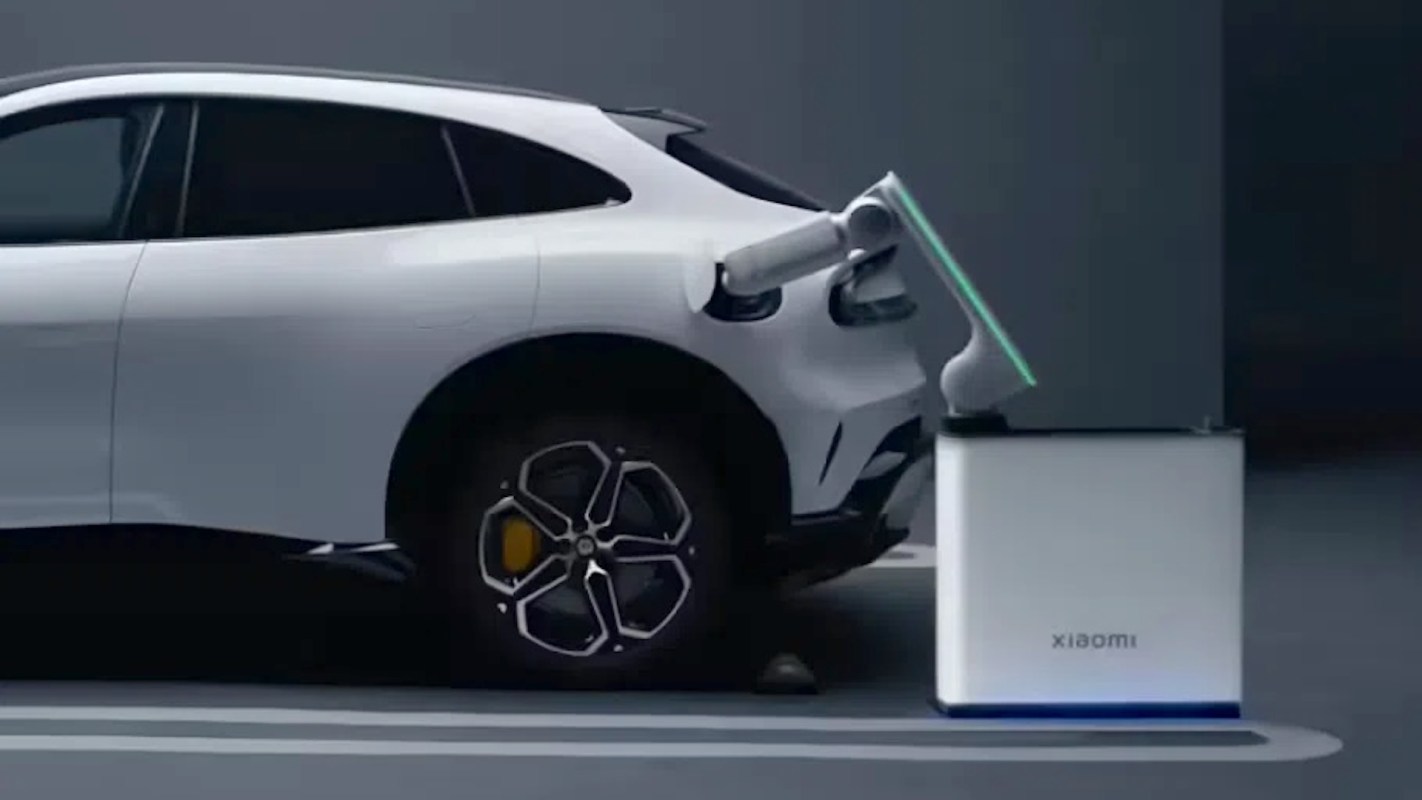
Xiaomi says the future of home EV charging could be as simple as parking your car and heading inside.
The company's newly announced home charging robotic arm is drawing attention for one major promise: no more manual steps to plug in.
If it arrives on schedule in late 2026, the system could make charging at home feel less like a chore and more like a hands-free smart-home feature.
What happened?
According to CarNewsChina.com, Xiaomi Auto expects the home charging robotic arm to go on sale in Q4 2026.
Xiaomi described the product as a way to connect automated parking with self-directed charging, calling it "a seamless, intelligent experience that bridges automated parking with autonomous charging."
Features that allow the car to park itself in a specific location and a robotic charging arm to automatically plug in can mean you don't ever have to plug or unplug the car yourself.
TCD Picks » Quince Spotlight
💡These best-sellers from Quince deliver affordable, sustainable luxury for all




The demo shows the vehicle park first, after which the robotic arm identifies the charging port and plugs in without driver involvement. The company also said the demo footage was captured in a real-world environment and that "all showcased features are production-ready."
Under what Xiaomi calls "Lazy" charging, drivers can leave the car as soon as it is parked and let the system take over.
The arm can disconnect on its own once the battery is full or reaches a chosen limit, and charging can also be started from a phone if the vehicle is close enough to the device.
Competitors in China's EV industry are developing similar systems. Li Auto, Aito, and Star Charge are also working on robotic charging, which should ensure it becomes more common in future.
Why does it matter?
A system that removes one more step from daily charging could make electric vehicle ownership easier for busy families, older drivers, and anyone tired of dealing with cables late at night or in bad weather.
It could also help more people feel comfortable making the switch to EVs, thereby reducing tailpipe pollution and improving air quality in nearby communities.
Charging at home is also typically much cheaper than relying on public fast chargers.
Installing solar panels can increase those savings even more, since charging with your own energy is cheaper than using public stations or pulling all your power from the grid.
Star Charge says its "Armstrong" system can complete the charging task in under 40 seconds, while Harmony Intelligent Mobility Alliance has previously shown the Aito M8 EV using "off-vehicle parking" to position the car before a robotic arm takes over the plug-in process.
Taken together, these announcements point to rapidly growing momentum behind automated EV charging.

Get TCD's free newsletters for easy tips, smart advice, and a chance to earn $5,000 toward home upgrades. To see more stories like this one, change your Google preferences here.






