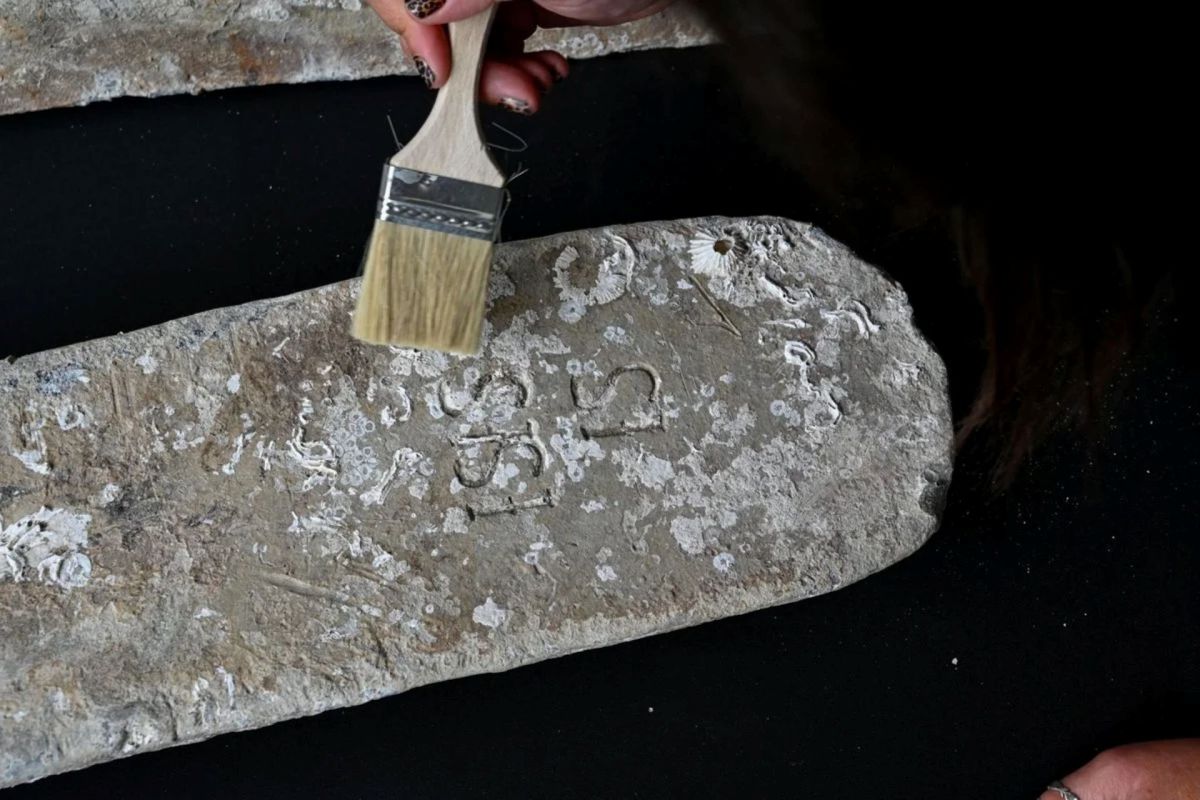
During survey work for the Hornsea 3 wind farm in the North Sea, researchers identified an unrecorded wreck site where three rare 17th-century lead ingots were still stacked on the seabed.
Off Norfolk, the find ties a major renewable energy development to surviving evidence of Britain's early maritime commerce.
What happened?
The ingots were found during pre-construction seabed work for Hornsea 3, when teams were carrying out routine assessments for possible unexploded ordnance. Heritage Daily.
About 75 miles (120 kilometers) from the Norfolk coast, in roughly 131 feet (40 meters) of water, the three lead ingots were identified by MSDS Marine archaeologists working with remotely operated vehicle teams.
Timber remains beneath the metal showed that the cargo belonged to a previously unknown wreck, even though little of the wooden ship itself still survives. Each ingot weighs about 154 pounds (70 kilograms), and all three were found lying on the seabed in a neat stacked formation.
Researchers may be able to trace the cargo's source through the letters stamped on each ingot. Those maker's marks — "IS," "EB," and "H" — resemble markings seen on lead recovered from the Dutch East India Company vessel Kennemerland, which was lost near Shetland in 1664.
TCD Picks » Quince Spotlight
💡These best-sellers from Quince deliver affordable, sustainable luxury for all




Because the markings echo those on Dutch East India Company cargo, archaeologists think the newly discovered wreck may have been a Dutch merchant ship traveling along a long-used North Sea trade route.
Why does it matter?
The discovery is especially significant because pre-18th-century timber wrecks are relatively rare in this part of the southern North Sea. That makes the site particularly valuable for understanding how goods moved between England and mainland Europe during the early modern period.
In the 1600s, Derbyshire and the Peak District were major English lead-mining regions, and researchers believe these ingots may have originated there. English lead was shipped through ports such as Hull and London toward trading hubs in Amsterdam and Rotterdam.
Before the dangers of lead were well understood, the metal was widely used in plumbing, construction, ammunition, and manufactured goods. Casting it into ingots made it easier to transport in bulk.
Developed by Ørsted, Hornsea 3 is projected to become the biggest standalone offshore wind farm in the world and to generate enough electricity for about 3.3 million U.K. homes. Before the artifacts were transferred to a museum, Ørsted worked with the Maritime & Coastguard Agency and Historic England to record, conserve, and preserve them.
What are people saying?
Alison James, MSDS Marine's Heritage Services director, called the discovery "a direct link to the past." She also said future analysis could help determine whether the lead came from Derbyshire before its final voyage by sea.
The stamped markings, archaeologists said, strongly suggest a connection to 17th-century Dutch trade. They also suspect the wreck lies on an old shipping route between Hull and the Netherlands, adding another clue to the ship's identity.
The ingots can be viewed by the public at Matlock's Peak District Lead Mining Museum in Derbyshire, while experts continue studying their exact origin.

Get TCD's free newsletters for easy tips, smart advice, and a chance to earn $5,000 toward home upgrades. To see more stories like this one, change your Google preferences here.