


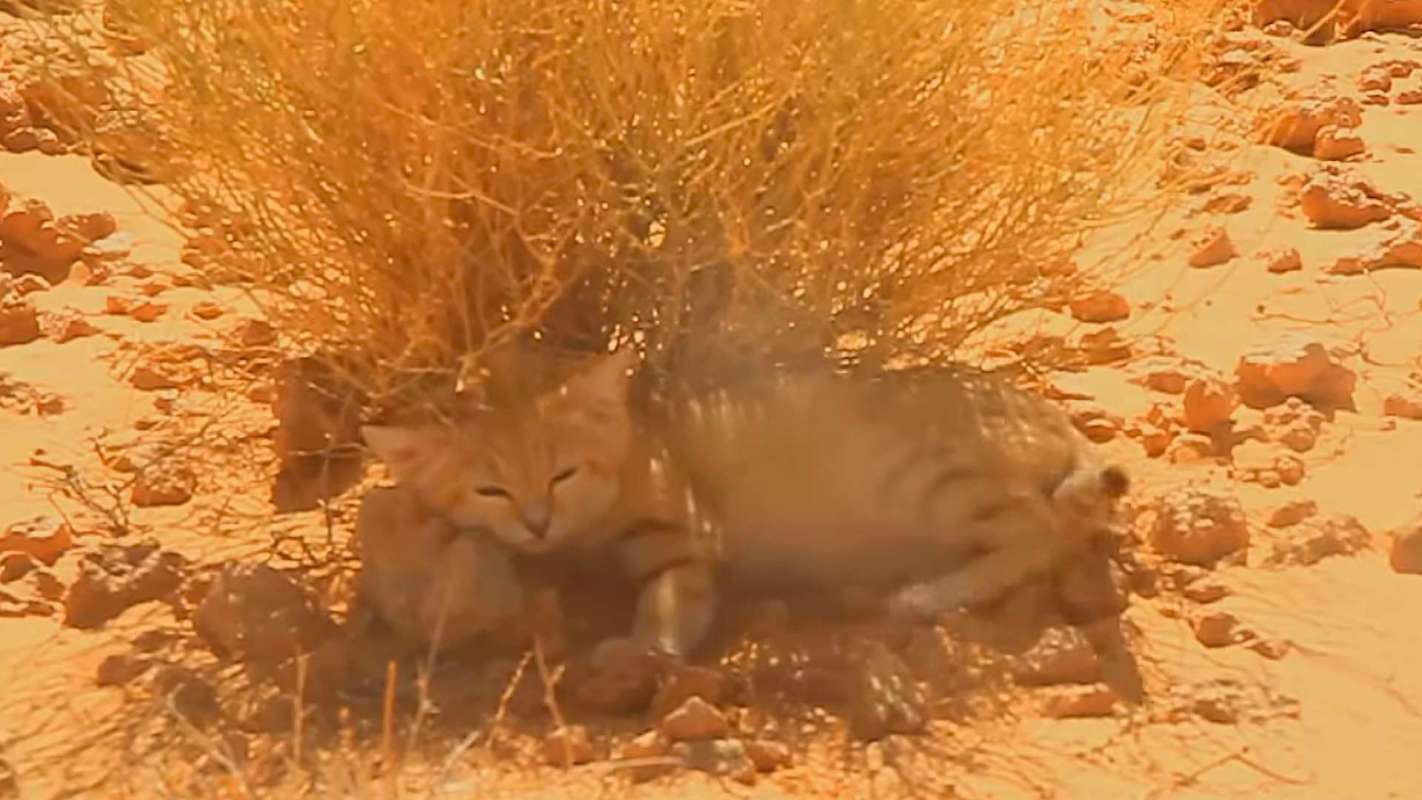
Scientists studying animals in the Sahara have linked a major wildlife finding to a nearly decade-old, 18-second YouTube upload.
That short clip ultimately helped researchers identify a previously unrecognized stronghold for sand cats in southwest Libya.
What happened?
A new study published in the peer-reviewed Journal of Arid Environments documented sand cats at 13 sites in the Libyan Sahara, per Wildlife Watchers. Researchers have also identified southwest Libya as an important refuge for the species.
The research has brought new attention to a 2017 video uploaded by wildlife photographer Mohammed Almuntasir, which the Guardian described as "the first material evidence that the sand cat … existed in the country."
Because its pale coat and small body help it vanish into desert surroundings, the sand cat can be extraordinarily difficult to spot. Often called the "ghost of the desert," it is considered the only cat species specialized for life in true desert habitats, and Libya had no confirmed record of it before Almuntasir's footage appeared.
Researchers have since logged 36 sand cat sightings during an eight-year collaboration that took place mostly remotely. Fifteen of those records came from the remote Wadi Armet valley, located about 620 miles southwest of Tripoli.
TCD Picks » Quince Spotlight
💡These best-sellers from Quince deliver affordable, sustainable luxury for all




The scientists also recorded the Saharan striped polecat at eight additional sites, with seven falling outside the International Union for Conservation of Nature's recognized range for the species, per Wildlife Watchers. The findings suggest Libya's deserts may hold far more overlooked wildlife than many experts previously believed.
Why does it matter?
A discovery like this can reshape maps, priorities, and protection efforts.
Libya's vast desert interior has seen limited survey work for years, so confirming that sand cats live there and may even be thriving in certain pockets gives scientists and local communities a clearer picture of the biodiversity the region supports.
Better wildlife data can help guide land management, support future research, and strengthen the case for protecting fragile desert ecosystems that nearby communities also rely on.
Observations from local photographers and residents can also clearly lead to important findings in regions that are difficult for researchers to reach.

Get TCD's free newsletters for easy tips, smart advice, and a chance to earn $5,000 toward home upgrades. To see more stories like this one, change your Google preferences here.






