


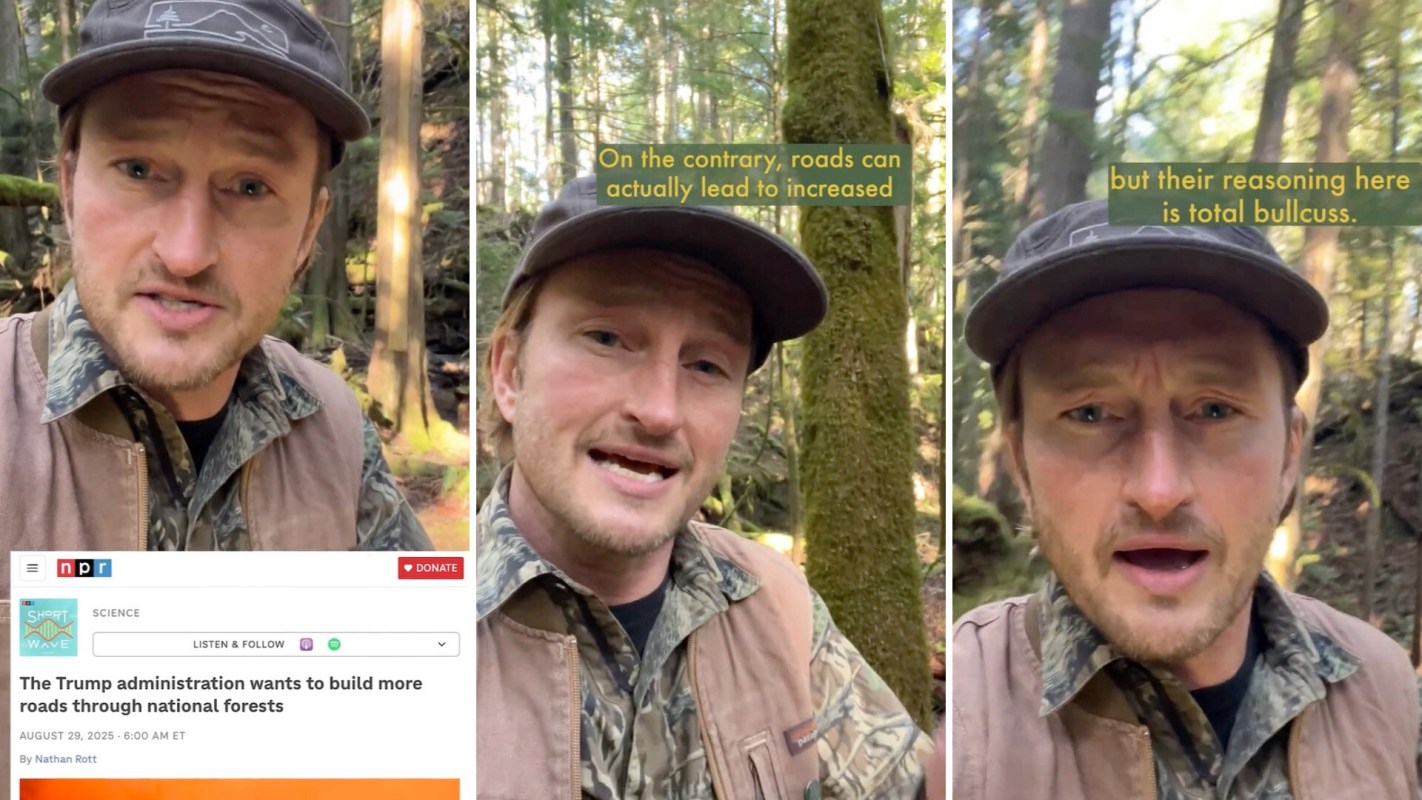
A study highlighted by science communicator Ross Reid found that one of the strongest predictors of wildfire risk may be something many people use every day: roads.
The finding is prompting renewed scrutiny of federal officials' claims that building more roads into forests could help with fire response and prevention.
Here's what to know
In a TikTok post, Reid said researchers at the U.S. Forest Service found a strong link between roads and wildfires, with most ignitions occurring within 164 feet (50 meters) of a roadway.
@nerdyaboutnature The wildfires lately, have been wild. 😳 A recent paper took a look at wildfire ignitions and found that proximity to roads was a good indicator for the size and severity of fires, with a vast majority of wildfires starting within 50 meters from a road. While these are often small fires, the frequency of occurrences can be too much to manage during a busy fire season and it's these small fires can lead to the big catastrophic ones that make global headlines and destroy communities. Why does this matter? Well, the Trump administration is trying to use wildfires to stoke fear and justify radical logging policies with no backing in science, that would build roads into the last big tracts of our forests in order to open the door for private industry to log and drill, claiming that more roads means more access for fire fighting and prevention. The forest services own studies refute that, showing that roads makes very little to no difference at all in their ability to access forests for fire prevention treatment. On the contrary, roads can actually lead to increased fire risk simply because 9 out of 10 wildfires are caused by people. More roads mean more cigarettes thrown out car windows, more hot catalytic converters igniting dry grass, and more chances for rogue campfires to go awry – inviting more frequent wildfire ignitions at a time when federal fire-fighting capacity has been radically reduced thanks to budget cuts overseen by the same administration. Building more roads into these forests could significantly increase the number of fires being started, added to the very real and common impacts of anthropogenic climate change. Instead of stoking wildfire fear misinformation and creating more problems, it's time we listen to what the best research by the brightest minds on earth tells us about this terrifying reality we face. Take a moment to tell them to keep the roadless rule in place, and start directing funding and resources to places that would actually make a difference! #wildfire #roadlessrule #action #roadless #fire ♬ original sound - Nerdy About Nature (Ross Reid)
Those roadside fires are often minor at first, but Reid said their volume during a heavy fire season can overwhelm crews. When enough of those incidents stack up, some can become the large, destructive fires that endanger communities and dominate headlines.
Reid argued that U.S. Forest Service findings run counter to the current administration's case for loosening roadless-forest protections. According to Reid, officials have invoked wildfire risk to support expanded road access for logging and drilling, even as Forest Service research says roads make "very little to no difference at all" for reaching areas targeted for fire-prevention treatment.
Reid said the bigger problem is that roads bring people, and people start most wildfires. In his telling, "9 out of 10 wildfires are caused by people," and additional access can mean more discarded cigarette butts, more hot vehicles coming into contact with dry grass, and more campfires growing out of control.
TCD Picks » Quince Spotlight
💡These best-sellers from Quince deliver affordable, sustainable luxury for all




More background
A single ignition along a roadside can cause property damage, disrupt work and school, create health risks, and increase emergency-response costs.
From Reid's perspective, cutting new roads into remote forest areas would add more entry points for human activity in fire-prone places, raising the odds of accidental ignitions. Meanwhile, increasingly hot, dry conditions are already making wildfires tougher to stop.
Intact forests store carbon, protect wildlife habitat, and reduce other environmental harms, so decisions that increase fragmentation of and encroachment into these wild lands may carry lasting costs.
Many commenters agreed with Reid's take.
"It's so important to use evidence-based decision making to tackle these fires," wrote one. "People's lives and homes are at stake. The cost is enormous. We can't afford not to listen to the science so that we can manage fires as effectively as possible."
What can be done?
Reid called on supporters to voice their support for the roadless forest rule and to press policymakers to implement science-backed measures that would more directly lower wildfire risk.
Additionally, there are steps we can all take to reduce the chances of a fire, particularly when visiting wild areas. By fully extinguishing campfires, keeping hot vehicles away from dry grass, and never throwing cigarettes from a car, we can help eliminate some of the most common causes of wildfires.
Reid summed up the issue bluntly: "Instead of stoking wildfire fear misinformation and creating more problems, it's time we listen to what the best research by the brightest minds on earth tells us about this terrifying reality we face."
Where can I learn more?
Questions about roads, access, and human-caused ignitions are part of a much broader wildfire fight playing out across the West. The articles below look at how policy battles, changing fire behavior, and pressures like drought can shape what communities are up against.
• In California, wildfire mitigation plans spark clashes over access, evacuation, and land management.
• Across the West, fewer fires now burn more land, underscoring how fast risks are changing.
• In the West, drought is helping nighttime wildfires keep spreading when cooler hours slowed them.
These articles also make clear that wildfire policy reaches far beyond what happens once flames are already spreading. Decisions about forest access and land management can help determine whether a small start stays contained or turns into a disaster.

Get TCD's free newsletters for easy tips, smart advice, and a chance to earn $5,000 toward home upgrades. To see more stories like this one, change your Google preferences here.






