


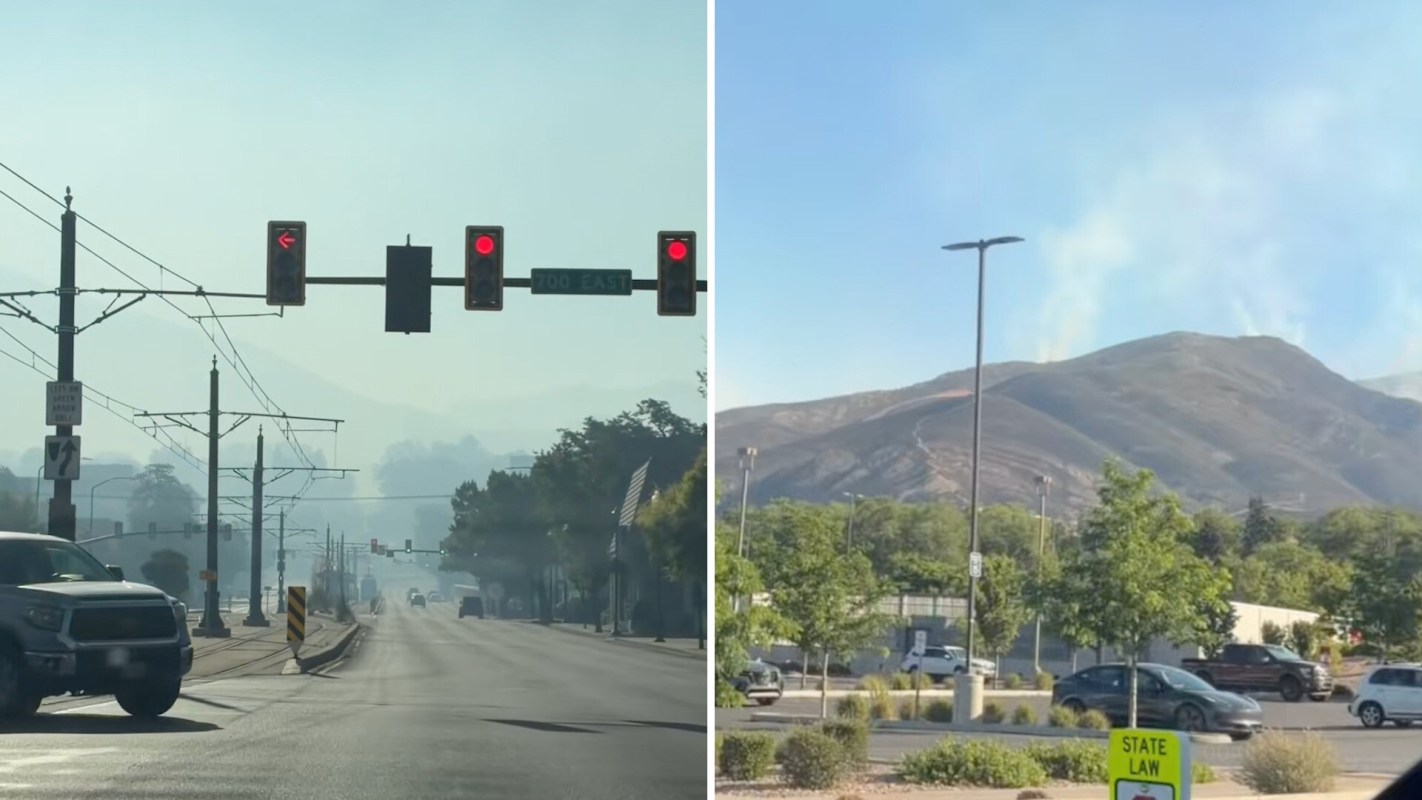
A wildfire smoke plume hanging over Salt Lake City is giving residents a vivid — and painful — view of how geography can worsen already dangerous air conditions.
A local video from the city shows smoke settling over the valley, where the mountains around Salt Lake City can slow the rate at which polluted air clears.
What's happening?
Posted to TikTok by Salt Lake City creator Didi (@didiluvvz), the video shows the metro area under thick, orange-tinged wildfire smoke. The creator described the scene this way: "The mountains keeping the smoke in the valley making it so much worse."
@didiluvvz The mountains keeping the smoke in the valley making it so much worse 😭 #fire #wildfire #saltlakecity #utah #airquality ♬ original sound - 😇Prespres_2010453😇
Residents in the comments described immediate discomfort. "My throat hurts so bad," one person wrote, while another said, "went outside for MAYBE 10 minutes and i have a headache now from it."
Some viewers tied the strange skies to nearby fire activity. One wrote, "This morning. I live in Eagle Mountain and it's snowing ashes," and another asked, "So THAT'S why the light coming from my windows were orange?"
The post reflects a familiar problem for Utah's Wasatch Front: The surrounding mountains can trap dirty air in the valley, allowing wildfire smoke and other pollution to build up rather than disperse.
TCD Picks » Quince Spotlight
💡These best-sellers from Quince deliver affordable, sustainable luxury for all




Why does it matter?
Wildfire smoke is more than a visual nuisance. It contains tiny particles that can irritate the eyes and throat, trigger headaches, and make it harder to breathe — especially for children, older adults, outdoor workers, and people with asthma or other lung conditions.
Worsening extreme weather disasters endanger lives by disrupting daily routines, straining hospitals, reducing safe outdoor work time, and hurting local businesses that depend on tourism and recreation. When smoke blankets a community, it can affect public health, community safety, and economic stability simultaneously.
Scenes like this show how climate-linked extremes can compound each other. Hotter, drier conditions can fuel larger fires, and local geography can then magnify the impact on nearby residents.
What can I do?
When smoke levels rise, the most practical steps are often the simplest: Stay indoors when possible, keep windows and doors closed, run air conditioning on recirculate if you have it, and use a HEPA air purifier if available. If you must go outside, a well-fitting N95 mask can help reduce the number of harmful particles you inhale.
Check local air-quality alerts before exercising outdoors or sending kids outside to play. Conditions can shift quickly as winds and fire behavior change, and even short exposure can feel intense, as residents in the comments described.
Communities can reduce risk by improving wildfire preparedness, expanding clean-air shelters, and investing in strategies that cut the pollution driving more dangerous heat and fire conditions. Individual actions will not solve wildfire smoke on their own, but they can help protect your health on bad air days.

Get TCD's free newsletters for easy tips, smart advice, and a chance to earn $5,000 toward home upgrades. To see more stories like this one, change your Google preferences here.






