


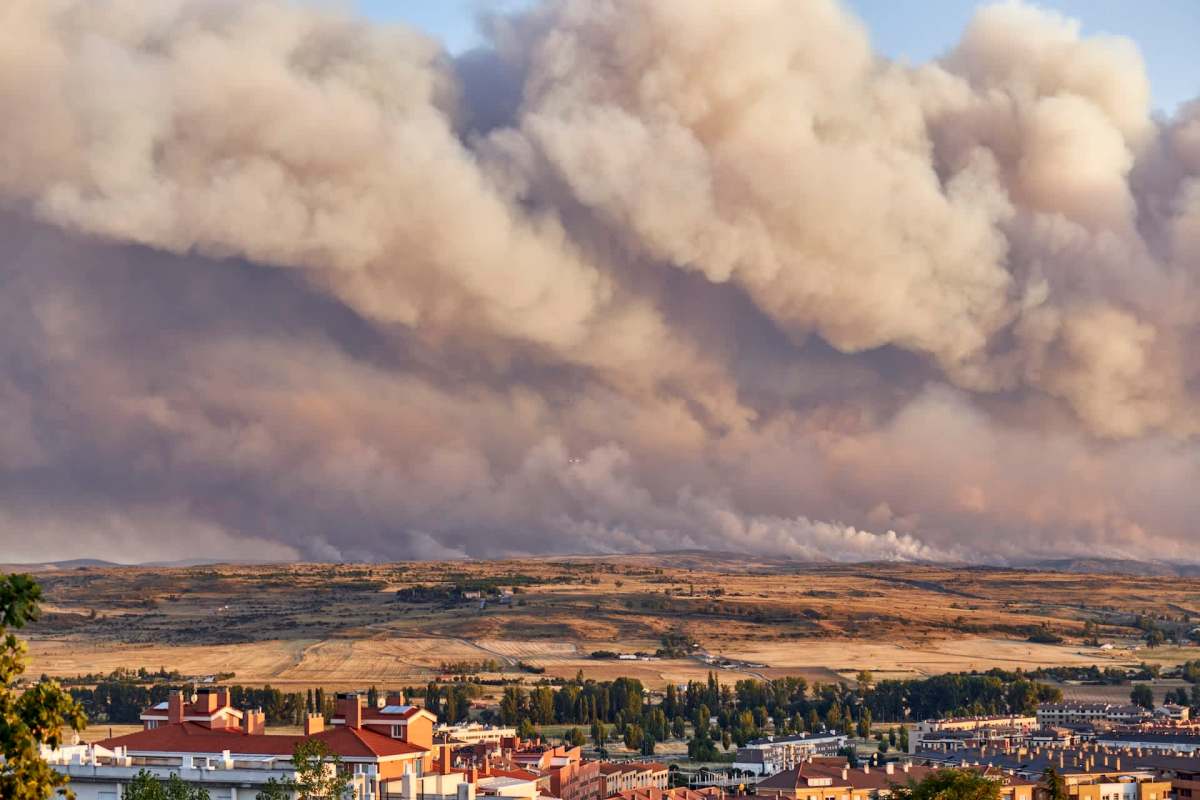
A brutal combination of record-breaking heat and widespread wildfire smoke has caused major public health warnings for much of the United States this summer.
Dangerous air quality followed close behind the season's extreme temperatures. In mid-July, wildfire smoke drove air quality to dangerous levels for 120 million Americans. In late June, the National Weather Service issued "major" or "extreme" heat advisories for 180 million people, as Popular Mechanics reported.
Here's what to know
This July was the hottest month ever recorded in the contiguous United States, and that prolonged heat fueled severe wildfires across North America.
By early September, the National Interagency Fire Center had counted 53,233 fires nationwide and over 8.3 million acres burned, the magazine said. In Canada, 11.1 million acres had burned.
When smoke covered MetLife Stadium in New Jersey during the World Cup final, it showed how far the pollution had traveled. The haze pushed air quality in cities and suburbs into "unhealthy" and even "hazardous" ranges, according to Popular Mechanics.
Wildfire smoke contains PM2.5, microscopic pollutants that can lodge deep in the lungs and are associated with tissue damage, lung inflammation, and premature death.
TCD Picks » Quince Spotlight
💡These best-sellers from Quince deliver affordable, sustainable luxury for all




More background
Researchers are measuring the health burdens of wildfire smoke, and the evidence points to serious risks.
Popular Mechanics noted that studies collected by The New York Times linked wildfire smoke to cancer, impaired cognition, and complications related to diabetes and pregnancy.
A 2024 study estimated roughly 12,000 deaths from 2007 to 2020 and said that number has been rising while also connecting wildfire smoke exposure to greater risks of cardiovascular disease, endocrine issues, and chronic kidney problems, Popular Mechanics reported.
The hazard also depends in part on what is burning. In urban fires, flames can consume cars, electronics, and building materials, sending additional toxic substances into the air.
Preliminary findings from UCLA Fielding School of Public Health researchers found that firefighters who responded to the 2025 Los Angeles blazes had lead levels in their blood plasma — and even in their cells — that were five times higher than those of firefighters fighting more rural fires, per Popular Mechanics.
Cognitive and neurological effects are part of the concern as well. Popular Mechanics noted that the Environmental Protection Agency said in 2023 that just a few hours of wildfire smoke exposure can reduce adult attention. Other studies have shown that longer exposure can worsen dementia or cerebrovascular disease.
What can be done?
Answering such questions requires scientific tools and sustained research, though federal backing has become less dependable.
In March 2025, the National Institutes of Health ended funding for research on the health impacts of climate change, Popular Mechanics noted. Federal agencies have also removed climate science information from websites such as Climate.gov.
Research shapes public warnings, medical guidance, school decisions, worker protections, and planning.
Where can I learn more?
The smoke emergency of the summer didn't come out of nowhere. Heat and wildfire pollution are undoing years of progress on cleaner air, driving up hospital visits, and widening health risks.
• In California, heat and wildfire smoke increased hospitalizations as pollution seeped indoors.
• Across the country, millions more Americans are likely to face dangerous smoke-filled air.
• Wildfire smoke is linked to stroke risk.
• At Harvard, researchers revealed human immunity is altered by wildfire exposure.

Get TCD's free newsletters for easy tips, smart advice, and a chance to earn $5,000 toward home upgrades. To see more stories like this one, change your Google preferences here.






