


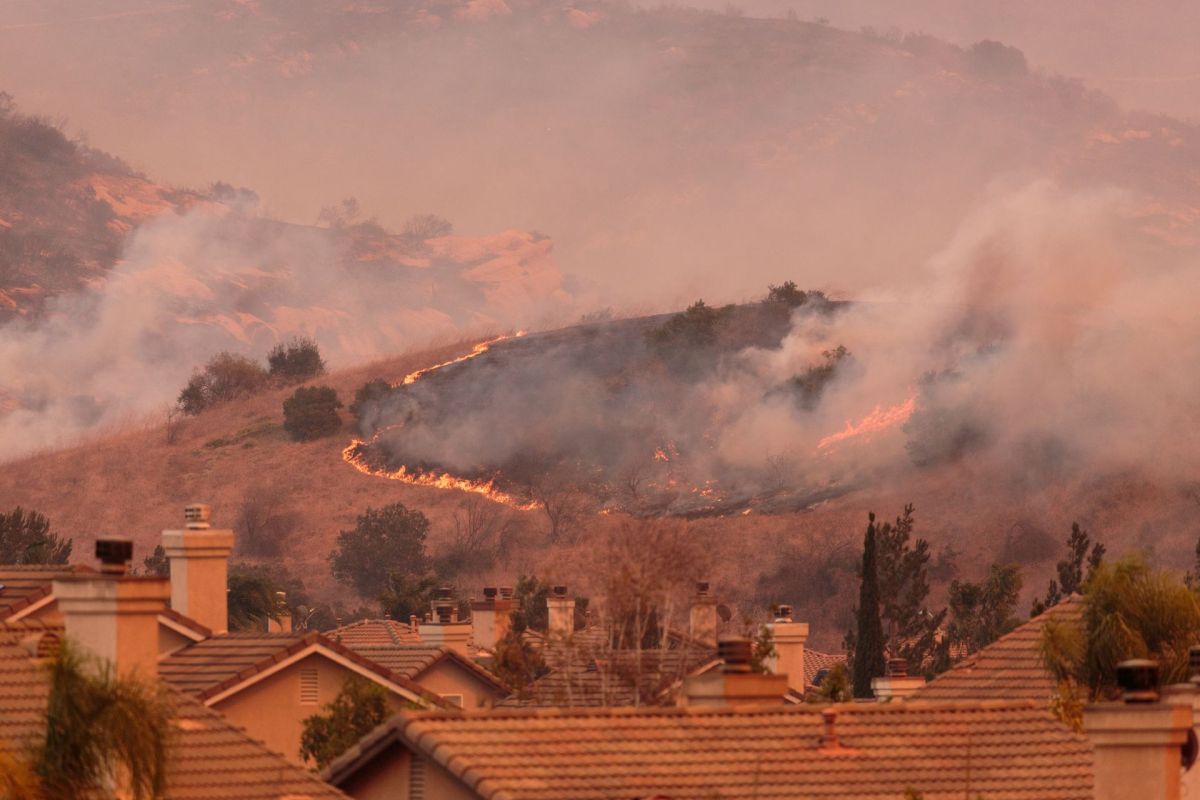
Researchers are investigating a possible cancer risk from wildfire smoke, which can expose communities hundreds of miles from a fire to harmful pollution.
Here's what to know
A study spanning 82,684 United States neighborhoods found regional differences that could help guide further research into that potential connection.
Neighborhoods with greater wildfire smoke exposure showed no increase in overall cancer-history prevalence across the contiguous United States, according to Fred Hutch Cancer Center.
The findings varied by region, however. In the Midwest and Northeast, moving from moderate to heavier exposure was associated with a cancer-history prevalence increase of approximately 2%–4%. The South and West showed no such pattern.
Published in Cancer Epidemiology, the study was led by first author Dr. Hiwot Zewdie, a researcher affiliated with Harvard T.H. Chan School of Public Health and the University of Washington, and senior author Dr. Trang VoPham, a Fred Hutch epidemiologist.
The researchers paired Centers for Disease Control and Prevention estimates of adults who reported a cancer diagnosis, excluding common skin cancers, with wildfire smoke estimates based on air monitors, satellites, and weather data.
TCD Picks » Quince Spotlight
💡These best-sellers from Quince deliver affordable, sustainable luxury for all




The neighborhood-level analysis controlled for factors including insurance coverage, poverty, age, smoking, and geographic region.
More background
New York City's orange skies in June 2023 resulted from smoke from Canadian wildfires, according to Fred Hutch Cancer Center.
The number of U.S. residents living in places with at least one extremely smoky day reached about 16 million in 2016–2020. That was four times the total in 2006–2010.
Fine particles can penetrate deep into the lungs, and some can enter circulation and reach other organs. These particles, known as PM2.5, are a major concern in wildfire smoke and measure less than 0.000098 inches (2.5 micrometers).
The International Agency for Research on Cancer classified outdoor air pollution, including PM2.5, as cancer-causing in 2013.
Wildfire smoke also contains carbon-based chemicals called polycyclic aromatic hydrocarbons. These chemicals can promote chronic inflammation, damage DNA, and interfere with DNA repair.
What's being done?
Communities in the Midwest and Northeast have historically encountered wildfire smoke less often, potentially leaving them less familiar with protective practices and with fewer public warning systems, according to the study's authors.
For households in those regions, the practices identified in the study — staying indoors during smoke episodes and using air filters — could be particularly relevant.
The authors suggested that differences in preparedness could influence exposure and health outcomes, an explanation they say still requires direct testing.
According to Fred Hutch Cancer Center, the National Institute of Diabetes and Digestive and Kidney Diseases provided funding as part of support from the National Institutes of Health.
"I think an important next step would be to examine these associations in existing large cohorts with detailed residential histories," Zewdie said. "This would help us better understand how wildfire smoke exposure may be related to specific cancer types, whether the overall and regional patterns we observed hold at the individual level, and which windows of susceptibility may be most important."

Get TCD's free newsletters for easy tips, smart advice, and a chance to earn $5,000 toward home upgrades. To see more stories like this one, change your Google preferences here.






