


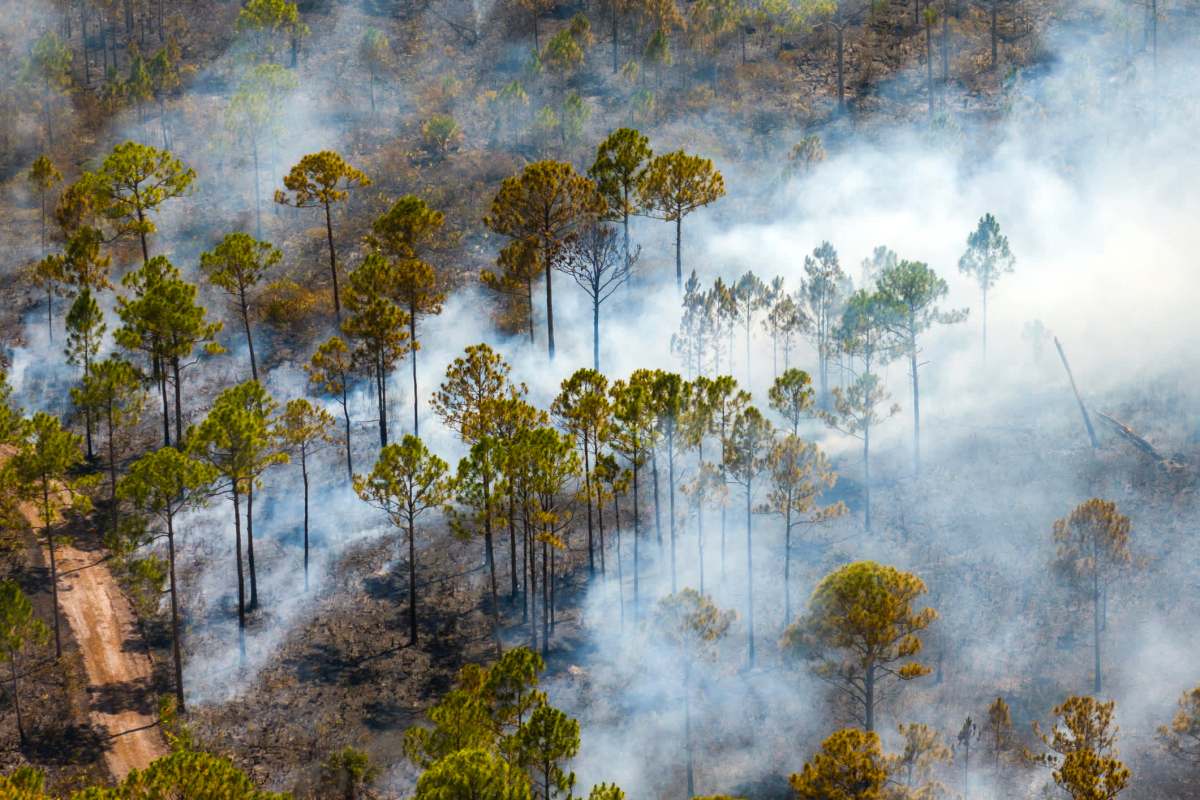
Wildfire smoke driving up ground-level ozone — the main component of smog — may be linked to thousands of early deaths in the United States.
What's happening?
Researchers have linked an increase in wildfire-driven ozone pollution to more than 300 additional premature deaths in the U.S. each year since 2013. In 2023 alone, the smog was associated with almost 8,000 premature deaths nationwide, according to coverage of a new study in Scientific American.
The issue centers on ground-level ozone, which is harmful to breathe, even though ozone higher in the atmosphere helps protect Earth from ultraviolet radiation.
Near the surface, ozone can form through sunlight-driven reactions between wildfire carbon monoxide and nitrogen oxides, creating smog that can worsen asthma and other respiratory problems.
Using a deep-learning model in an analysis funded by the National Aeronautics and Space Administration and published this month in the journal Science, researchers examined surface ozone levels alongside premature death data. They found that ozone pollution generally declined from 2003 to 2015, likely because of stronger pollution controls on sources such as vehicle tailpipes.
However, from 2015 to 2024, that trend began to reverse, with ozone levels climbing again, especially in the Midwest and parts of the Western U.S. The study also found that without smoke from wildfires, ozone in the Midwest likely would have continued to decline after 2015.
TCD Picks » Quince Spotlight
💡These best-sellers from Quince deliver affordable, sustainable luxury for all




Why is this concerning?
The results describe more than an environmental problem. Ozone is a lung irritant, and higher levels can make daily life more difficult for people living with asthma, chronic obstructive pulmonary disease, and other respiratory conditions.
It can further pose heightened risks for children, older adults, and anyone who spends long periods outdoors. And a wildfire can raise health concerns for people living hundreds or even thousands of miles away.
The increase in ground-level ozone also shows how progress made through cleaner cars and other pollution controls can be partly undermined as wildfire seasons grow more severe.
What can be done?
Of course, the answer isn't to roll back any pollution improvements made through cleaning up transportation and energy systems. Instead, the research just provides even more reason to mitigate wildfire risks — and the human-induced climate change that can worsen them.
The study also underscores the importance of effective air-quality alerts, as community members — and especially those more vulnerable to respiratory triggers — may need to stay indoors to reduce their exposure during certain periods.

Get TCD's free newsletters for easy tips, smart advice, and a chance to earn $5,000 toward home upgrades. To see more stories like this one, change your Google preferences here.






