


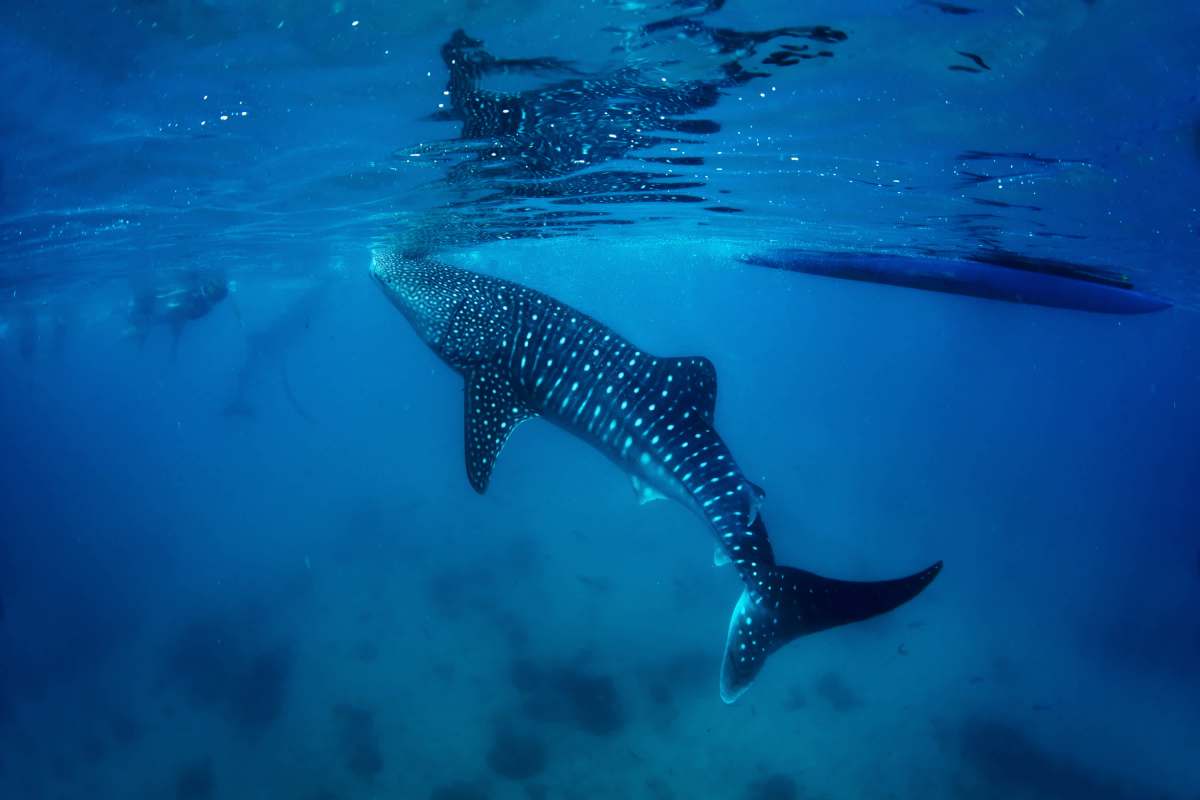
A boat trip off South Korea's Jeju Island turned memorable for passengers and fishers when an endangered whale shark circled the vessel.
According to Korea JoongAng Daily, the animal appeared off the coast of Aewol on July 1, an unusual event because whale sharks are seldom seen in Korean waters.
What happened?
Around 8:30 p.m., during a squid-fishing excursion, the massive creature appeared beside the vessel and slowly circled.
As it slid below the boat, footage from the scene revealed its spotted body, broad flat head, and wide-open mouth.
After reviewing the video, experts identified the animal as a juvenile whale shark 3 to 4 meters (about 10 to 13 feet) long, according to Korea JoongAng Daily.
Whale sharks are the largest fish on Earth and can grow to over 10 meters (32 feet, 10 inches), Korea JoongAng Daily reported.
TCD Picks » Quince Spotlight
💡These best-sellers from Quince deliver affordable, sustainable luxury for all




The species is usually associated with tropical and subtropical waters.
In Korean seas, whale sharks sometimes show up during summer as water temperatures rise, but encounters this close are uncommon.
Why does it matter?
Whale sharks are filter feeders that strain plankton and small fish from the water and are not considered a threat to humans.
The species is covered by legal protections worldwide and is considered endangered, according to the International Union for Conservation of Nature. Sightings such as this one can show how these animals are moving through changing oceans.
Kim Byung-yeop, a marine science professor at Jeju National University, told Korea JoongAng Daily warmer waters around Jeju are helping more subtropical species reach the area.
He linked that warming to the changing climate. When ocean temperatures change, animals move or follow food sources into new places, and that can reshape what communities catch, eat, protect, and prepare for on the water.
Rising ocean temperatures can also have dangerous effects on wildlife. For example, warming waters are stressing a cold-water zooplankton species, Calanus finmarchicus. At the bottom of the food chain, they play an important role in marine food webs. Males were found to be vulnerable to heat-related stress, which could affect reproduction and threaten ocean ecosystems that support seafood supplies.
What are people saying?
"Whale sharks are known to travel long distances," Kim said.
Whale sharks have faced dangers in the area before. Korea JoongAng Daily stated that two sharks were caught in a net in Jeju in 2012, and carcasses were found along the shoreline in 2015 and 2017.

Get TCD's free newsletters for easy tips, smart advice, and a chance to earn $5,000 toward home upgrades. To see more stories like this one, change your Google preferences here.






