


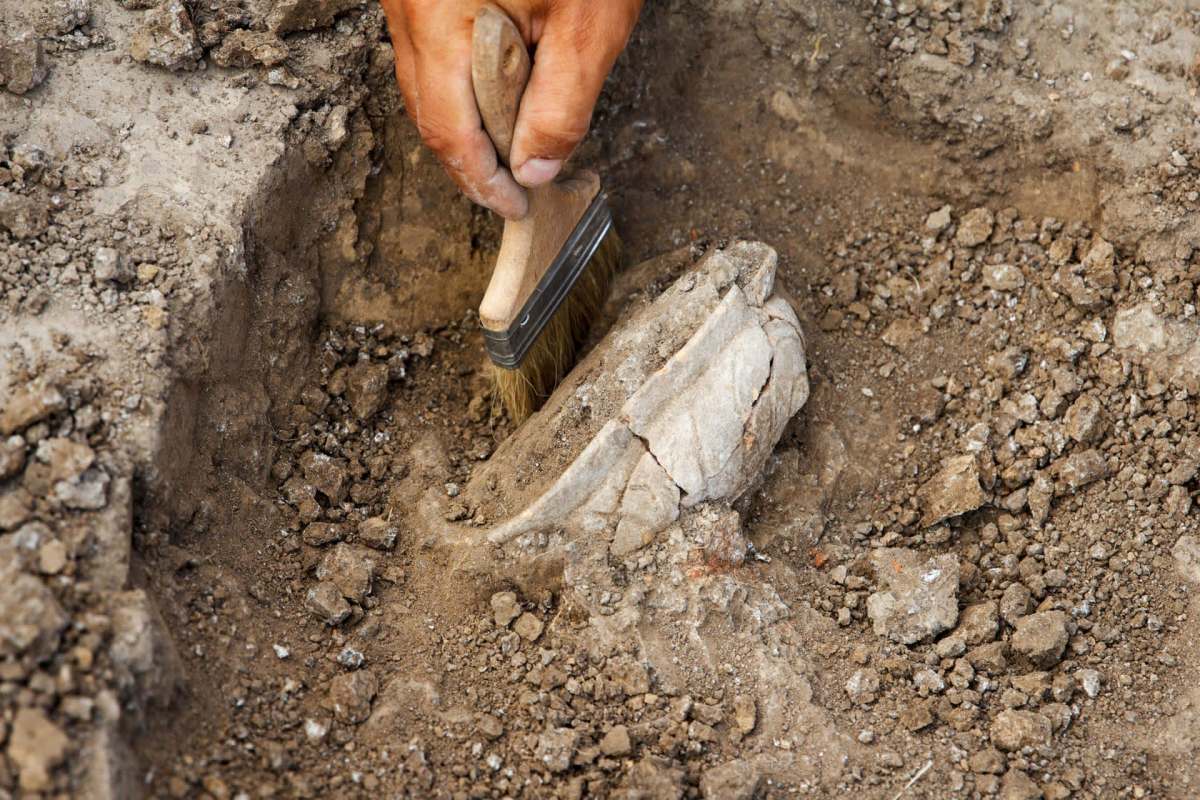
Archaeologists in Thailand have discovered a 2,000-year-old skeleton alongside golden rings while excavating a site in the western part of the country.
The find is now offering archaeologists a rare glimpse into the wealth, status, and cultural connections of the region and its people.
What happened?
Among the latest finds at a recently identified site in western Thailand are two gold rings recovered from a burial area, including one with inscriptions found with human remains, as reported by CBS News.
At the Don Yai Thong excavation in Thailand's Phetchaburi province, archaeologists recovered the rings a couple of weeks ago, CBS News reported. The site, about 80 miles southwest of Bangkok, was first identified earlier this year after residents discovered fragments of ancient bronze drums in a rice field.
Officials from Thailand's Fine Arts Department said the jewelry found with the human bones at the burial site dates back to the country's late prehistoric Iron Age, which they dated to roughly 1,500 to 2,500 years ago. They also released footage and images of the site on social media.
One ring is plain gold, while the other is marked with characters believed to be Brahmi, an ancient writing system from India.
TCD Picks » Quince Spotlight
💡These best-sellers from Quince deliver affordable, sustainable luxury for all




The department said specialists initially read the inscription as "pusarakhitasa," translated as "the one protected by Pushya." It added that Pushya refers to a zodiac sign in Indian astronomy and suggested the ring's owner may have had ties to the Vaishya merchant caste in ancient India.
The broader excavation has yielded more than the rings. Since February, archaeologists have reported finding eight human skeletons along with bronze and gold jewelry, pottery, and other burial items, evidence that the dead may have been wealthy people or members of the upper class, according to CBS News.
Why does it matter?
The inscription may point to links between ancient Thailand and Indian culture, language, and belief systems. If that interpretation holds, the ring would provide evidence of exchange networks that carried not only goods, but also writing and social identity across regions.
Gold jewelry, ceremonial objects, and carefully placed remains can show how status was marked in both life and death.

Get TCD's free newsletters for easy tips, smart advice, and a chance to earn $5,000 toward home upgrades. To see more stories like this one, change your Google preferences here.






