


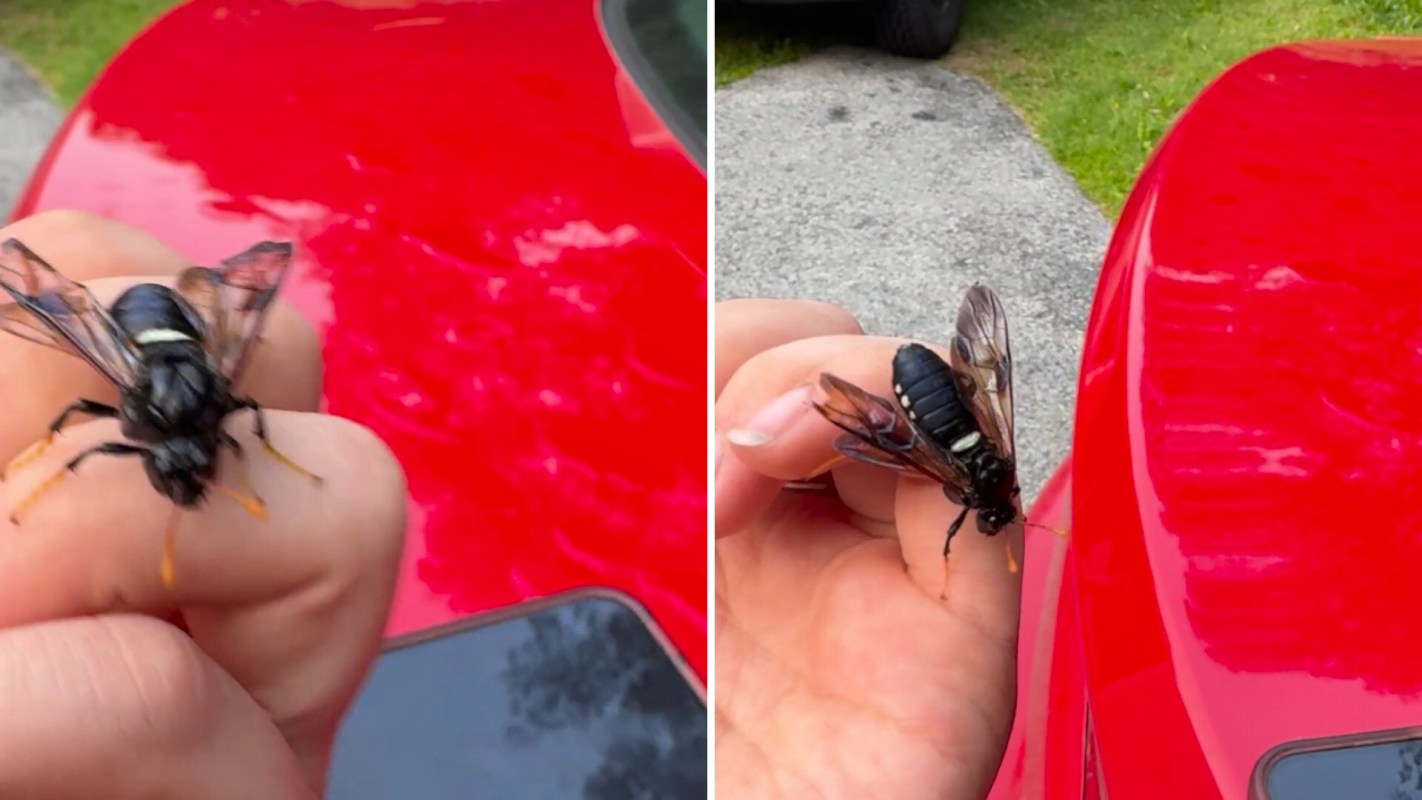
A menacing-looking mystery insect in northern Maine caught the internet's attention after someone posted an image of the large visitor, which looked a bit like a wasp but appeared unusually docile.
Here's what to know
In a post shared to Reddit's r/WhatsThisBug community, the original poster wrote, "She seems very weak, and I have her in a container with some flowers that she's been clinging to from what I can tell she's feeding, but when I get up in the morning, I plan to give her some sugar water and hopefully release her, but I would love an ID! I'm located in northern Maine."
(Click here to view embed if it does not appear.)
Replies quickly converged on the same identification: a North American elm sawfly.
One commenter called it "Beautiful!" before adding, "North American Elm Sawfly, apparently in the order Hymenoptera (which includes bees and wasps etc)."
Part of the intrigue was that the insect looked close enough to a wasp to seem familiar, but not quite the same. Another commenter summed this up, writing, "So that's why it looks so almost like a wasp but not." A different user added, "Exactly, their particularity is they are hymenopteras without wasp waists."
TCD Picks » Quince Spotlight
💡These best-sellers from Quince deliver affordable, sustainable luxury for all




More background
At a glance, a sawfly can be easy to confuse with a wasp or hornet. Its size and coloring can make it seem threatening, especially when people do not recognize the species.
In the comments, users stressed that this species does not pose a danger to humans. One user shared: "Some fun facts about the species: Climbex Americana, despite its huge size and its resemblance to wasps, is harmless to humans. They cannot sting or bite."
The same commenter noted that these insects "can be quite detrimental to the elm and willow trees upon which they feed."
For anyone who finds a weak or sluggish insect that they'd like to protect, the safest first step is usually to observe it. If the insect is not actively threatening anyone, giving it space and avoiding sprays or swatting can help prevent needless harm.
In cases like this, posting clear photos to an identification forum can also be useful, especially when the location is included. That detail helped Redditors quickly narrow down the insect in this case.
It is also smart to be cautious about handling any insect directly, even one that commenters say is harmless. Using a container or a leaf, or gently relocating it to a sheltered outdoor spot, can reduce stress for both the person and the bug.

Get TCD's free newsletters for easy tips, smart advice, and a chance to earn $5,000 toward home upgrades. To see more stories like this one, change your Google preferences here.







