


Your water heater does more than make showers comfortable. Researchers at the National Institute of Standards and Technology say warm water sitting in household pipes can pose a hidden risk: It creates an environment for dangerous bacteria to grow.
But researchers have now patented a system that heats water enough to kill those microbes before cooling it back down to prevent scalding at the tap.
What happened?
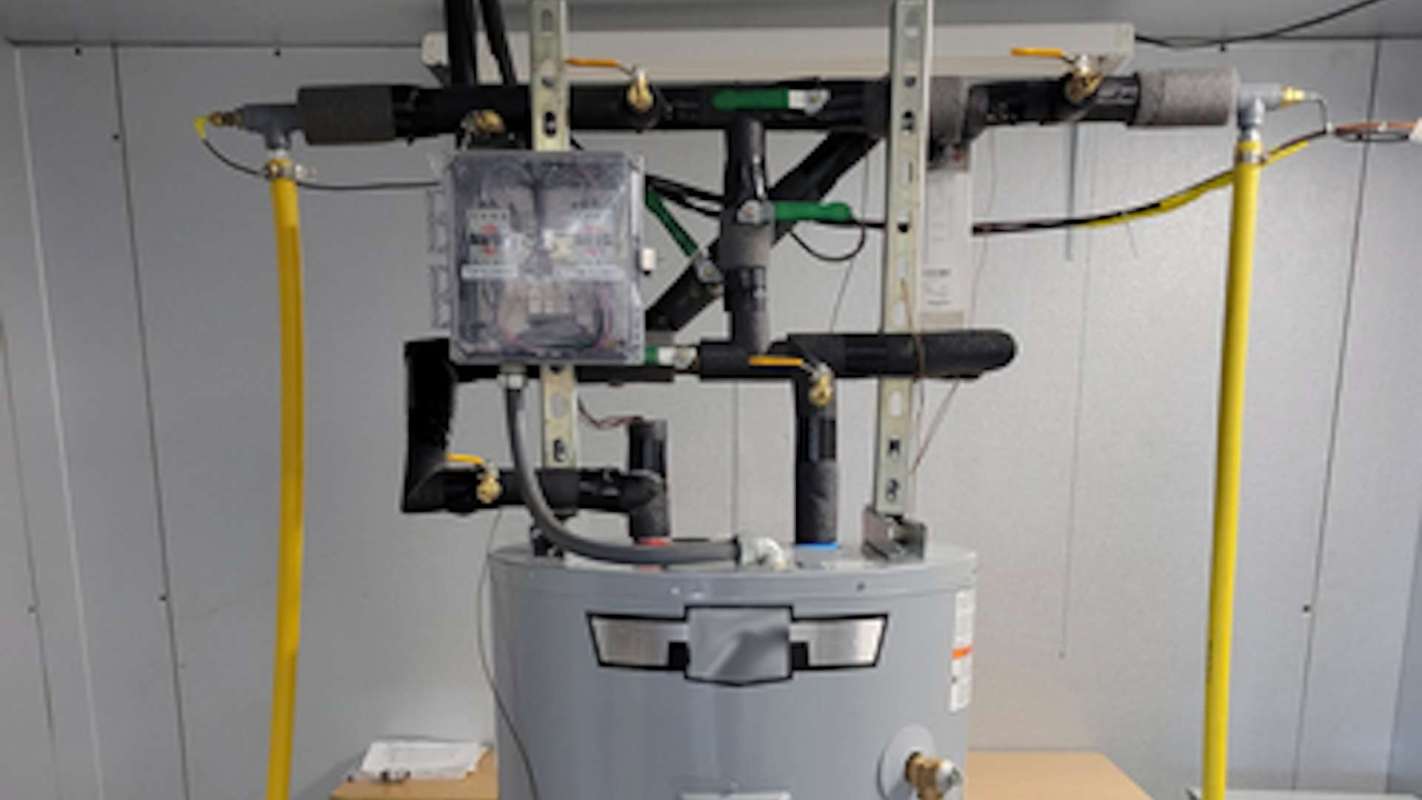
To target Legionella, NIST patented a plumbing arrangement that first heats water to a bacteria-killing temperature and then cools it down to a safe temperature before it reaches showers and sinks. The agency says the system is meant to reduce infections such as Legionnaires' disease while keeping everyday hot water safe.
The bacteria problem is tied to the temperatures common in home systems. Many water heaters are set around 120 degrees Fahrenheit, which can limit growth but may not wipe out Legionella. After water leaves the tank and cools in household plumbing, it can fall back into a range where bacteria do well.
For homeowners already considering a replacement, upgrading water-heating equipment can bring another financial upside: A heat pump water heater can often slash electricity use compared with a standard electric model. Cala's heat pump water heaters use smart technology that learns when to heat water based on your household's habits, so money isn't burned on heating water when you don't need it.
Why does it matter?
The main risk from this bacteria is Legionnaires' disease, a serious illness that NIST said carries about a 10% fatality rate. People can get sick by breathing in tiny airborne droplets from contaminated water. Though Legionella pneumophila occurs naturally in the environment, it can build up in plumbing systems, and older adults and immunocompromised people face the greatest risk.
NIST said the United States records a little over 6,000 confirmed cases each year, but the actual total may be far higher because the illness is not routinely tested for.
Water also tends to linger in modern plumbing. Homes now have more faucets, showers, toilets, and appliances, though each individual fixture uses less water than older models did. That combination can leave warm, stagnant water sitting in pipes, which is more favorable to bacteria.
Save $10,000 on solar panels without even sharing your phone number Want to go solar but not sure who to trust? EnergySage has your back with free and transparent quotes from fully vetted providers in your area. To get started, just answer a few questions about your home — no phone number required. Within a day or two, EnergySage will email you the best options for your needs, and their expert advisers can help you compare quotes and pick a winner. Solar panels can save you more than $50k over their 25-year lifespan, and EnergySage can help you save as much as $10k on installation. Which begs the question — isn't that worth an email or two? |

What's being done?
NIST mechanical engineer Dave Yashar developed a system that heats stored water to about 160 degrees, hot enough to kill nearly all Legionella very quickly. Before that water is sent through the building, a heat exchanger cools it down, and the recovered heat is reused instead of being lost.
"We built our residential-size prototype by modifying an off-the-shelf water heater with around $100 of additional components, and those costs could be brought down by a manufacturer," Yashar said, per the release.
The setup could be particularly helpful in places such as hotels and nursing homes. Rather than relying on active and expensive bacteria-control measures, facilities could use an integrated temperature-control system as a passive option.
For households replacing a unit for efficiency reasons, Cala offers smart heat pump water heaters designed to learn when a home needs hot water. Its customizable units help homeowners decrease their energy bills by heating water exactly when it's needed. That can reduce wasted standby heating.
For consumers comparing new water-heating technology, Cala shows it is focusing on both lower utility bills and better performance.
"Hot water is an essential part of everyday life," Yashar said. "It's exciting to bring a new innovation to an old technology."

Get TCD's free newsletters for easy tips, smart advice, and a chance to earn $5,000 toward home upgrades. To see more stories like this one, change your Google preferences here.






