


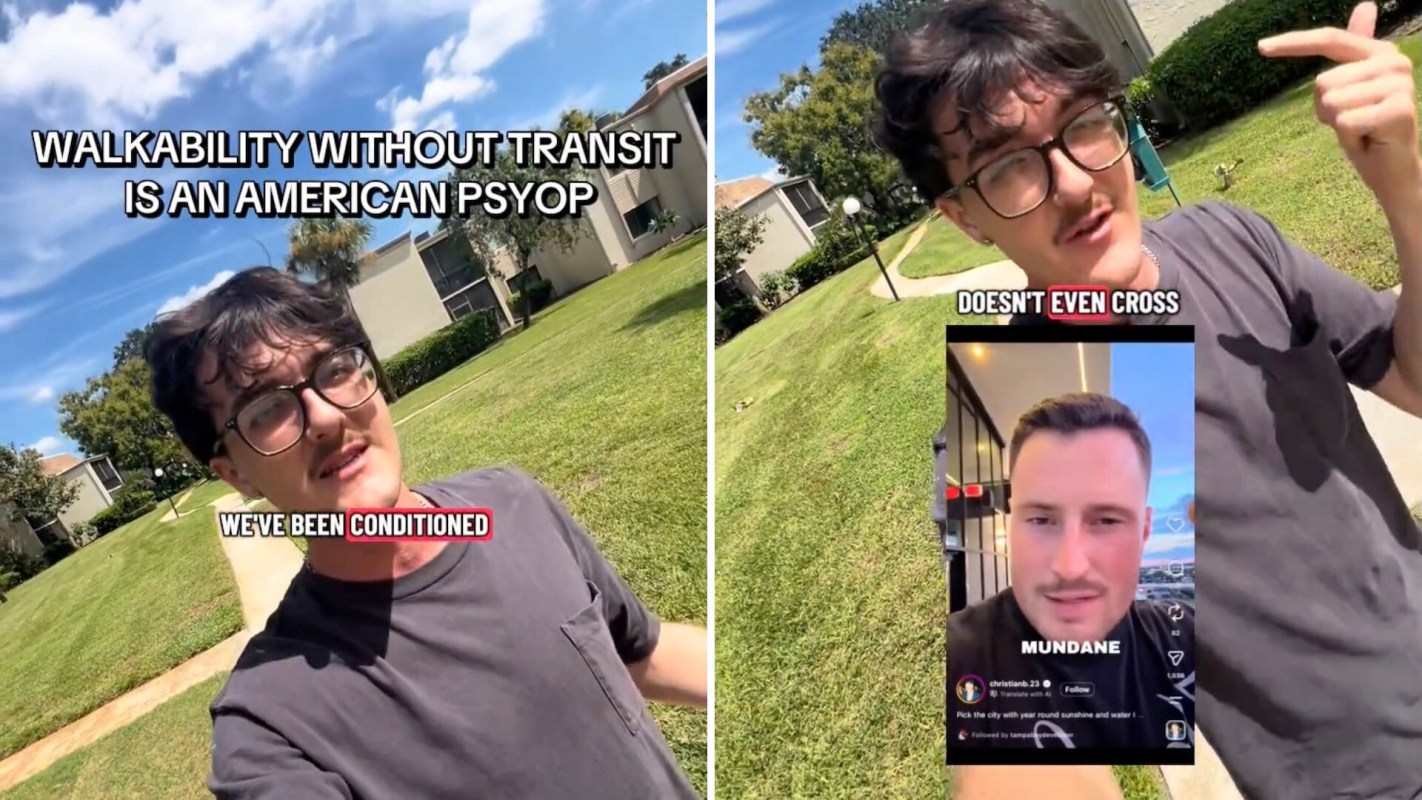
A video celebrating neighborhood strolls in Tampa, Florida, sparked a sharper discussion than it may have intended.
Oopsiez (@oopsiez) openly wondered if a place is truly highly livable if you can walk around your block but still need a car for almost everything that matters.
Here's what to know
In a TikTok reaction video, Oopsiez argued that treating that kind of setup as enough shows how deeply car dependency has shaped expectations in the U.S.
@oopsiez Why are we romanticizing less than the bare minimum? 💔 #carculture #transit #walkablecities #urbanplanning #americanculture ♬ Beat Addicted - Type Beats Trap
"Walkability without public transit is one of the biggest psyops in America," the creator said.
The critique stemmed from a Tampa booster video focused on warm weather and the ability to walk around the neighborhood. Oopsiez argued that enjoying a nice place to stroll is not the same as having a city that delivers a strong quality of life.
"A good quality of life doesn't come just from walking and then driving away," the creator said. "For everything else, it comes from having robust options like biking, transit and walking."
TCD Picks » Quince Spotlight
💡These best-sellers from Quince deliver affordable, sustainable luxury for all




"This is a common take, unfortunately," one commenter chimed in. "True walkability is so scarce in the U.S. a lot of people 'settle' for walkable bubbles/neighborhoods as the next best thing. I've been tempted to do so as well because the areas with good transit are so cost prohibitive, but these bubbles def feel like a bandaid solution."
Another commenter pointed to the limits of the idealized version of Florida walking life, writing: "The concept of any city in central and south Florida being walkable from April-October… I don't think people envision 100+ degree weather in 100% humidity with 0 shade when they talk about 'walking in warm weather.'"
More background
A neighborhood can have sidewalks, cafes, and nice weather and still leave residents dependent on a car for work, groceries, school, medical appointments, or getting to the rest of the city.
If daily life still requires driving, residents remain exposed to fuel, insurance, parking, and maintenance costs.
People who cannot drive, including many older adults, teens, and people with disabilities, may also be left with fewer safe, practical ways to get around.
In Oopsiez's view, this watered-down version of walkability feels acceptable mainly because car-oriented development is so common across the country.
"Americans have been so used to car dependency that that thought doesn't even cross his mind," the creator said, referring to the original Tampa praise.
What's being done?
Cities can help cut down on car dependency with public transit options like reliable buses, trains, and trolleys. Closing off some streets for bikers and pedestrians is another move that can make cities less car-dominant.
"We shouldn't be settling for this," Oopsiez said. "We should be looking at it and saying, 'This isn't even enough. This isn't even the bare minimum.'"
Where can I learn more?
Around the world, cities are exploring the importance of walkability. Implementing it and public transit are often easier said than done.
• A transit expert argued the best of both worlds is a city built for walking.
• In Houston, residents warned they only have one option when safer street plans stalled.
• In Seoul, a new transport program made greener commuting cheaper enough to scale nationwide.

Get TCD's free newsletters for easy tips, smart advice, and a chance to earn $5,000 toward home upgrades. To see more stories like this one, change your Google preferences here.






