


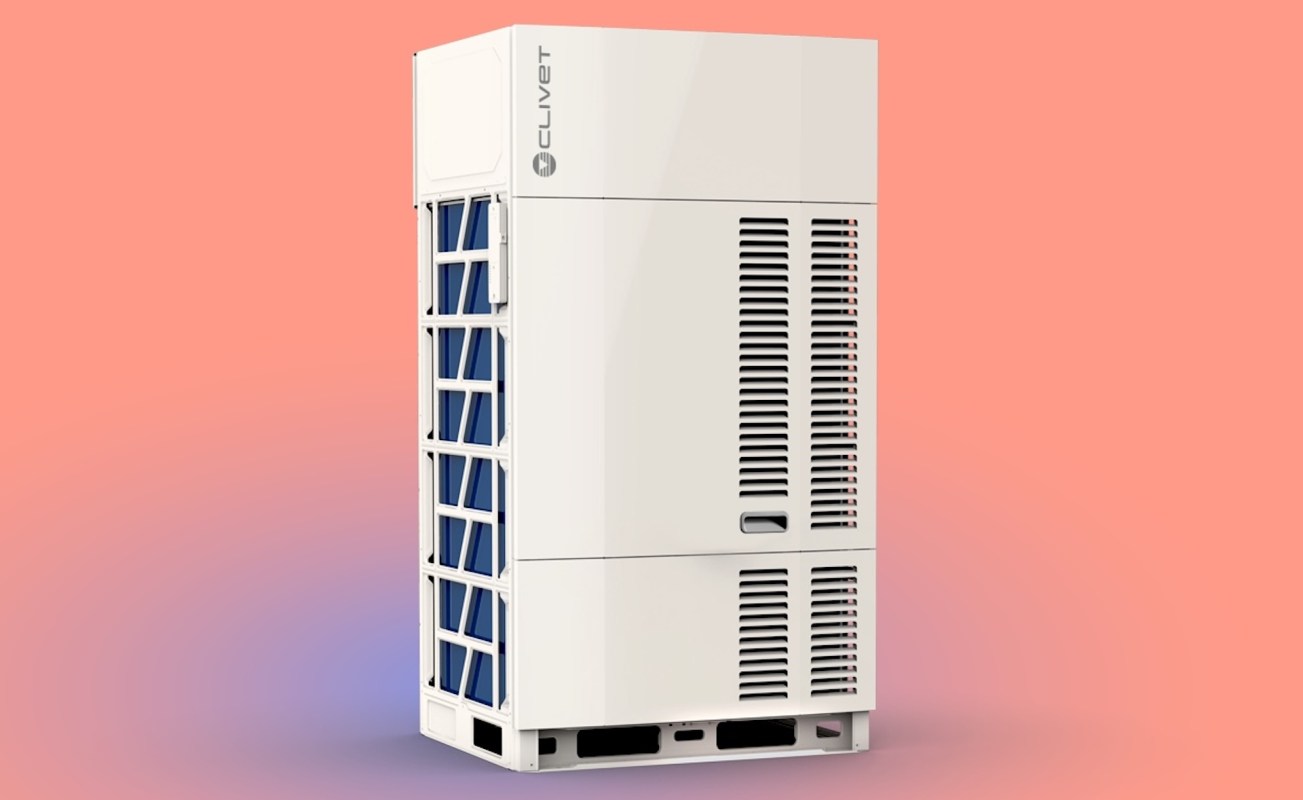
Italian heat pump manufacturer Clivet has unveiled a new variable refrigerant flow, or VRF, lineup for homes and businesses that can connect with photovoltaics without relying on a conventional solar inverter, a move that could simplify how buildings use on-site solar electricity for heating and cooling.
For buildings that generate their own solar electricity, Clivet says its latest VRF heat pumps can use that power more directly.
The Italy-based manufacturer, part of Midea, introduced the residential and commercial series with photovoltaic compatibility, eliminating the need for a traditional solar inverter and potentially simplifying on-site solar use for heating and cooling.
Here's what to know
According to pv magazine, the new CVT9 outdoor units expand Clivet's variable refrigerant flow offerings for homes and commercial buildings. Clivet is an Italian manufacturer and a subsidiary of Chinese appliance company Midea.
Rather than depending on a standard PV inverter, the units are meant to pair with a PV Box that delivers a steady 400- to 600-volt DC supply. That is what enables the direct photovoltaic connection.
Clivet's range starts with five single-module models offering 25.2-45 kilowatts of cooling capacity. Installers can combine two modules for systems rated from 50 kilowatts to 90 kilowatts, and the biggest setup reaches 100 kilowatts at maximum heating output.
TCD Picks » Quince Spotlight
💡These best-sellers from Quince deliver affordable, sustainable luxury for all




According to Clivet, the new series will work with indoor units and control systems from the earlier V8 generation.
Clivet expects its integrated PV control system to become available in 2027.
More background
The technical specifications suggest Clivet is aiming for year-round performance in demanding conditions.
The CVT9 units use R32 refrigerant and DC inverter compressors with enhanced vapor injection and a secondary microchannel heat exchanger. Clivet says that combination allows the systems to operate in outdoor temperatures down to -22 degrees Fahrenheit (-30 C) while still maintaining nominal heating capacity at 23 F (-5 C).
A compressor that can modulate down to 7% of capacity could improve efficiency when full output is not needed, helping reduce wasted electricity while keeping indoor temperatures more stable.
Single-module units are listed with seasonal energy efficiency ratios of 8.00 to 8.58 and seasonal coefficients of performance of 4.78 to 4.89, with similar figures for dual-module systems.
What's being done?
The units come with an integrated digital ammeter for real-time consumption monitoring, Modbus RTU connectivity for building management systems, and a Bluetooth module with a USB Type-C port for diagnostics.
For buildings with limited electrical capacity, the systems are adjustable from 40% to 100% in 1% increments.
Two-module systems can automatically shift the load if one outdoor unit triggers an alarm, and they can alternate operating hours between modules to balance wear.
The units also use the company's SafeBox2 protection system for electronic components.
Where can I learn more?
Clivet's inverter-free PV heat pumps land at the intersection of two fast-changing technologies: HVAC and solar.
The articles here show how better air-conditioning systems and more advanced panels could make on-site solar power more useful inside buildings.
• Researchers have unveiled a complete rethinking of air conditioning that could slash building energy use.
• Oxford PV has established its first-ever beachhead in the US for perovskite solar.
• Solar developers are racing to make solar electricity even cheaper as advanced silicon technologies improve.
That progress helps explain why direct solar-powered heating and cooling may become more practical as both parts of the system continue to improve.

Get TCD's free newsletters for easy tips, smart advice, and a chance to earn $5,000 toward home upgrades. To see more stories like this one, change your Google preferences here.






