


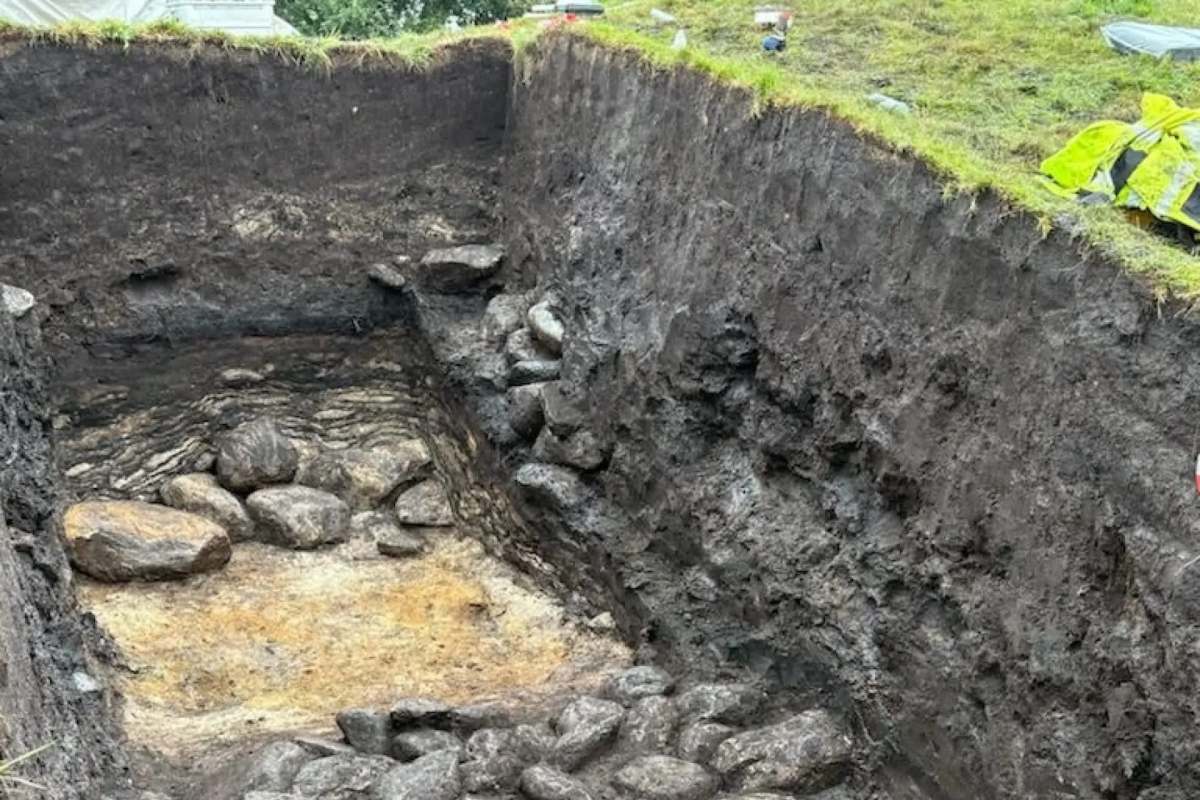
In Norway, a new excavation of a forgotten burial mound is offering archaeologists a look at an ancient ship that could belong to the Viking era.
What happened?
According to Science Norway, University of Stavanger archaeologists Marie Ødegaard and Håkon Reiersen are revisiting an ancient burial mound that was first examined in 1902. That earlier work established that the mound held a buried ship, but large portions of it were left untouched.
The outlet reported the vessel was about 50 feet long, and archaeologists believe parts of its base and side planking may still be preserved.
Rather than excavating the entire monument, the team extended a trench archaeologist Haakon Shetelig dug in 1902, the outlet explained.
While the ship appears to be in poor condition, the excavation has already produced clues.
"We have found one or two rivets, probably from the ship," Ødegaard told Science Norway.
TCD Picks » Quince Spotlight
💡These best-sellers from Quince deliver affordable, sustainable luxury for all




The dig also revealed wood that may be unrelated to the ship along with a layer of birch bark that could clarify how the mound was constructed and later used.
Why does it matter?
Finds such as this help scientists reconstruct not just objects such as ships but also the landscapes, rituals, and materials that surrounded them.
In this case, the mound preserved details that survived for over a thousand years.
"It was so well preserved that I could see blueberry plants and heather that were growing there when they built the mound in the Viking age," Ødegaard said, as Science Norway reported. "The plants even still had leaves on them."
Researchers think the ship burial was added atop a Bronze Age mound, implying the location mattered long before the Viking-era burial.
Earlier research placed the ship before the Viking age, while newer studies suggest it dates to around 864.
Narrowing that timeline could sharpen historians' understanding of how burial customs changed during one of Northern Europe's most studied eras.
The excavation was commissioned by the Norwegian Directorate for Cultural Heritage in partnership with Rogaland County Municipality, Science Norway reported.
It also forms part of a wider effort tied to proposals for adding more Viking sites to the UNESCO World Heritage List.
Archaeologists are leaving most of the mound undisturbed while assessing the condition of wood, metal, and other organic material.
They are also collecting samples to better date what lies beneath the ship burial.

Get TCD's free newsletters for easy tips, smart advice, and a chance to earn $5,000 toward home upgrades. To see more stories like this one, change your Google preferences here.






