


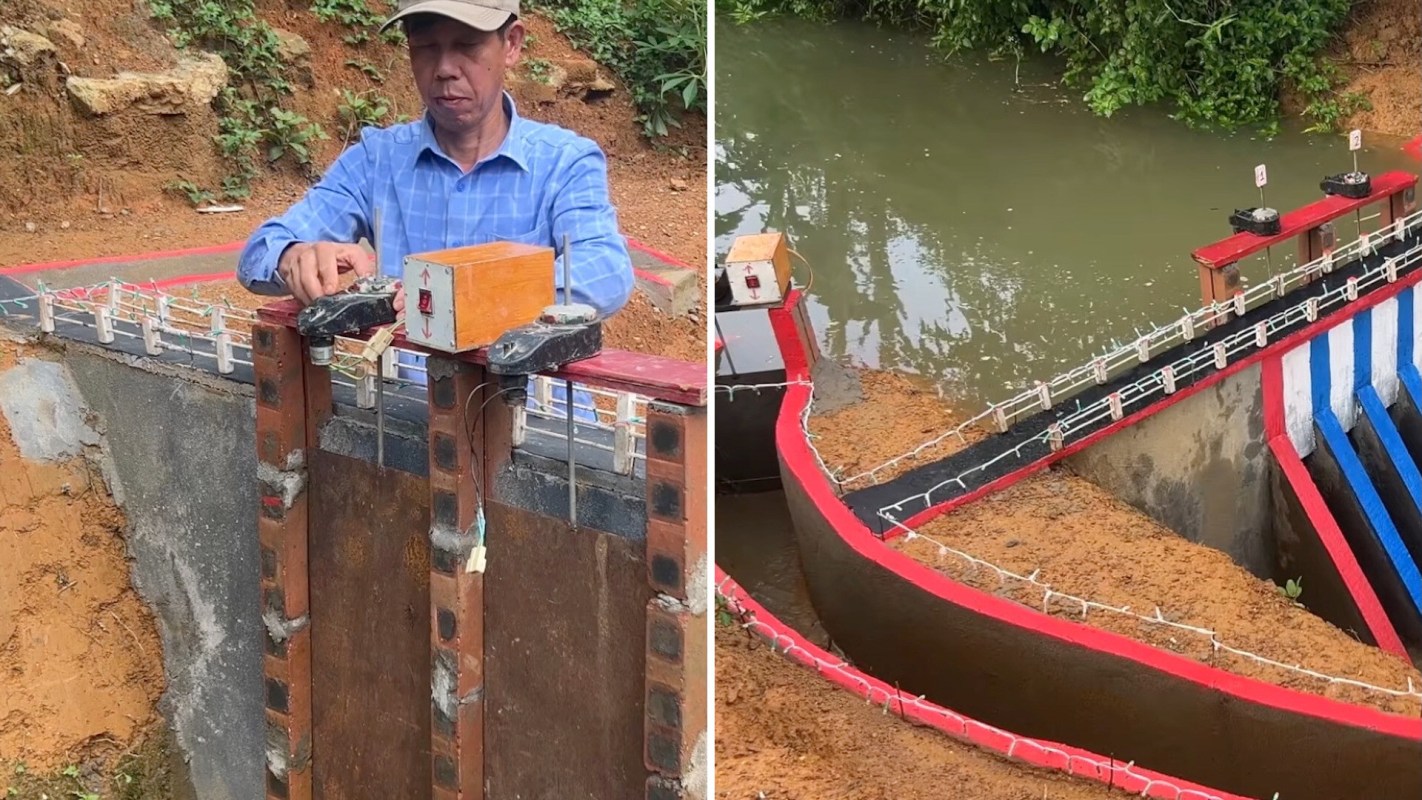
A homemade hydroelectric plant built by a Vietnamese engineer relies on a turbine, a generator, piping, and brickwork to produce electricity. He built the system to turn a stream close to his home into a steady power source.
Here's what to know
Vietnamese engineer Chien-Tran's installation can run small electrical loads and works the same way as a standard hydropower setup. He documented the project on Mini Construction, his YouTube channel, according to Cronista.
The generator produces electricity by converting the rotation of a connected turbine. Water flowing downhill provides the energy that spins the turbine, drawing that energy from the elevation difference.
Flow and slope shape both the installation's design and its potential output. Finding a waterway with suitable conditions is where Chien-Tran begins his demonstration.
For households exploring renewable electricity without a suitable stream, residential solar offers another potential route to lower bills: $0-upfront solar leases may save some households hundreds of dollars per month. EasyHome offers a free explorer tool to estimate possible savings and find vetted local installers.
More background
The small plant's brickwork contains the water and guides it to the generating equipment. The masonry also provides structural support.
A stable foundation is necessary regardless of the material used. Stone can substitute for brick, depending on the design and the materials on hand.
Water reaches the generating equipment through a conduit from the retaining structure. According to Cronista, sealing joints and edges helps limit leaks and protects the structure from water pressure.
Crushed by your bills? See instant solar savings from vetted installers in just a few clicks With energy prices through the roof, there's never been a better time to go solar — and EasyHome can help you find the best prices from the best installers in your area. EasyHome takes the guesswork and headaches out of energy upgrades by showing you estimated savings from a network of vetted local partners. To get started, just enter your ZIP and share a few details about your home — seeing your estimate is really that easy. |

Water flow, the elevation drop, and the intended output determine how the turbine and generator are arranged. Builders can make the turbine from metal or similar materials that can withstand water, with its shaft linked directly to the generator.
What can be done?
Preparing the work area for a similar household installation may involve temporarily rerouting the stream to reach the channel. Cronista also calls for assessing water flow and the elevation drop.
Working in a natural waterway may call for a permit. Equipment safety and potential impacts on nearby ecosystems also deserve consideration.
For households interested in backup power, EasyHome also offers options to explore battery storage. Pairing solar with batteries can help manage electricity costs and provide stored energy during outages — a different approach to the household power needs behind Chien-Tran's stream-powered project.
Water is kept from the turbine until Cronista completes a post-assembly inspection. The checks cover structural stability, secure connections, and leaks.
A lit bulb and a running fan display the output of Chien-Tran's stream-powered system.
Where can I learn more?
Chien-Tran's project is one way to generate electricity at home. DIY solar is another.
• A workshop owner avoided a $4,000 trench by powering lights and saws with $2,200 DIY solar.
• A weekend homeowner considering a solar-powered well pump received advice to prioritize small, DC-only equipment.
• A Texas homeowner says his $35,000 DIY solar setup keeps his home off-grid 90% of the time.
• Facing $350 bills and mounting outages, a Texas homeowner turned to DIY whole-home solar.
• A California DIYer says a $1,200 plug-in solar setup reaches nearly 1,200 watts.

Get TCD's free newsletters for easy tips, smart advice, and a chance to earn $5,000 toward home upgrades. To see more stories like this one, change your Google preferences here.






