


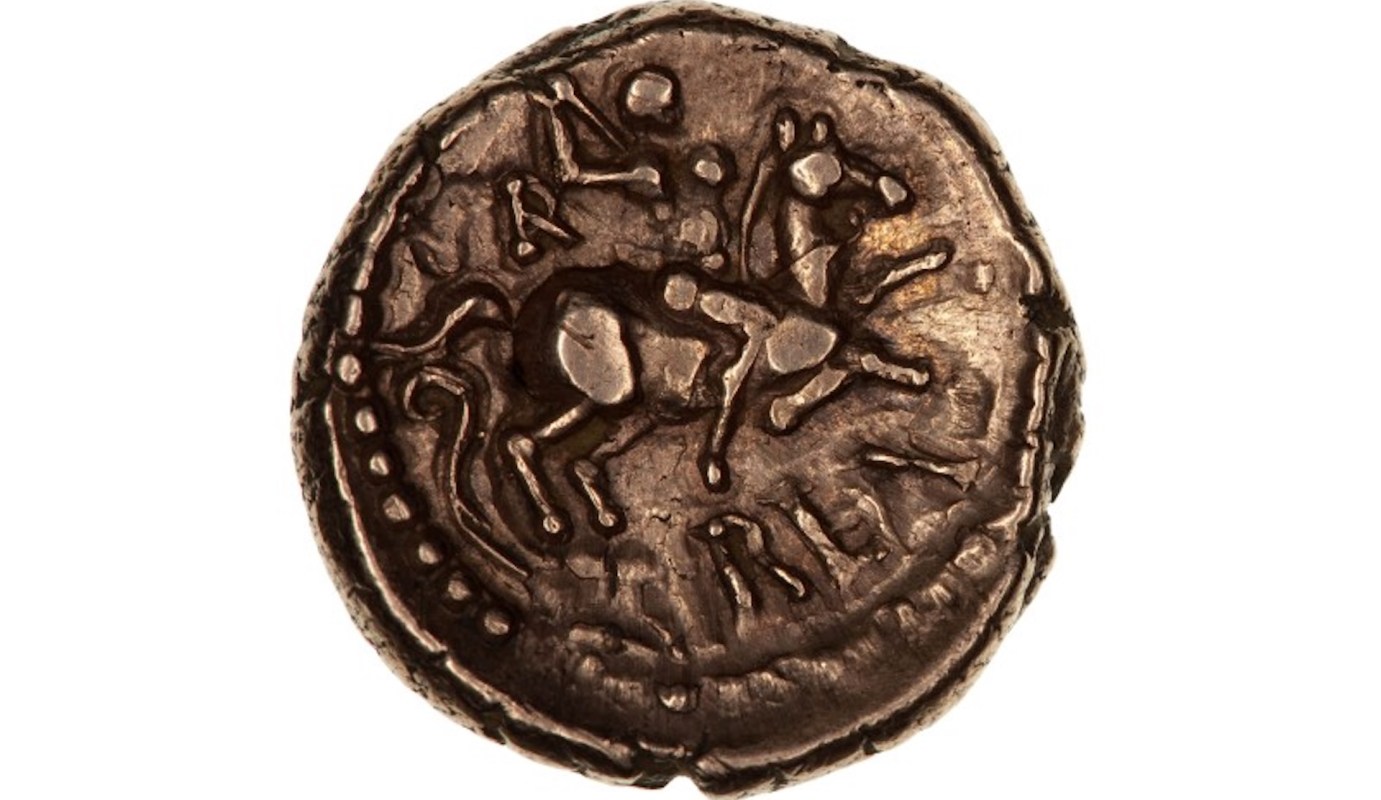
Verica, an Iron Age ruler who helped set Rome's invasion of Britain in motion, may have been misidentified as a man for two centuries.
Here's what to know
In a discussion published in Current Archaeology, researchers reassessed Verica's identity using ancient coins, Roman accounts, and naming conventions, according to Popular Science.
In Rome, the exiled Verica persuaded Claudius to proceed with a planned Channel crossing. The ruler had been ousted in 40 CE as leader of the Atrebates, an Iron Age people based in southeastern England.
Claudius launched his invasion in 43 CE. The agreement behind it tied Verica's return to the throne to assistance for Roman troops: strategic guidance and local knowledge.
"Verica is assumed to have been male because of the patriarchal mindset of 19th century classical historians," study co-author Miles Russell, an archaeologist at Bournemouth University, said in a statement, per Popular Science. "Verica was not only critical to the special relationship between Britain and Rome in the early first century [CE] but was indisputably female."
More background
The ending "a" was common among women's names in Iron Age Britain, including those of two other female tribal leaders: Cartimandua of the Brigantes and Boudica of the Iceni, according to Popular Science. The researchers began their examination with Verica's name and its place in that pattern.
TCD Picks » Quince Spotlight
💡These best-sellers from Quince deliver affordable, sustainable luxury for all




Boudica's fame rests on her role in a revolt against Roman rule — an unsuccessful uprising in 60 CE.
Claudius' critics used his consultations with women and formerly enslaved people to depict him as weak. Their accounts may also hold a clue to Verica's identity.
The Roman historian Cassius Dio's treatment of Verica's influence was, Russell argues, another way of attacking Claudius.
"The story of Claudius committing to something only because a woman told him to, fits the trope of this emperor as being submissive and henpecked," he said, according to Popular Science. "In effect, Dio was saying that the campaign was undertaken solely because of the whisperings of a barbarian femme fatale."
What's being done?
Russell and his colleagues are also reexamining the physical evidence Verica left behind: coins minted after the ruler's restoration to the throne.
Rome permitted Verica to issue currency bearing the Latin title "rex," signaling the emperor's support. The researchers challenge the assumption that the title necessarily identified a man.
They interpret the term as recognizing rulers of either gender, with Russell pointing to Cleopatra of Egypt as a prominent female example.
The coins' imagery offers a further clue. While other British Iron Age rulers issued coins depicting clearly male fighters, Verica's currency depicts a bare-breasted, slender rider, according to Popular Science.
"Had she not been deposed, fleeing to Claudius for military support, Rome may never have invaded Britain in the first place," Russell said.
Where can I learn more?
Verica's coins show how much surviving objects can reveal about the past.
• In Egypt, a homeowner's discovery of an inscribed stone led archaeologists to two royal statues.
• In France, hillside home construction halted after excavations revealed a 2,000-year-old city beneath the site.
• In Denmark, a homeowner digging a terrace uncovered the country's biggest Viking silver hoard.

Get TCD's free newsletters for easy tips, smart advice, and a chance to earn $5,000 toward home upgrades. To see more stories like this one, change your Google preferences here.






