


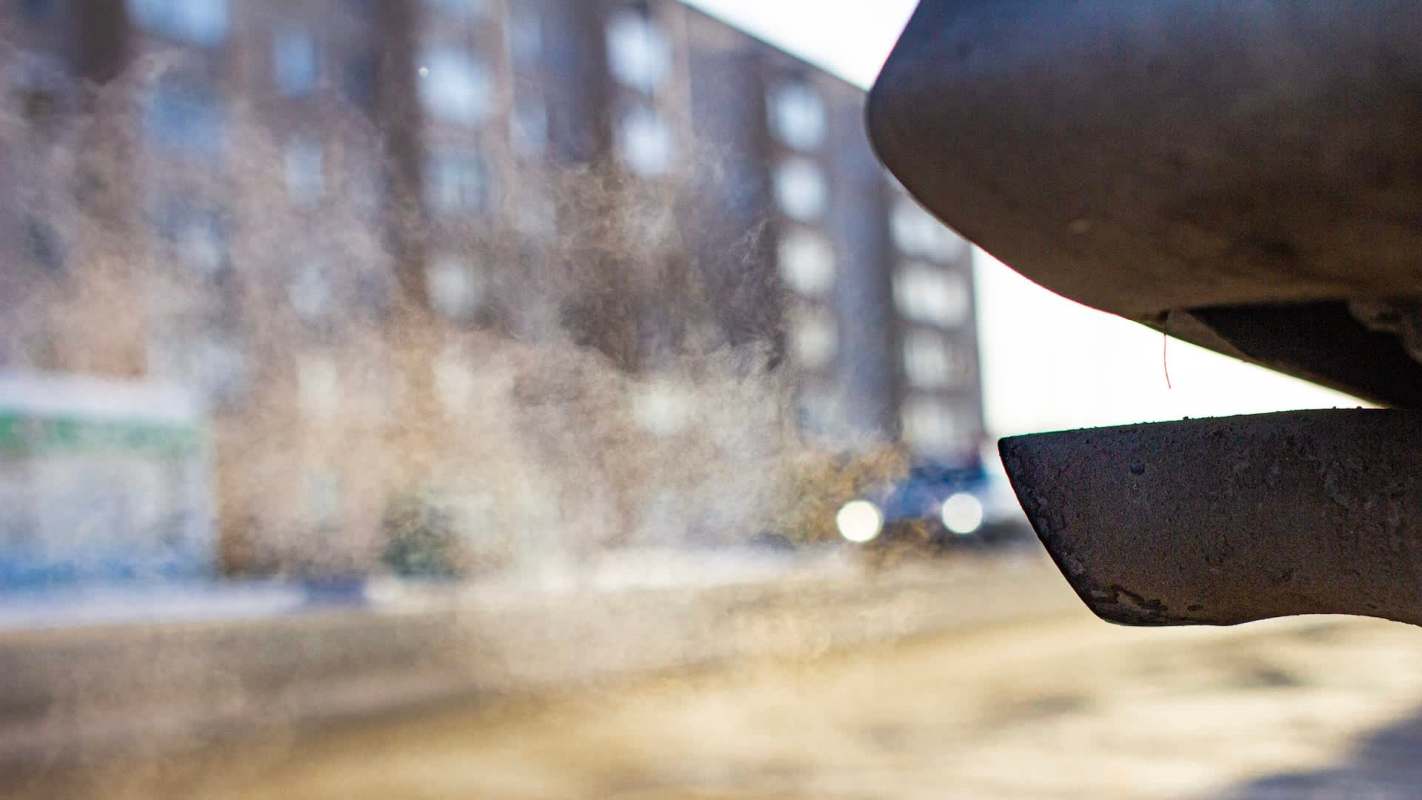
A new analysis points to a severe health burden from pollution produced by cars, trucks, and buses in the United States.
In 2024, emissions from road vehicles were associated with more than 41,800 premature deaths nationwide — the equivalent of about five Americans every hour.
What's happening?
Even as cleaner transportation options expand, the findings add to the evidence that traffic-related pollution continues to pose a major public health risk.
As The Guardian reported, the nonprofit International Council on Clean Transportation examined pollution from both fuel production and road vehicle fuel use. The group estimated more than 41,800 premature deaths last year using sensor measurements gathered with the Fédération Internationale de l'Automobile Foundation and health-impact calculations based on standard academic methods.
The Guardian also reported that the U.S. had more newly linked pediatric asthma cases from vehicle pollution in 2024 than any other country. American children made up about 1 in 10 of those new cases worldwide.
"Transportation emissions have real, everyday impacts on the health and safety of communities we live in and represent," Paul Jones III, the transportation planner at the New York City Environmental Justice Alliance, told The Guardian.
TCD Picks » Quince Spotlight
💡These best-sellers from Quince deliver affordable, sustainable luxury for all




Why does it matter?
Traffic pollution is tied to serious health outcomes that can affect families, especially children, older adults, and people with asthma or other respiratory or health conditions.
Vehicle pollution can shape the air people breathe near roads, schools, loading zones, and commuting corridors, with consequences that can show up in emergency rooms, missed school days, and lasting health problems.
Concern about environmental toxins also appears to be rising. The Guardian reported that Americans are worried about exposure and support tougher federal standards, noting that the American Lung Association found last year that nearly half of people in the U.S. were breathing unhealthy levels of airborne pollution.
What's being done?
According to the researchers, one of the most direct ways to curb the harm is to move away from gas and diesel vehicles more quickly. The Guardian reported that if cars, trucks, and buses reached zero emissions by 2040, the U.S. could prevent more than 100,000 premature deaths and over 42,000 childhood asthma cases by 2050 compared with the current adoption trajectory.
Progress on that front has been inconsistent. As The Guardian reported, the Trump administration has rolled back major environmental measures and taken steps to decelerate clean vehicle adoption, a shift experts say could slow efforts to reduce harmful exposure.
Large-scale improvements depend most on institutional action such as stronger standards, cleaner fleets, and better local monitoring.
"At a time when many Americans are concerned about the impact of environmental toxins on their families' health, public health authorities can't afford to overlook the impact of vehicle pollution on mortality and respiratory health outcomes," ICCT senior researcher Lingzhi Jin said.

Get TCD's free newsletters for easy tips, smart advice, and a chance to earn $5,000 toward home upgrades. To see more stories like this one, change your Google preferences here.






